
George Washington Free Franks: Identification, Values & How to Sell
To auction, sell or consign your George Washington free frank signature, please email your description and photos to [email protected] of Nate D. Sanders Auctions (NateDSanders.com).
What Is a George Washington Free Frank and Why Is It Valuable?
A free frank signature allowed mail to be sent without postage and was used by officials in the American Colonies and during the early United States. They were commonplace until postage stamps were introduced in 1847. George Washington often signed franking documents “G. Washington” or “Go: Washington”. His free franks often involved military matters and presidential responsibilities and are valued by collectors of presidential memorabilia and postal history.
Some of our George Washington free frank sales:
Franking Signature – Sold for $13,650
We realized $13,650 for a George Washington free frank signature signed “Go: Washington”. Address panel is addressed to Brigadier General Daniel Morgan, who is remembered for his battlefield tactics during the Revolutionary War. Leaf is undated but addressed to Morgan near Winchester, Virginia, where Morgan resided following the Revolutionary War. Morgan was promoted to Major General in 1794, so it’s believed this free frank was written before then. Document measures 5.625 x 3.25 inches.

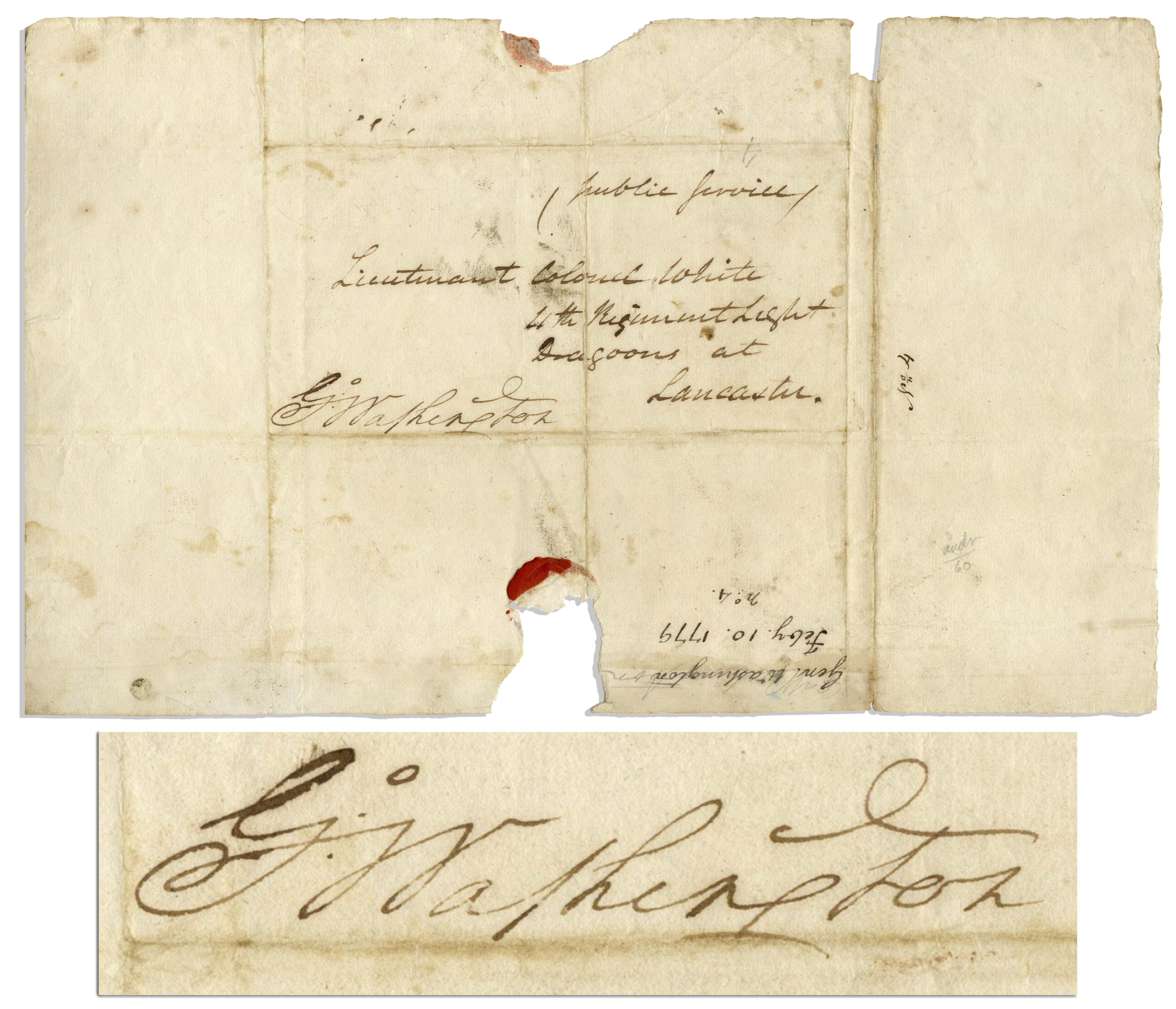
Free Franked Envelope from 1779 – Sold for $10,000
We sold a George Washington free franked envelope, also signed and addressed in his hand and dated 10 February 1779, for $10,000. At this time Washington was serving as Commander-in-Chief of the Continental Army. Envelope is addressed to Lieutenant Colonel Anthony Walton White, who was with the 4th Regiment Light Dragoons in 1779 and had previously served as Washington’s aide-de-camp. This 13.5 x 8.25 inch document is signed ”Go: Washington” and also has ”public service” written on the address panel.
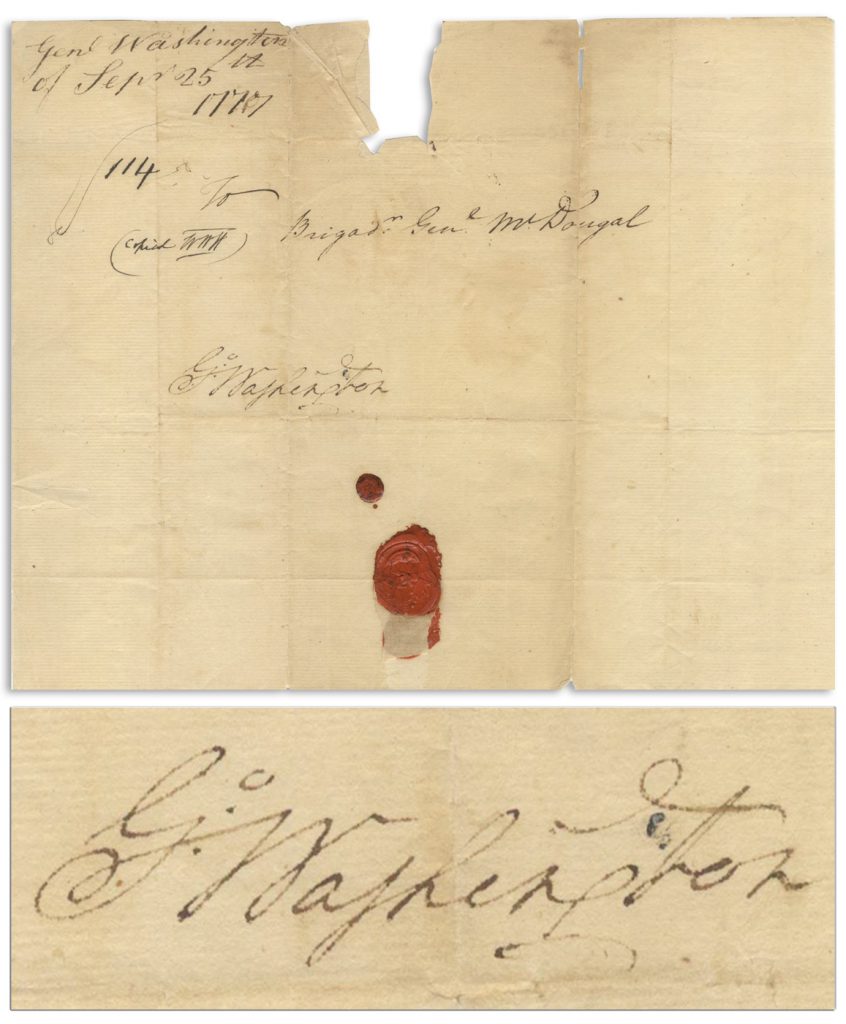
Revolutionary War Era Franking Signature – Sold for $9,900
We realized $9,900 for a free frank signed leaf addressed to Brigadier General Alexander McDougall. McDougall was a noteworthy Patriot leader who was involved in New York’s Sons of Liberty leading up to the Revolutionary War. Leaf is dated 25 September 1777, a day before the British captured Philadelphia. Document is signed “Go: Washington”, measures 9 x 7.25 inches and includes red wax seal.
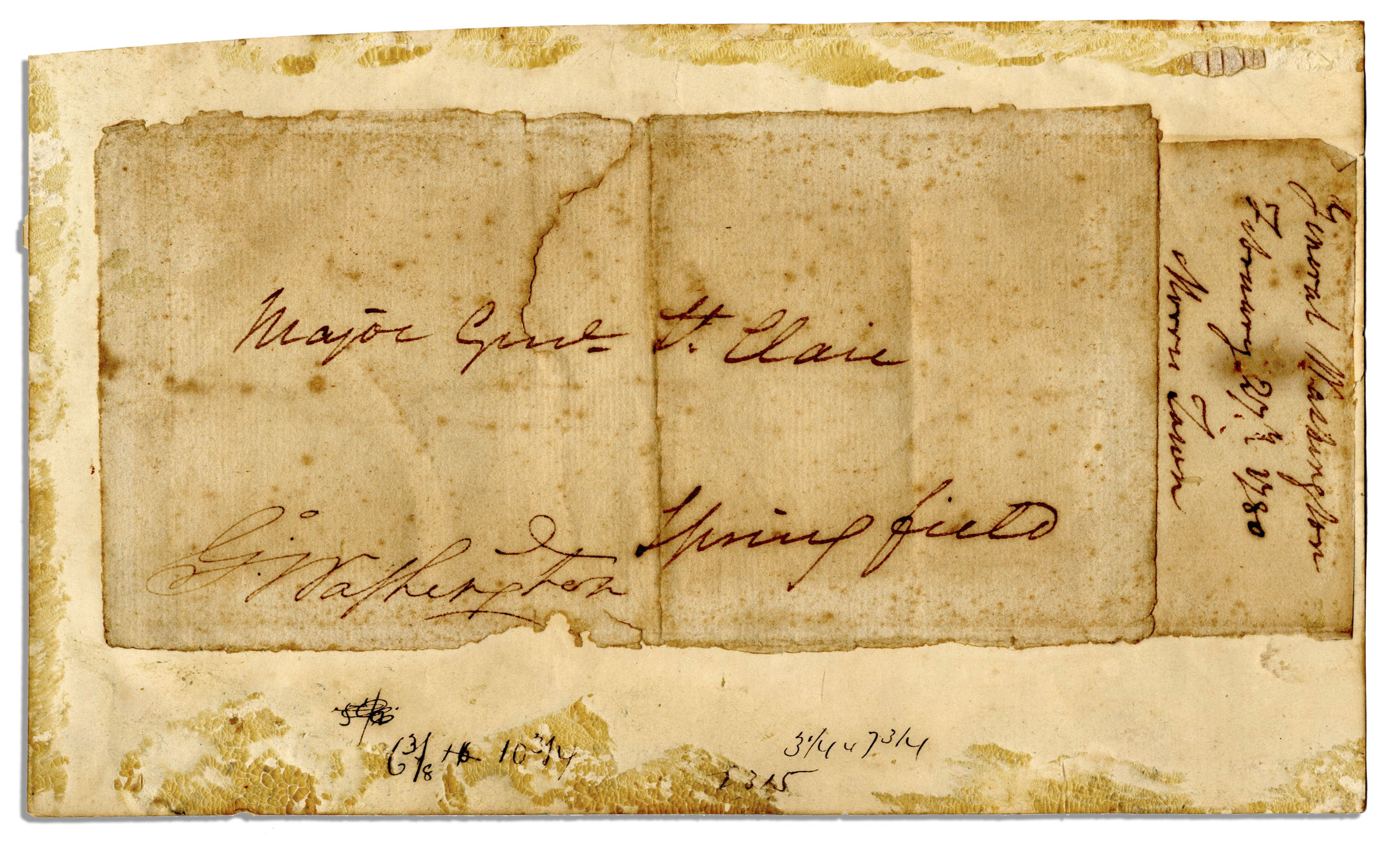
Signed Free Frank – Sold for $9,799
We sold a George Washington free frank signed while serving as General of the Continental Army during the American Revolutionary War for $9,799. Document is signed ”G Washington” alongside a notation in someone else’s hand reading, ”Major Genl St. Clair / Springfield”, his aide-de-camp at the time. Free frank is dated February 27, 1780, a harsh winter filled with several defeats and low morale for the Continental Army.
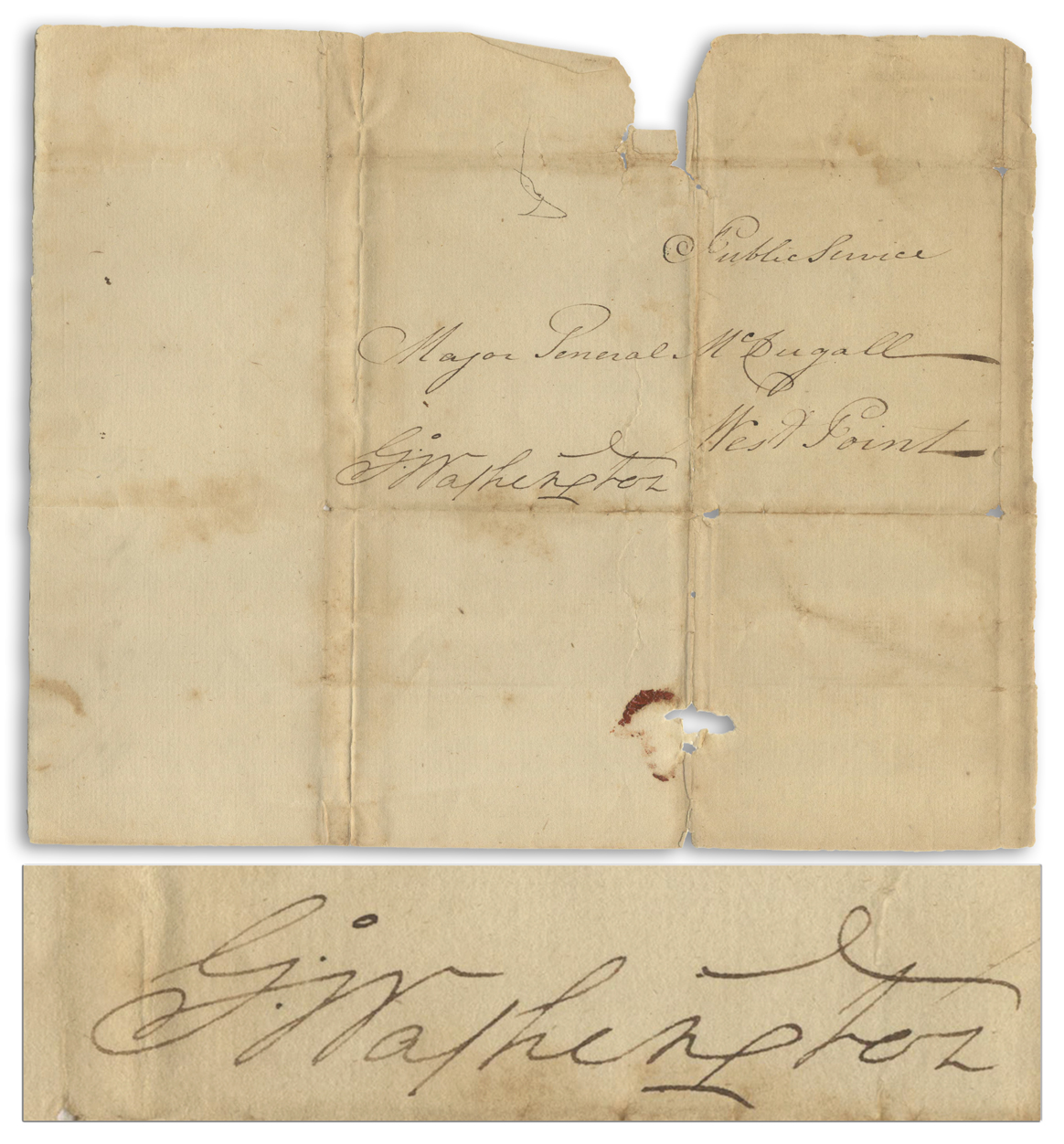
Franking Signature – Sold for $9,000
We realized $9,000 for a free frank leaf signed “Go: Washington” addressed to Major General Alexander McDougall at West Point, New York. McDougall is remembered as a strong leader in the fight for colonial rights pre-Revolutionary War. Document is not dated, but is from after 1780 when McDougall had been sent to command the army at West Point following Benedict Arnold’s betrayal to the Continental Army. Leaf measures 10 x 8.25 inches and includes red wax seal.
Thank you for learning about George Washington free franks and for checking out some of our previous sales. Please feel free to contact us at [email protected] for a free appraisal or to sell your Washington free frank. Learn how to sell your George Washington autograph.
FAQs
What is the difference between a George Washington signed document and a signed free frank?
A George Washington signed document is a full document that George Washington’s autograph along with official orders. A signed free frank will include Washington’s signature, but is typically just the address panel of a letter without including a full document.
Learn more about George Washington signed documents.
How much is a George Washington free frank worth?
The value of your free frank can vary based on condition, year signed and addressee.