
Sell or Auction Your William Whipple Autograph Letter Signed for up to Nearly $4,000 or More at Nate D. Sanders Auctions
FREE APPRAISAL. To buy, auction, sell or consign your William Whipple autograph letter signed that is for sale, please email your description and photos to [email protected] of Nate D. Sanders Auctions (http://www.NateDSanders.com).
Sell Your William Whipple Autograph Letter Signed
Below is a recent recent realized price for an autograph letter signed by Declaration of Independence signer William Whipple. We at Nate D. Sanders Auctions can obtain up to this amount or more for you:
William Whipple Autograph Letter Signed. Sold for Nearly $4,000.
We sold the following Declaration of Independence reproduction copies:
1833 copy of the Declaration of Independence from the original copper plate by William J. Stone, who created the earliest copies of the Declaration of Independence in 1823. John Quincy Adams, then Secretary of State, oversaw the 1823 project and commissioned Stone to reproduce the document for the upcoming 50th anniversary of the signing. Stone used a new wet-ink transfer process to create a copper plate from which copies were made. By wetting the original document, some of the original ink was transferred to the copper plate, which was then used for printing 201 vellum copies, nearly all of which now reside in permanent collections.
Ten years later, in 1833, the same copper plate was used to print additional copies of the Declaration of Independence on rice paper for inclusion in Peter Force’s book, ”American Archives”. The series was to total 20 volumes, but the cost of the set was prohibitive for most Americans and printing was stopped short at nine volumes. It’s unknown how many Declarations were printed but it’s believed that most were destroyed, apart from the small number that were printed and sold. This 1833 Force Declaration is the oldest Declaration apart from the original and the 1823 copies.
This copy of the Force Declaration is still within ”American Archives”, which is unusual as most copies have since been cut out; copies in the book are considered more desirable. Declaration bears the ”W.J. STONE SC. WASHN.” watermark at lower left from the original copper plate. Declaration measures 25” x 29”. A very bright copy as expected since it hasn’t been exposed to light. Folds as issued, light staining along top edge, small spot of foxing under Hancock’s signature and two small closed tears on right side as noted, the largest approximately 2”. Overall in very good plus condition.
Declaration is accompanied by almost the entire ”American Archives” series, comprising eight volumes: volumes 1 and 3-6 of the 4th series and volumes 1-3 of the 5th series, lacking only volume 2 of the 4th series. ”American Archives” is nine volumes in total, published from 1837 to 1853, comprising the most important documents of colonial American and the American Revolution. In addition to the Declaration, volumes also include reproductions of the King’s Message to Parliament, the Treaty with Great Britain, numerous maps and other documents. Ex-libris volumes are bound in contemporary blue cloth. Minor discoloration to some pages in the 5th series, overall very good. Sold for $23,813.

1843 Force Declaration of Independence From Original Copper Plate — Beautiful Copy
1843 Force Declaration of Independence from the original copper plate by William Stone, one of the earliest copies of the Declaration of Independence. In 1823, Congress authorized the production of facsimile copies of the Declaration of Independence for two reasons: the original was deteriorating rapidly and many of the aging original Signers sought copies. John Quincy Adams, then Secretary of State, oversaw the project and commissioned noted engraver William J. Stone to reproduce the document. Stone used a new Wet-Ink transfer process to create a copper plate from which facsimile copies were made. By wetting the original document, some of the original ink was transferred to the copperplate, which was then used for printing. Stone printed 201 copies on vellum, keeping one copy for himself (now residing in the Smithsonian) and distributing other copies to Thomas Jefferson, President James Monroe, members of Congress, surviving original Signers, various colleges and universities, and others. Of the original 201 copies, only 31 examples are currently known to exist, 19 of which are permanently housed in museums. In 1843, Peter Force used the original Stone copperplate to print additional copies of the Declaration of Independence on rice paper for inclusion in his book, ”American Archives”. Congress authorized up to 1,500 copies of the book to be printed, and while the actual number of copies printed is unknown, it’s generally estimated at 500. The Stone and Force copies represent an irony: certainly, they allowed additional people and institutions to obtain an identical facsimile of this most beloved of all historic American documents, but Stone’s Wet-Ink transfer process contributed to the deterioration of the original signed copy of the Declaration. The parchment did not respond well to water, with the unfortunate result being that the original Declaration of Independence, on display in our nation’s capitol, is in a rather sad state of preservation. This Force Declaration measures approximately 24.75” x 29.5” on rice paper. Folded for its original purpose of inclusion in Force’s book. A very good to near fine copy except for archival tape repairs on verso, and some creasing to front. The paper quality is very good, without as much brittleness as we usually see. A visually stunning example of one of America’s most beloved documents. Sold for $21,963.
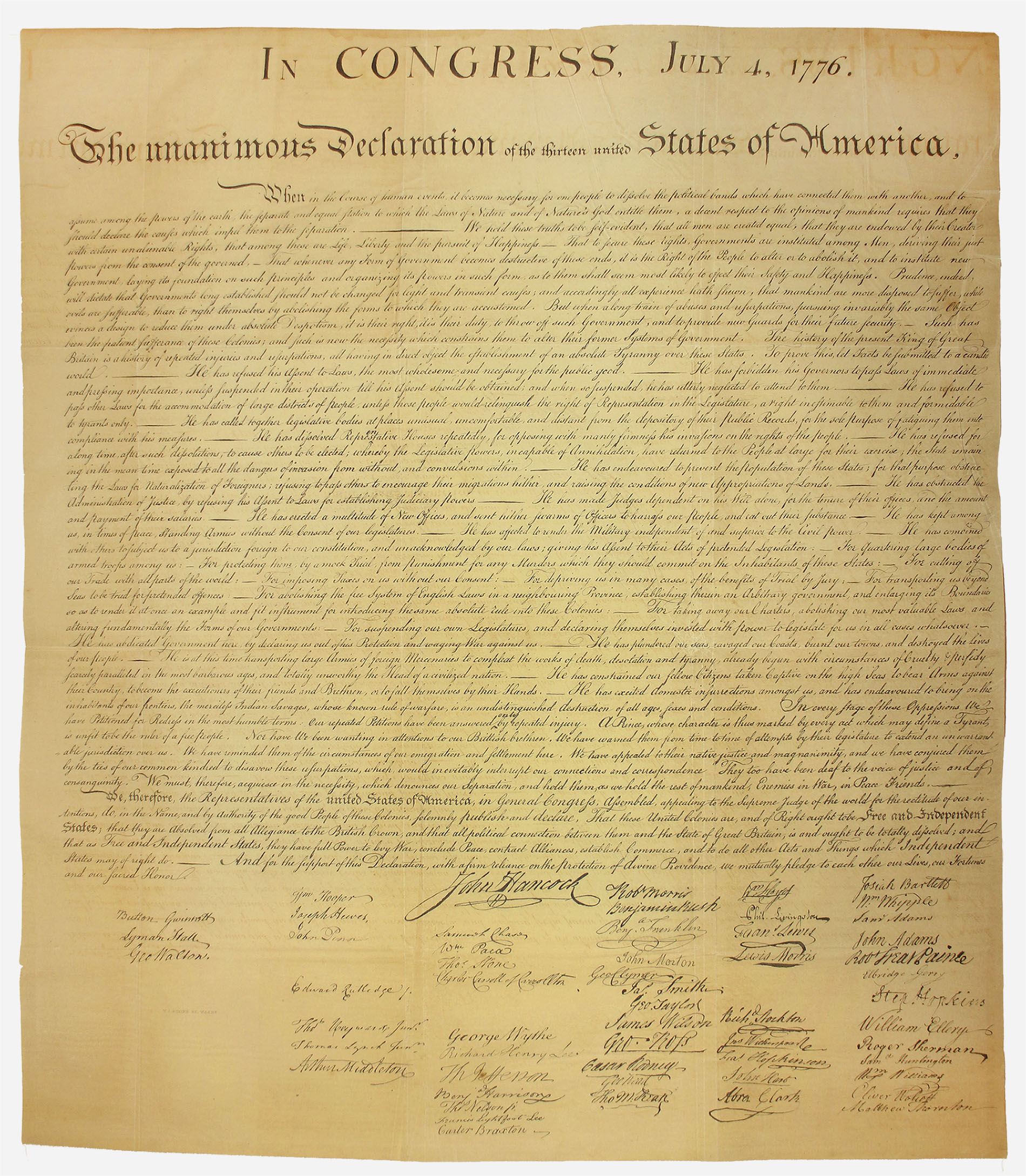
Rare 1843 Declaration of Independence Print — Peter Force Printing From the Original William Stone Copper Plate — In the Original Book — With Complete Set of Volumes
Extremely rare fold-out Force print of William J. Stone’s official engraving of the Declaration of Independence from “American Archives,” Volume I of the Fifth Series. With complete set of nine volumes edited by Peter Force. Washington, D.C.: M. St. Clair Clarke and Peter Force: 1843. Folio Volume I with marbled boards and endpapers runs 951pp. Most extant copies of this volume are missing the highly sought after fold-out rice paper Declaration of Independence. When Congress commissioned Peter Force to compile the nine-volume, 15,500pp. “American Archives” series documenting the nation’s history in 1843, it was determined that a copy of the Declaration would be included in the volume covering 1776. Twenty-three years earlier, as the original document was rapidly deteriorating, Secretary of State John Quincy Adams had authorized engraver William J. Stone to create a copperplate of the Declaration via painstaking wet-ink transfer. It took Stone three years to create a plate with absolute fidelity to the original, although the process caused additional deterioration to the original document, now exhibited in the Capitol Rotunda in Washington, D.C. Stone printed 201 copies on vellum. He kept one copy for himself, now residing in the Smithsonian, and the other copies were distributed to Thomas Jefferson, President James Monroe, members of Congress, surviving original Signers, various colleges and universities, and others. Of the original 201 copies, only 31 examples are currently known to exist, 19 of which are permanently housed in museums. The remaining dozen vellum examples are rarely offered for sale. The “American Archives” copies were made from Stone’s plate, now housed in the National Archives. Congress authorized up to 1,500 copies of the book to be printed, but subscriptions fell far short of that number. The actual number of copies of the book printed is unknown, with estimates ranging at around 500 copies. Fewer than half are believed to have survived, in varying states of preservation, most missing the Declaration. This is an extremely rare opportunity to find the book with the Declaration still intact and in such pristine condition. The fold-out document measures 26″ x 29″ and is stamped at lower left, “W.J. Stone S.C. Washn.” Document shows minor ink transfer from being folded and has a horizontal split approximately 3″ towards the middle of the right edge from folding, as well as two other small tears and along folds affecting words in the center of the document. Very good condition. All other American Archives volumes present as a set. Boards on several books show separation and wear. Books are in good condition. Sold for $20,000.
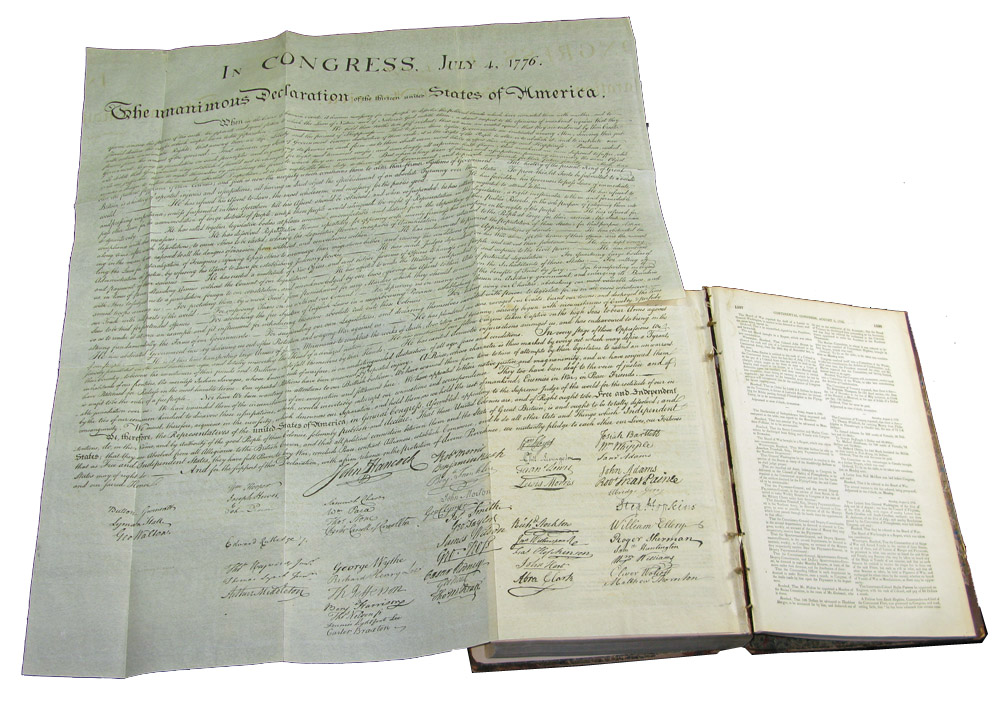
1843 Force Declaration of Independence From Original Copper Plate — Beautiful Copy
1843 Force Declaration of Independence from the original copper plate by William Stone, one of the earliest copies of the Declaration of Independence. In 1823, Congress authorized the production of facsimile copies of the Declaration of Independence for two reasons: the original was deteriorating rapidly and many of the aging original Signers sought copies. John Quincy Adams, then Secretary of State, oversaw the project and commissioned noted engraver William J. Stone to reproduce the document. Stone used a new Wet-Ink transfer process to create a copper plate from which facsimile copies were made. By wetting the original document, some of the original ink was transferred to the copperplate, which was then used for printing. Stone printed 201 copies on vellum, keeping one copy for himself (now residing in the Smithsonian) and distributing other copies to Thomas Jefferson, President James Monroe, members of Congress, surviving original Signers, various colleges and universities, and others. Of the original 201 copies, only 31 examples are currently known to exist, 19 of which are permanently housed in museums. In 1843, Peter Force used the original Stone copperplate to print additional copies of the Declaration of Independence on rice paper for inclusion in his book, ”American Archives”. Congress authorized up to 1,500 copies of the book to be printed, and while the actual number of copies printed is unknown, it’s generally estimated at 500. The Stone and Force copies represent an irony: certainly, they allowed additional people and institutions to obtain an identical facsimile of this most beloved of all historic American documents, but Stone’s Wet-Ink transfer process contributed to the deterioration of the original signed copy of the Declaration. The parchment did not respond well to water, with the unfortunate result being that the original Declaration of Independence, on display in our nation’s capitol, is in a rather sad state of preservation. This Force Declaration measures approximately 25.5” x 29” on rice paper. Folded for its original purpose of inclusion in Force’s book. A near fine copy except for some archival tape repairs on verso, so subtle as not to be noticed even upon close examination. A visually stunning example of one of America’s most beloved documents. Sold for $18,750.
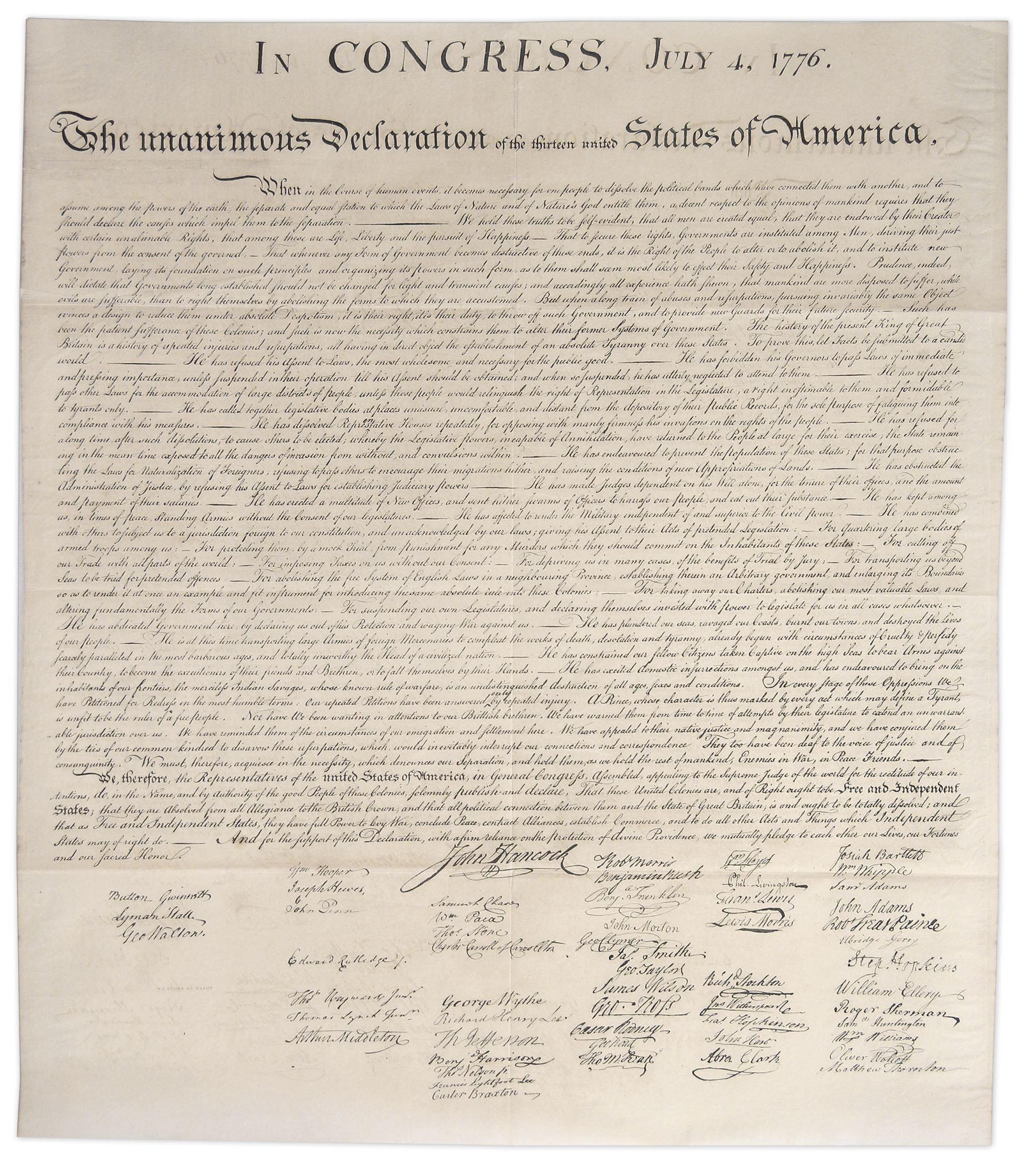
1843 Force Declaration of Independence From Original Copper Plate
1843 Force Declaration of Independence from the original copper plate by William Stone, one of the earliest copies of the Declaration of Independence. In 1823, Congress authorized the production of facsimile copies of the Declaration of Independence for two reasons: the original was deteriorating rapidly and many of the aging original Signers sought copies. John Quincy Adams, then Secretary of State, oversaw the project and commissioned noted engraver William J. Stone to reproduce the document. Stone used a new Wet-Ink transfer process to create a copper plate from which facsimile copies were made. By wetting the original document, some of the original ink was transferred to the copperplate, which was then used for printing. Stone printed 201 copies on vellum, keeping one copy for himself (now residing in the Smithsonian) and distributing other copies to Thomas Jefferson, President James Monroe, members of Congress, surviving original Signers, various colleges and universities, and others. Of the original 201 copies, only 31 examples are currently known to exist, 19 of which are permanently housed in museums. In 1843, Peter Force used the original Stone copperplate to print additional copies of the Declaration of Independence on rice paper for inclusion in his book, ”American Archives”. Congress authorized up to 1,500 copies of the book to be printed, and while the actual number of copies printed is unknown, it’s generally estimated at 500; it is the oldest Declaration apart from the original and the Stone copies. Declaration measures approximately 25.25” x 29.5”. Folded for its original purpose of inclusion in Force’s book. A very good to near fine copy with foxing at bottom affecting some signatures and discreet archival repairs on verso. A bright copy with virtually no toning. Sold for $18,750.

1843 Force Declaration of Independence From Original Copper Plate — Near Fine Condition
1843 Force Declaration of Independence from the original copper plate by William Stone, one of the earliest copies of the Declaration of Independence. In 1823, Congress authorized the production of facsimile copies of the Declaration of Independence for two reasons: the original was deteriorating rapidly and many of the aging original Signers sought copies. John Quincy Adams, then Secretary of State, oversaw the project and commissioned noted engraver William J. Stone to reproduce the document. Stone used a new Wet-Ink transfer process to create a copper plate from which facsimile copies were made. By wetting the original document, some of the original ink was transferred to the copperplate, which was then used for printing. Stone printed 201 copies on vellum, keeping one copy for himself (now residing in the Smithsonian) and distributing other copies to Thomas Jefferson, President James Monroe, members of Congress, surviving original Signers, various colleges and universities, and others. Of the original 201 copies, only 31 examples are currently known to exist, 19 of which are permanently housed in museums. Sold for $18,750.

Rare and Beautiful 1843 Force Declaration of Independence From Original Copper Plate
1843 Force Declaration of Independence from the original copper plate by William Stone, one of the earliest copies of the Declaration of Independence. In 1823, Congress authorized the production of facsimile copies of the Declaration of Independence for two reasons: the original was deteriorating rapidly and many of the aging original Signers sought copies. John Quincy Adams, then Secretary of State, oversaw the project and commissioned noted engraver William J. Stone to reproduce the document. Stone used a new Wet-Ink transfer process to create a copper plate from which facsimile copies were made. By wetting the original document, some of the original ink was transferred to the copperplate, which was then used for printing. Stone printed 201 copies on vellum, keeping one copy for himself (now residing in the Smithsonian) and distributing other copies to Thomas Jefferson, President James Monroe, members of Congress, surviving original Signers, various colleges and universities, and others. Of the original 201 copies, only 31 examples are currently known to exist, 19 of which are permanently housed in museums. In 1843, Peter Force used the original Stone copperplate to print additional copies of the Declaration of Independence on rice paper for inclusion in his book, ”American Archives”. Congress authorized up to 1,500 copies of the book to be printed, and while the actual number of copies printed is unknown, it’s generally estimated at 500. The Stone and Force copies represent an irony: certainly, they allowed additional people and institutions to obtain an identical facsimile of this most beloved of all historic American documents, but Stone’s Wet-Ink transfer process contributed to the deterioration of the original signed copy of the Declaration. The parchment did not respond well to water, with the unfortunate result being that the original Declaration of Independence, on display in our nation’s capitol, is in a rather sad state of preservation. This Force Declaration measures approximately 25.5” x 29” on rice paper. Folded for its original purpose of inclusion in Force’s book. Separation starting along folds, especially along lowermost horizontal fold, otherwise in near fine condition. The points of separation can be repaired with archival tape to be almost indiscernible when framed. A visually stunning example of one of America’s most beloved documents. Sold for $15,625.

1843 Force Declaration of Independence From Original Copper Plate — Beautiful Copy
1843 Force Declaration of Independence from the original copper plate by William Stone, one of the earliest copies of the Declaration of Independence. In 1823, Congress authorized the production of facsimile copies of the Declaration of Independence for two reasons: the original was deteriorating rapidly and many of the aging original Signers sought copies. John Quincy Adams, then Secretary of State, oversaw the project and commissioned noted engraver William J. Stone to reproduce the document. Stone used a new Wet-Ink transfer process to create a copper plate from which facsimile copies were made. By wetting the original document, some of the original ink was transferred to the copperplate, which was then used for printing. Stone printed 201 copies on vellum, keeping one copy for himself (now residing in the Smithsonian) and distributing other copies to Thomas Jefferson, President James Monroe, members of Congress, surviving original Signers, various colleges and universities, and others. Of the original 201 copies, only 31 examples are currently known to exist, 19 of which are permanently housed in museums. In 1843, Peter Force used the original Stone copperplate to print additional copies of the Declaration of Independence on rice paper for inclusion in his book, ”American Archives”. Congress authorized up to 1,500 copies of the book to be printed, and while the actual number of copies printed is unknown, it’s generally estimated at 500. The Stone and Force copies represent an irony: certainly, they allowed additional people and institutions to obtain an identical facsimile of this most beloved of all historic American documents, but Stone’s Wet-Ink transfer process contributed to the deterioration of the original signed copy of the Declaration. The parchment did not respond well to water, with the unfortunate result being that the original Declaration of Independence, on display in our nation’s capitol, is in a rather sad state of preservation. This Force Declaration measures approximately 24.75” x 29.5” on rice paper. Folded for its original purpose of inclusion in Force’s book. A near fine copy except for some archival tape repairs on verso, so subtle as not to be noticed even upon close examination. A visually stunning example of one of America’s most beloved documents. Sold for $15,000.

Exceptionally Beautiful Force 1843 Copper Plate Engraving of the Declaration
1843 Force Declaration of Independence from the original copper plate by William Stone. Measures approximately 25.5” x 29” on rice paper. This offering represents an opportunity to obtain one of the earliest copies of the Declaration of Independence. In 1823, Congress authorized the production of facsimile copies of the Declaration of Independence for two reasons: the original was deteriorating rapidly and many of the aging original Signers sought copies. John Quincy Adams, then Secretary of State, oversaw the project and commissioned noted engraver William J. Stone to reproduce the document. Stone used a new Wet-Ink transfer process to create a copper plate from which facsimile copies were made. By wetting the original document, some of the original ink was transferred to the copperplate, which was then used for printing. Stone printed 201 copies on vellum, keeping one copy for himself (now residing in the Smithsonian) and distributing other copies to Thomas Jefferson, President James Monroe, members of Congress, surviving original Signers, various colleges and universities, and others. Of the original 201 copies, only 31 examples are currently known to exist, 19 of which are permanently housed in museums. The remaining dozen vellum examples are rarely offered for sale and today typically bring $200,000 or so. In 1843, Peter Force used the original Stone copperplate to print additional copies of the Declaration of Independence on rice paper for inclusion in Volume I of his multi-volume book, ”American Archives.” Congress authorized up to 1,500 copies of the book to be printed, and while the actual number of copies printed is unknown, it’s generally estimated at 500. It is believed that fewer than half of the rice paper copies still exist (of which this is an example) in varying states of preservation. The Stone and Force copies represent an irony: certainly, they allowed additional people and institutions to obtain an identical facsimile of this most beloved of all historic American documents, but Stone’s Wet-Ink transfer process contributed to the deterioration of the original signed copy of the Declaration. The parchment did not respond well to water, with the unfortunate result being that the original Declaration of Independence, on display in our nation’s capitol, is in a rather sad state of preservation. This Declaration has been folded for its original purpose of inclusion in Force’s book and is in overall near fine condition. Document is repaired to verso using archival tape along previous foldlines. A visually stunning example of one of America’s most beloved documents. Sold for $14,032.

Declaration of Independence Broadside Printed by John Binns
John Binns’ Declaration of Independence. Binns, publisher of “The Democratic Press”, painstakingly designed this example of the Declaration in 1818. Design features the text of the Declaration, surrounded by 16 cartouches containing pictorial vignettes for each of the colonies, plus a George Washington bust portrait occupying a place of honor at top center, flanked by John Hancock and Thomas Jefferson. Bears the printed signature of John Adams to the lower right corner. Engraved paper print is mounted expertly to a thin fabric backing. Measures 25.25″ x 35″. Very mild toning. Light foxing but near fine given age. Sold for $5,750.

Here are some items signed by other Declaration of Independence signers that we have sold:
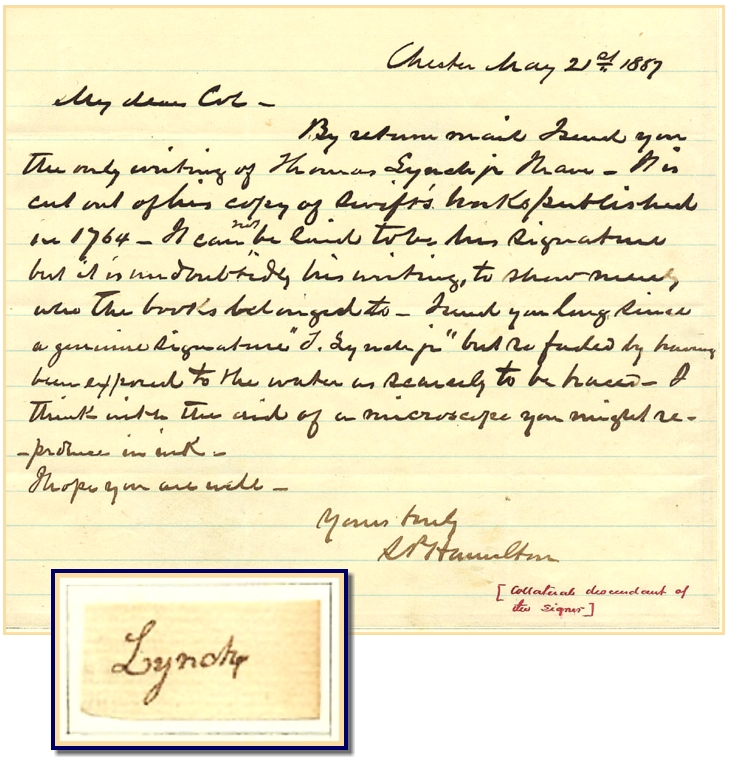
The second rarest Declaration of Independence signer’s autograph behind Button Gwinnett is a Thomas Lynch autograph, a signer from South Carolina. We at NateDSanders.com were lucky enough to have sold his autograph in 2004. Here is the description, picture and the price realized:
Thomas Lynch autograph book page from the 2nd rarest signer of the Declaration of Independence. Extremely rare signature which has been cut from a book. Comes with a 1-page letter, dated 1887, from Samuel Prioleau Hamilton, 6th son of South Carolina Governor James Hamilton and grand nephew of Thomas Lynch Jr. Reads in part: “…By return mail I send you the only writing of Thomas Lynch Jr. I have. It is cut out of his copy of Swift’s works published in 1764. It can not be laid to his [Declaration of Independence] signature but it is undoubtedly his writing…I sent you long since a genuine signature ‘T. Lynch jr’ but so faded by having been exposed to the water as scarcely to be read. I think with the aid of a microscope you might reproduce in ink…” Also comes with a 3-page letter from noted autograph expert Kenneth W. Rendell, dated 1966, certifying the authenticity of this signature. Reads in small part, “…I received the Lynch back today and have gather[ed] together a mass of evidence to confirm its authenticity. In comparing my signature with that on the Declaration of Independence there is a definite difference, as you point out…The first difference is in the L. In mine it is started after the downstroke and in the Declaration before it. This is a very easy alteration to make in writing. He just started it a little before he previously did…Lynch’s early writing (my signature) was much stronger, because he was…very ill when he signed the Declaration. In 1775 Lynch contracted bilious fever and became…a partial invalid. After signing the declaration he continued to get worse and he left two years later for the West Indies…He died in a ship-wreck on that voyage…In Mary Benjamin’s book, which is the leading work on autographs, she also makes reference to the problem of comparing early signatures with that on the declaration…there is no question of the serious effect that this illness had on him, and also on his writing…Beneath the facisimile Hamilton writes, “Seven signatures, mainly from school books. Long after Lynch’s death in 1779, his sister cut many signatures from books in his library to supply autograph collectors…” Mounted to another sheet, with the Hamilton letter laid beneath it. Very good condition. An excellent Thomas Lynch autograph. Sold for $26,000.
Declaration of Independence signer, Thomas Nelson autograph letter signed, “Thos Nelson Jr.” as Governor of Virginia, thus Governor of the state where the Yorktown Surrender and the last fighting of the Revolutionary War happened. In this autograph letter signed, with an additional free frank signed, Nelson asks Brigadier General George Weedon to thwart disaster by taking care of supplying provisions for Washington’s Yorktown-bound army. Nelson personally fought in the Seige of Yorktown. Datelined Richmond, Virginia, 3 September 1781, letter reads: “…After congratulating you on the arrival of 28 French ships of the line, six frigates & 3000 troops, permit me to request your assistance for the support of a considerable army that are now on their march from the northward…Disappointment to so large an army would be attended with the most fatal effects. I think the game is nearly up with Cornwallis…” Large folio document runs one page and measures 8″ x 12.5″. Toning and light staining, with signed address leaf mounted to verso, else near fine. Published in Magazine of History, August 1910, pages 125-6. Provenance: Henkels Joshua I. Cohen sale, 12 November 1907, lot 122; collection of Adrian Joline; sold by Mary Benjamin to Allyn Kellogg Ford. Sold for $23,116.

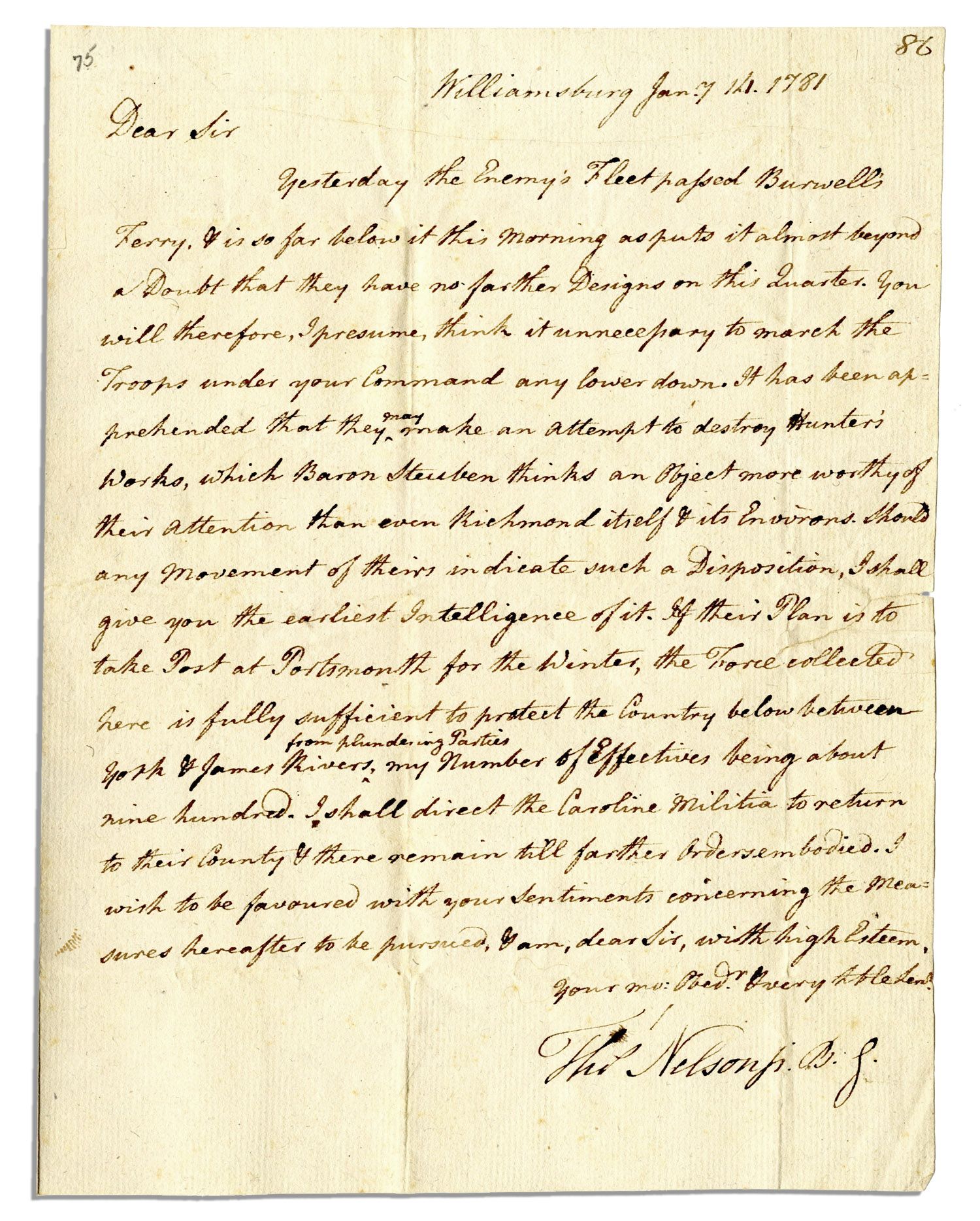
Declaration of Independence signer Thomas Nelson letter signed, ”Thos Nelson Jr” as Brigadier General. From Williamsburg, Virginia, he writes to Brigadier General George Weedon concerning the whereabouts of Benedict Arnold and his men. Dated 14 January 1781, it reads: ”…Yesterday the enemy’s fleet passed Burwell’s Ferry, & is so far below it this morning as puts it almost beyond a doubt that they have no farther designs on this quarter…[but might] post at Portsmouth… [The militia at Nelson’s command is] fully sufficient to protect the county below between York & James Rivers from plundering parties…” Single page measures approximately 6.5” x 8.5”. Small tear near center and a small seal hole. Light toning and soiling. In very good to near fine condition. Sold for $10,541.
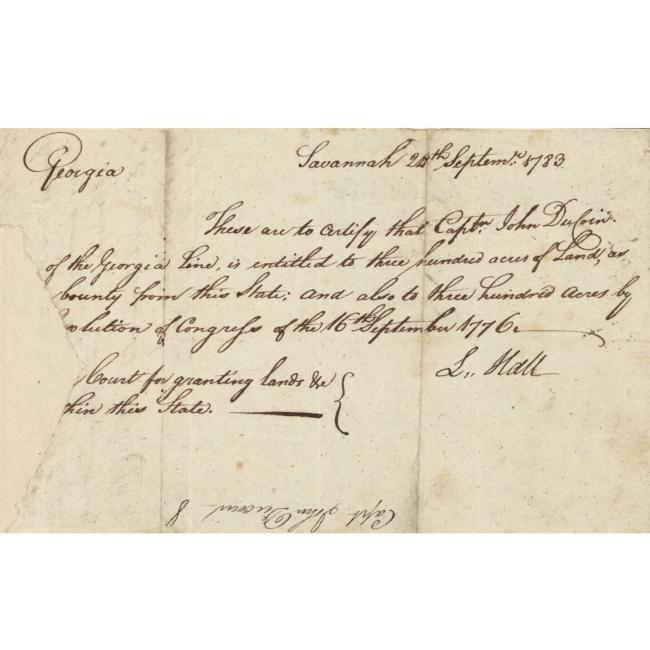
Declaration of Independence Signer, Document With a Lyman Hall Autograph
Declaration of Independence signer, autograph document signed with a bold Lyman Hall autograph, who is one of the more scarce signers. Acting in his capacity as Governor of Georgia, Hall grants 600 acres of land to a Captain John Ducour, signing at the document’s conclusion, “L. Hall”. Datelined Savannah, 24 September 1783, half sheet measures 9″ x 5.75″. With docketing on verso. Document is inlaid and there is loss to left margin affecting three words. Housed in a blue linen folding case with a blue morocco spine lettered gilt. Attractive document in very good condition. Sold for $9,518.
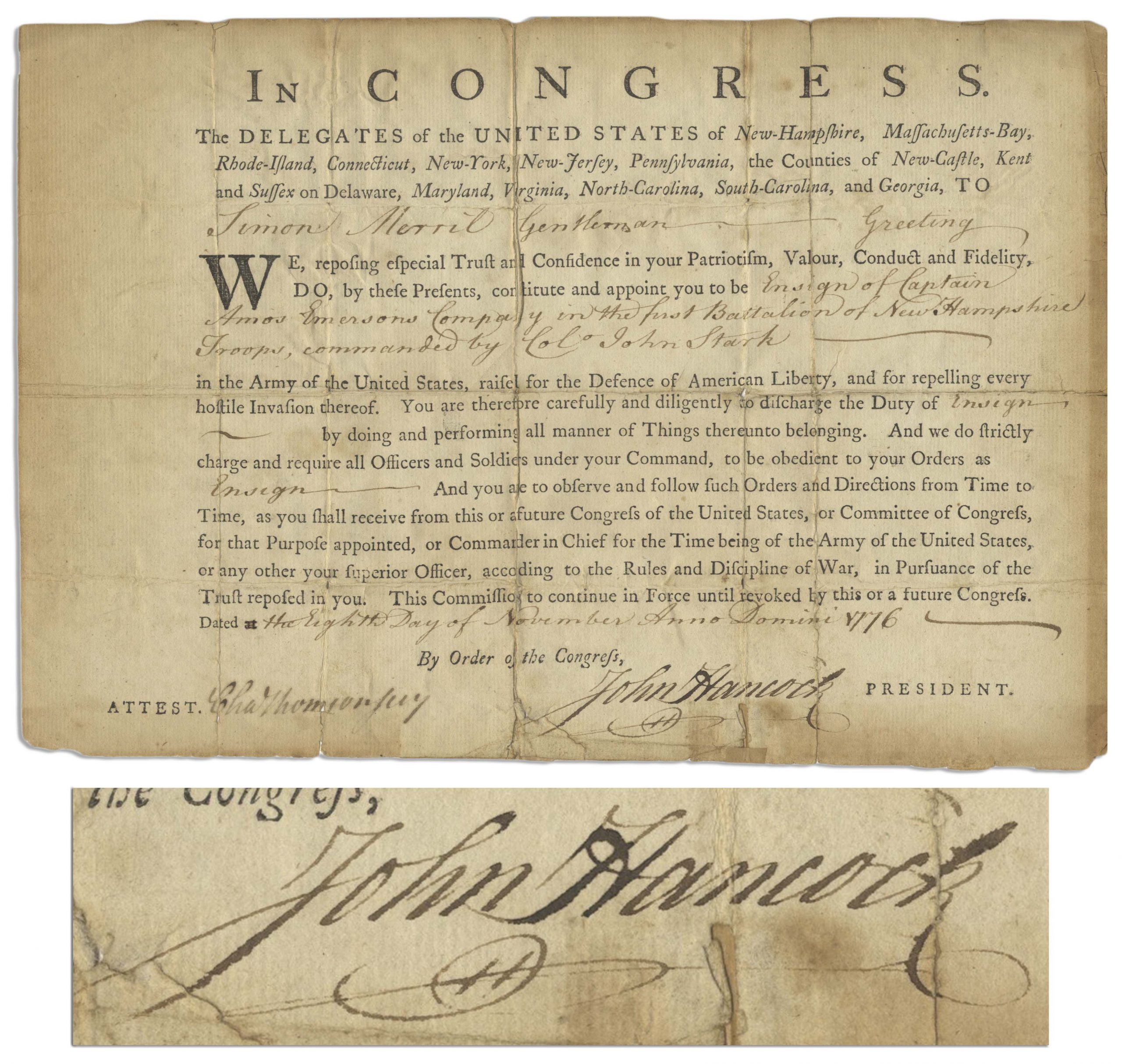
John Hancock military document signed from 1776, as President of the Continental Congress, appointing an Ensign to the 1st New Hampshire Regiment, headed by Colonel John Stark. At the Revolutionary War Battle of Bennington, Stark rallied over 1,400 untrained militiamen, without uniforms and using their personal firearms, to thwart a British raid on Bennington, Vermont, famously telling his troops, “We’ll beat them before night or Molly Stark’s a widow!” Dubbed “The Hero of Bennington” and promoted to General, Stark also proved himself at Bunker Hill, Trenton, Princeton and the Siege of Boston.
John Hancock’s large, eloquent signature is on full display here, with his characteristic paraph below. Dated 8 November 1776, document is countersigned by Charles Thomson as Secretary of the Continental Congress. Measures 12″ x 8.25″. Reinforced with paper on verso. Some separation along folds, with folds touching the ends of Hancock’s signature. Overall very good condition given age, and with a bold, attractive signature by Hancock. Sold for $9,375.
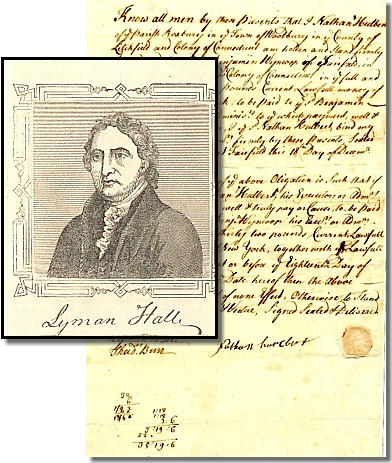
Lyman Hall Legal Document Signed
Legal document with a Declaration of Independence signer, Lyman Hall autograph. 18 Dec. 1753, concerns a loan agreement between Nathan Hurlbert and Benjamin Wyncoop. Reads: “…full and whole sum of sixty-four pounds current lawful money…to be paid…the condition of the above obligation is such that if the above named…shall well & truly pay or cause to be paid…obligation to be void & of none effect, otherwise to stand & remain in full force…in presence of (signed) Lyman Hall.” Number notations at bottom. Accompanied by small engraving of Hall. Fine condition. Sold for $7,905.
Declaration of Independence Signer, Document With a Lyman Hall Autograph
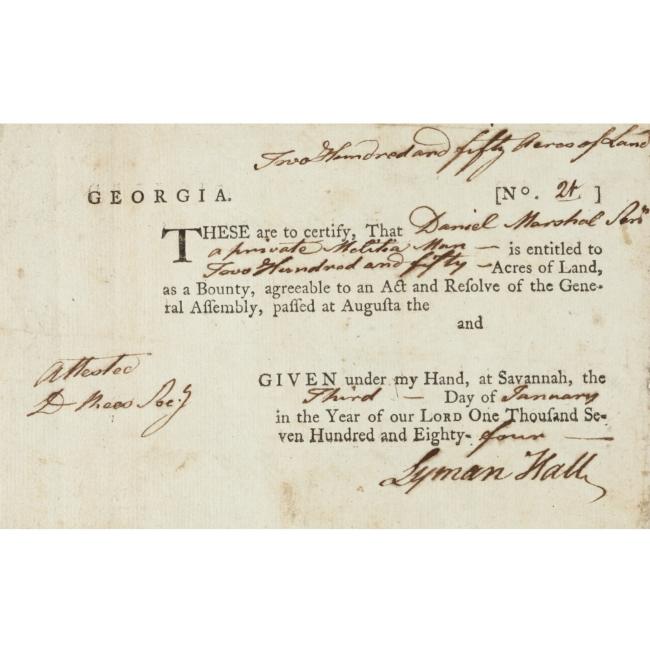
Declaration of Independence signer, document signed with a nice Lyman Hall autograph as Governor of Georgia, from Savannah, dated 3 January 1784. Document grants 450 acres to a Daniel Marshal, “a private militia man”. Inlaid document measures 4.75″ x 7″ and is housed in a blue linen folding case with blue morocco spine lettered in gilt. Minor discoloration along margin, else near fine. Sold for $7,500.
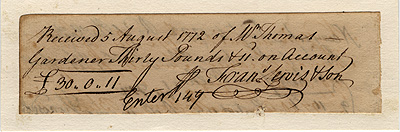
Francis Lewis-DOI 1772 Autograph Document Signed
Autograph document signed by DOI signer Francis Lewis, 1772. Reads: “Received 5 August 1772 of Wm Thomas at Gardener thirty pounds on account. Fran. Lewis & Son.” Signed clearly in black ink. Excellent condition. Lewis, a wealthy NY businessman, joined the Revolutionary movement when he attended the Stamp Act Congress. In the Continental Congress, Lewis was instructed not to vote for independence, but signed the Declaration anyway. The British destroyed his home and his wife died after being imprisoned. He soon abandoned politics. Sold for $6,463.
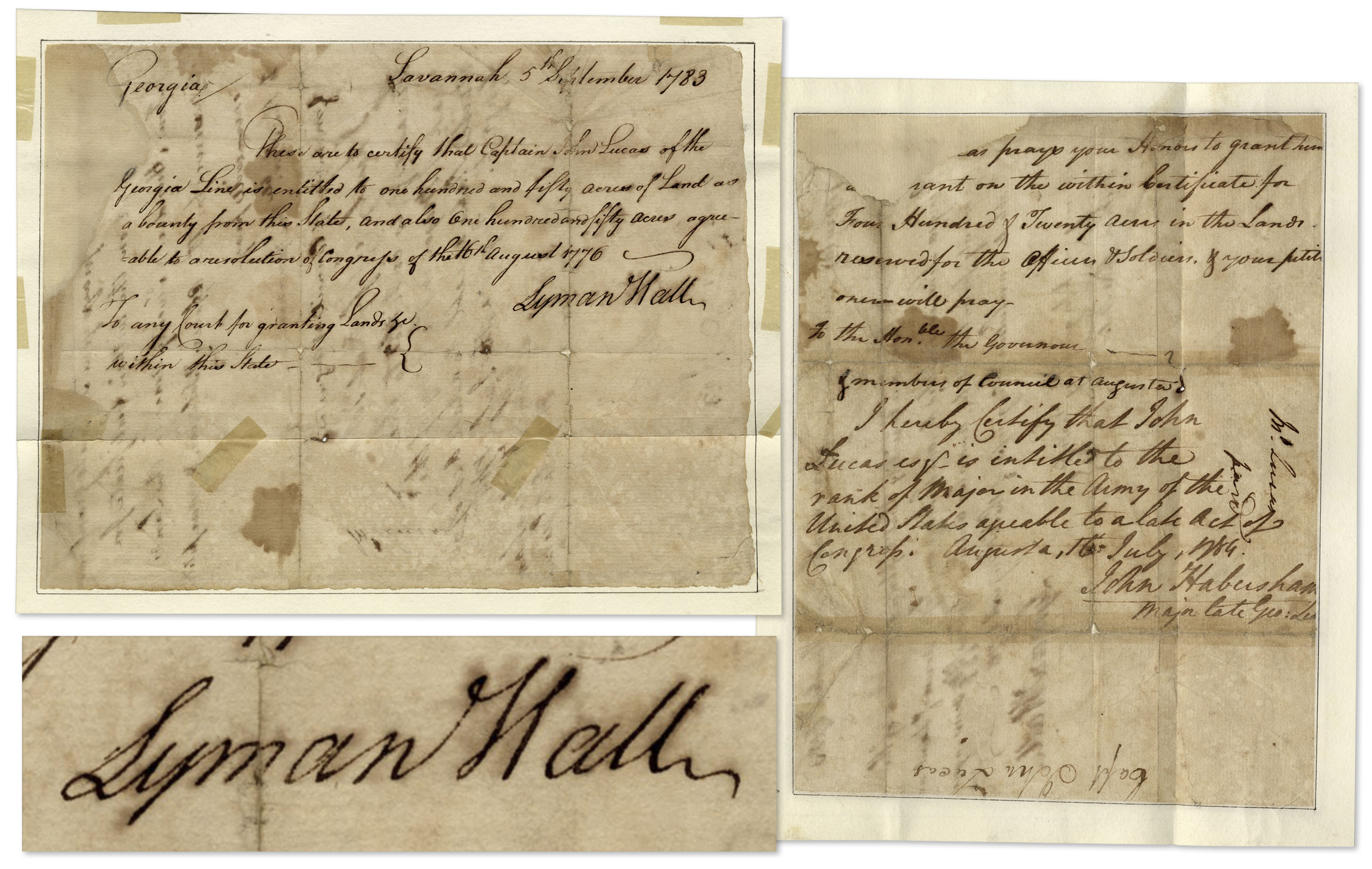
Declaration of Independence signer, document signed with a dark Lyman Hall autograph as Governor of Georgia, from Savannah, dated 5 September 1783. Hall is one of the rarest Declaration signers. Document grants 300 acres to a Captain John Lucas, according to the resolution of Congress from 16 August 1776. Inlaid document measures 8.5” x 6.5”. Paper loss along top left edge and tears along folds, repaired with inlaying. Also some discoloration. Lyman Hall signature is very bold. Accompanied by an engraving of Hall, and with a COA from University Archives certifying that the Lyman Hall autograph is authentic. Sold for $6,250.
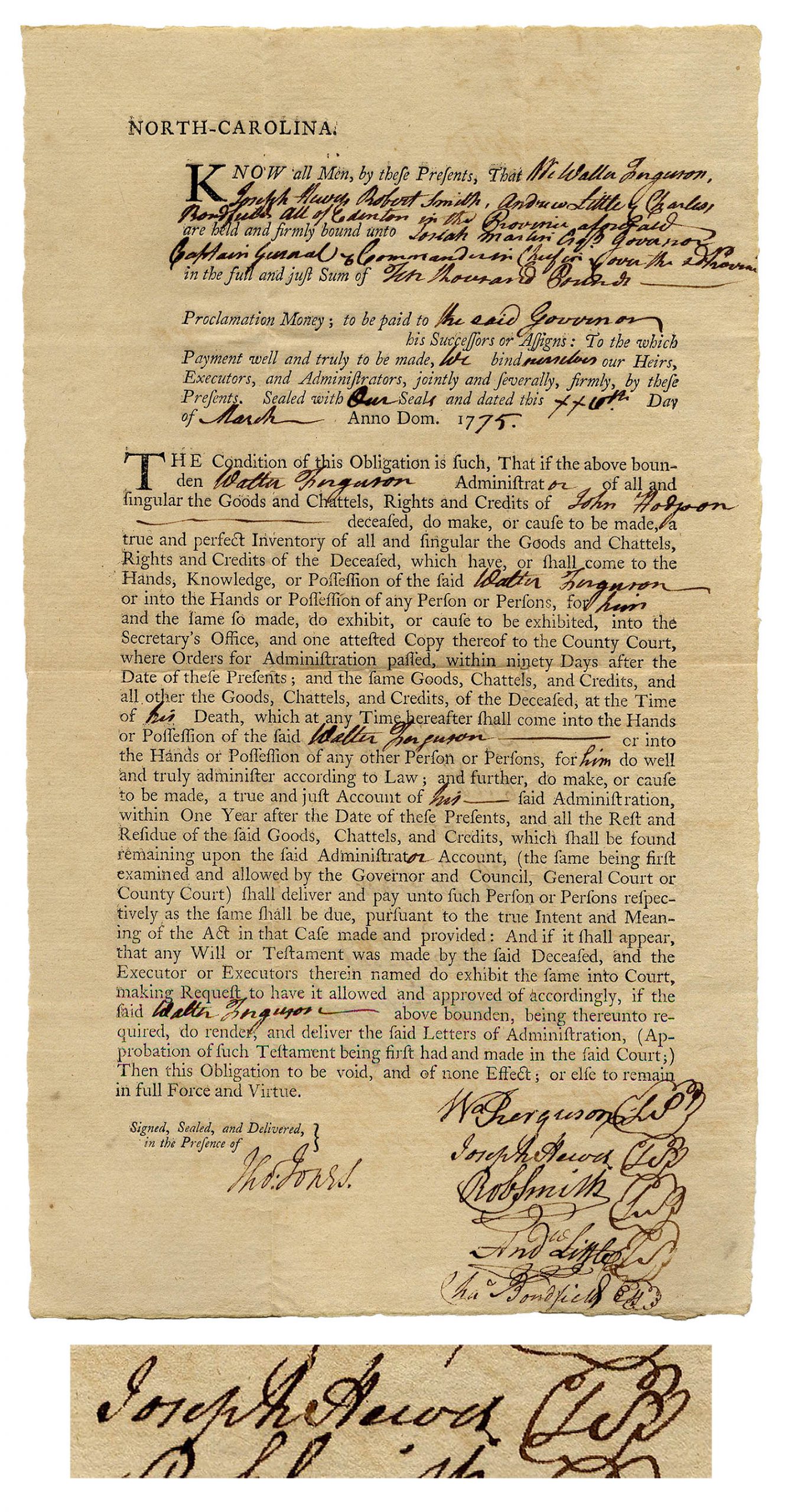
One of the Rarest Declaration of Independence Signers, Joseph Hewes Document Signed
Declaration of Independence signer, Joseph Hewes document signed with his full name, ”Joseph Hewes”, one of the rarest Signers. Guided by his Quaker beliefs, Hewes was actually not in favor of revolution against England, but supported independence as North Carolina’s representative to the Continental Congress. Dated 6 March 1775, partially printed legal document is additionally signed by Thomas Jones (who fills in portions of the document), Walter Ferguson, Robert Smith, Andrew Little, and Charles Bondfield. Document reads in part, ”NORTH-CAROLINA. / Know all men by their presents, that Mr. Walter Ferguson, Joseph Hewes, Robert Smith, Andrew Little & Charles Bondfield, all of Edenton in the Provence…are held and firmly bound unto Josiah Martin Esq. Governor Captain General & Commanding Chief…in the full and just sum of ten thousand pounds Proclamation Money; to be paid to the said Governor his successors or assigns: to the which payment well and truly be made, we bind ourselves, our heirs, executors, and administrators, jointly and severally, firmly, by these Presents. Sealed with our seals and dated this 6th Day of March Anno Dom. 1775.” Single page measures 7” x 12”. Light uniform toning and minimal creasing, overall in near fine condition given age, with bold handwriting. Sold for $4,375.
Thomas Stone DOI Autograph Letter Signed
Thomas Stone autograph letter signed, reading: “To the worshipful justices of the Charles County in Court fitting the petition of William Thomas and Robert Jims humbly showeth that your…became security for a certain Elizabeth Jims of Charles County on the estate of her husband Joseph Jims deceased. That your…are apprehensive the said Elizabeth Jims is wasting the said state whereby your acts will offer your…therefore humbly pray your worship to…against the said Elizabeth Jims to show cause why she should not give Counter Security to your…or…the estate into their possession. T. Stone.” A signer of the Declaration of Independence from Maryland, Stone was a wealthy lawyer and served in the state provincial convention. A moderate, he was elected to the Continental Congress. Stone later refused to sign the Articles of Confederation and declined to attend the Constitutional Convention. Measures 6.5″ x 7″. Nice condition. Sold for $3,675.

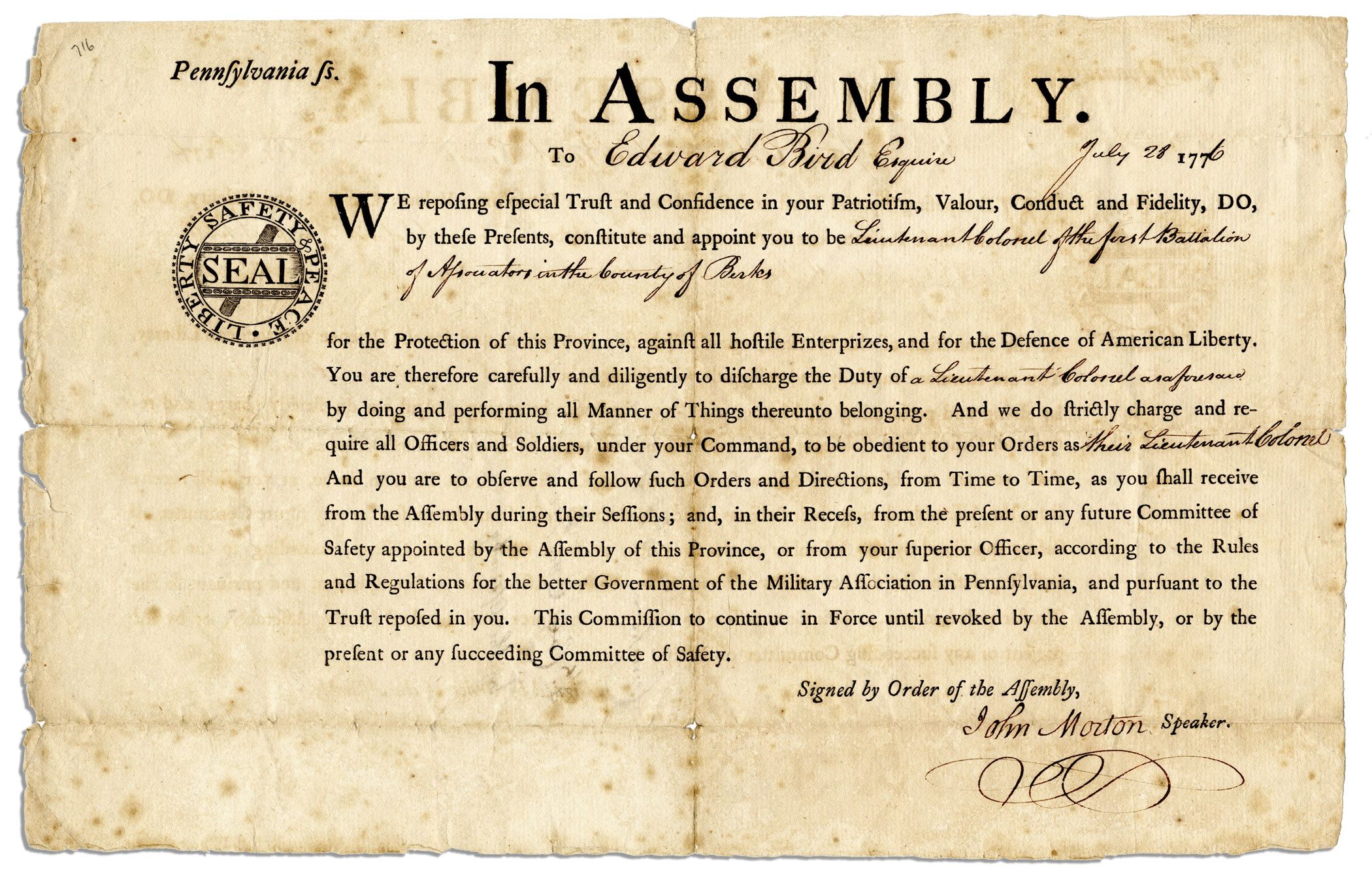
John Morton signed document as Speaker of the Pennsylvania Assembly. Less than one week before he penned his name to the Declaration of Independence, he signs ”John Morton”, appointing Edward Bird to the position of Lieutenant Colonel of the First Battalion of Associators for Berks County. Single page folio document measures 13″ x 8.5″. Foxing, toning, edge wear and minimal separation to folds. In very good condition overall. Sold for $2,520.
FREE APPRAISAL. To buy, auction, sell or consign your William Whipple autograph letter signed that is for sale, please email your description and photos to [email protected] of Nate D. Sanders Auctions (http://www.NateDSanders.com).
We offer the following services for your William Whipple autograph letter signed:
- Appraise William Whipple autograph letter signed.
- Auction William Whipple autograph letter signed.
- Consign William Whipple autograph letter signed.
- Estimate William Whipple autograph letter signed.
- Sell William Whipple autograph letter signed.
- William Whipple autograph letter signed valuation.