
Sell or Auction Your Thomas Aquinas Quaestiones de Duodecim Quodlibet 1470s for Over $10,000 or More at Nate D. Sanders Auctions
FREE APPRAISAL. To buy, auction, sell or consign your Thomas Aquinas Quaestiones de duodecim quodlibet 1470s that is for sale, please email your description and photos to [email protected] of Nate D. Sanders Auctions (http://www.NateDSanders.com).
Sell Your Thomas Aquinas Quaestiones de Duodecim Quodlibet 1470s
Thomas Aquinas (/əˈkwaɪnəs/; Italian: Tommaso d’Aquino, lit. ‘Thomas of Aquino’; 1225 – 7 March 1274) was an Italian Dominican friar, philosopher, Catholic priest, and Doctor of the Church. An immensely influential philosopher, theologian, and jurist in the tradition of scholasticism, he is also known within the latter as the Doctor Angelicus, the Doctor Communis, and the Doctor Universalis. The name Aquinas identifies his ancestral origins in the county of Aquino in present-day Lazio, Italy. Among other things, he was a prominent proponent of natural theology and the father of a school of thought (encompassing both theology and philosophy) known as Thomism. He argued that God is the source of both the light of natural reason and the light of faith. His influence on Western thought is considerable, and much of modern philosophy developed or opposed his ideas, particularly in the areas of ethics, natural law, metaphysics, and political theory.
Below is a recent realized price for a Thomas Aquinas Quaestiones de duodecim quodlibet 1470s item. We at Nate D. Sanders Auctions can obtain up to these amounts or more for you:
Thomas Aquinas Quaestiones de Duodecim Quodlibet 1470s. Sold for over $10,000.

Here are some recent items that our auction house, Nate D. Sanders (http://www.NateDSanders.com) has sold:
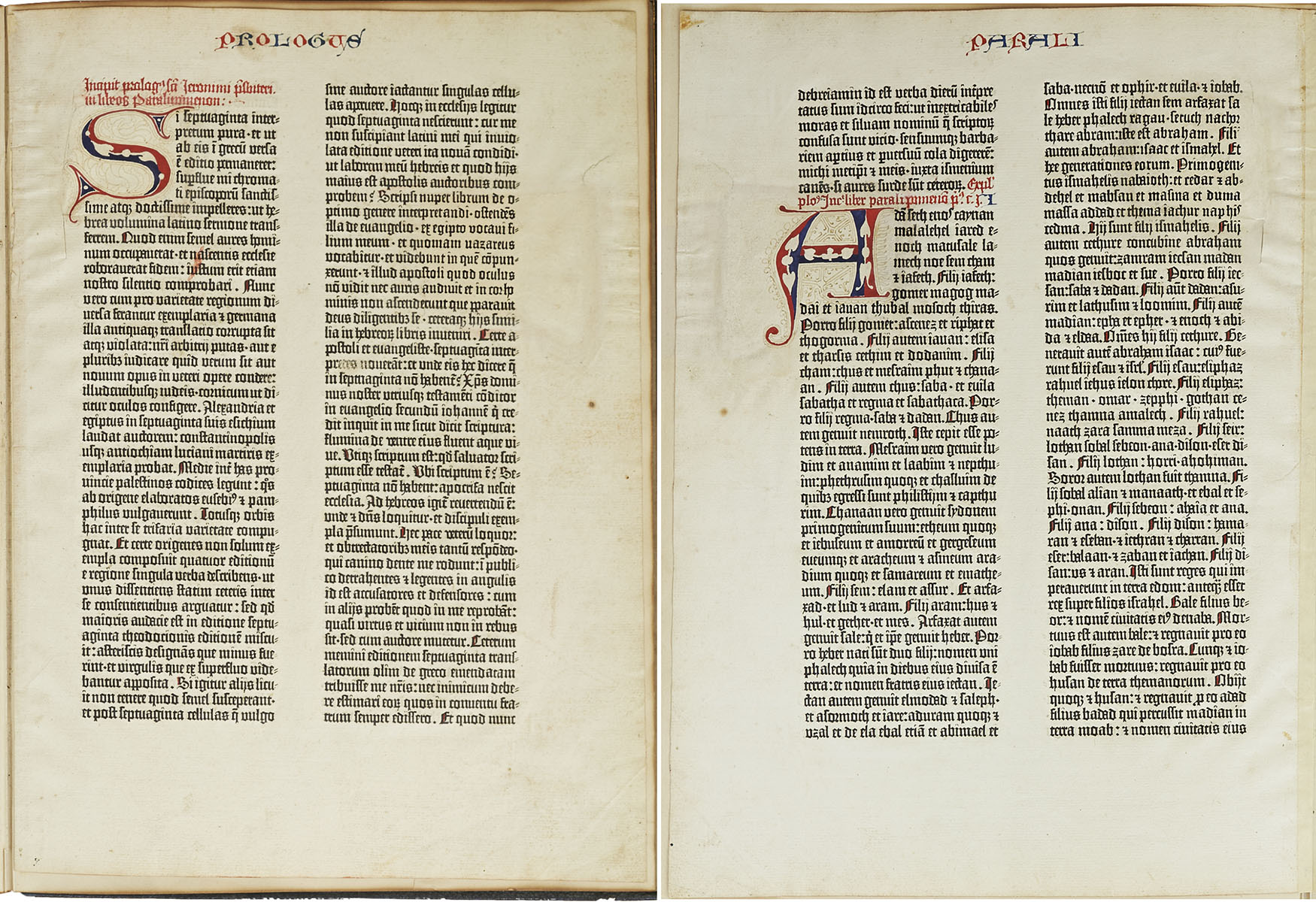
Gutenberg Bible Leaf 193 Chronicles of Old Testament
Scarce leaf from the Gutenberg Bible, one of the earliest major books printed from moveable metal type, the invention that ushered in the Age of Enlightenment by democratizing knowledge through mass production of literature. Printed by Johannes Gutenberg in Mainz, Germany from 1450-1455, less than 50 complete or near-complete copies of the Gutenberg Bible are now extant, with nearly all those housed in public institutions. Singular leaves are also scarce, with the leaf presented here having been acquired by bookseller Gabriel Wells, whose purchase of an incomplete Bible in 1920 gave way to selling the individual leaves alongside an essay by A. Edward Newton entitled “A Noble Fragment”. Leaf is number 193 of the full Latin Bible, with the recto being the Prologue to 1 Chronicles of the Old Testament, and the verso the first part of Chapter 1 of 1 Chronicles. Each page features two columns of 42 lines in dark black Gothic type, accented by red and blue rubrication. Each copy of the Gutenberg Bible differs in its rubrication and illumination, with buyers at the time deciding upon these embellishments after the Bible was printed. The six-line rubricated letters of this leaf were likely added later, restored to match the original style. Leaf measures 11.125″ x 15.375″, bound on edge to portfolio measuring 11.75″ x 16″. Paper quality is still bright with very little foxing or discoloration compared to other examples. A stunning example from the book that changed the course of history. Sold for $136,500.
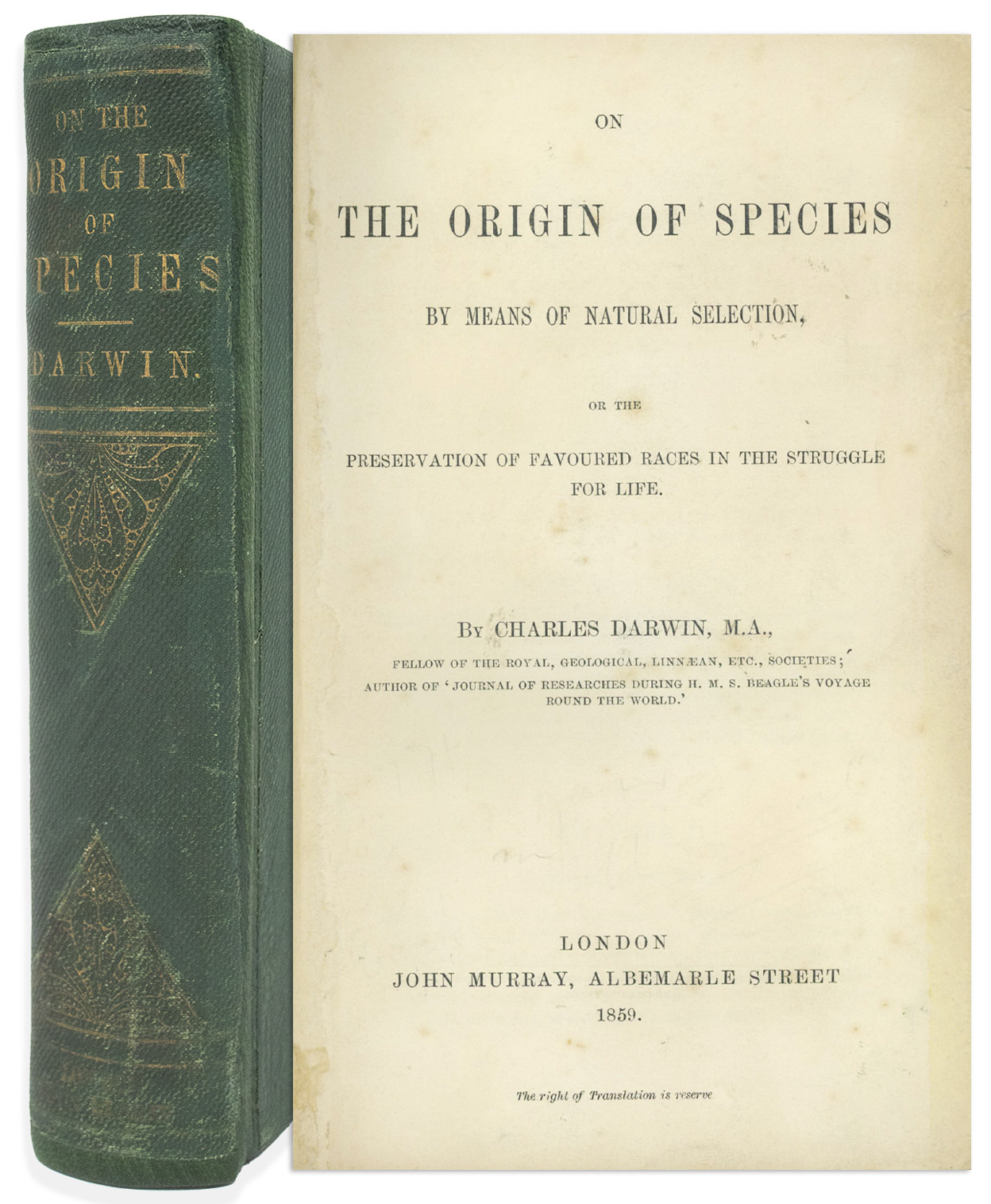
Charles Darwin On the Origin of Species 1st Edition
First edition, first printing of “On the Origin of Species” by Charles Darwin, one of the most important books in the scientific canon. London: John Murray, 1859. In this revolutionary book that upended man’s own view of himself, Darwin posits natural selection as the engine driving species’ evolution, an argument so persuasive that even 19th century religious leaders adjusted their teachings to allow for evolution to work in concert with divine planning. Its importance has only grown in the 150+ years since publication, with Freeman concluding it to be “the most important biological book ever written”. First released on 24 November 1859, its scarcity nearly matches its importance, with the first printing consisting of only 1,250 copies, and the number of extant copies now significantly fewer.
All first printing points are present, including original binding, variant B, title page with copyright information on verso, Table of Contents (pages v-ix) with binder instructions to verso, complete pages 1-502, and folding table present between pages 116-117. Bound in publisher’s full green boards, stamped and lettered in gilt. Overall in very good condition; ads at back of volume have been removed as has half-title page, and endpapers have been replaced. Volume is rebacked using morocco, with original spine laid down. Some shelf wear to boards. Light foxing throughout book, with some chipping, small closed tears with repairs to a few pages, and a few dogeared pages. One small mark on page 109, otherwise no internal writing or marks. Housed in a custom quarter-leather clamshell box. Overall in very good condition, a handsome, presentable copy of this scarce first printing. Sold for $68,250.
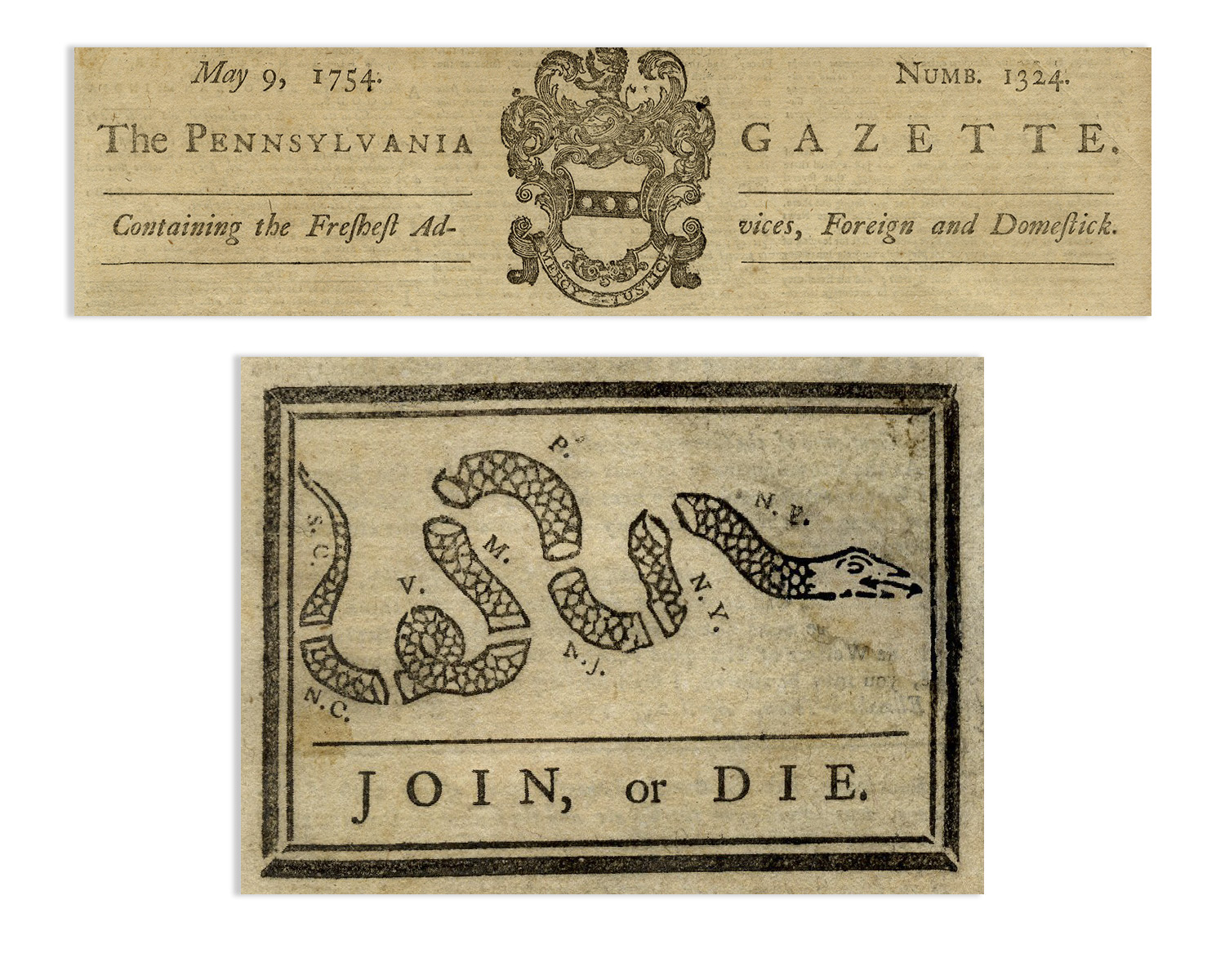
”JOIN, or DIE” Newspaper From Benjamin Franklin’s ”Pennsylvania Gazette” in 1754 — The Most Influential Political Cartoon in America’s History & Only Known Copy Apart From the Library of Congress
The most influential political cartoon in the history of America, the ”JOIN, or DIE” severed rattlesnake designed by Benjamin Franklin and published in his ”Pennsylvania Gazette” on 9 May 1754. This incredibly scarce newspaper is the very first printing of the ”JOIN, or DIE” cartoon, and the only known copy apart from one other housed in the permanent collection at the Library of Congress. Sold for $50,000.
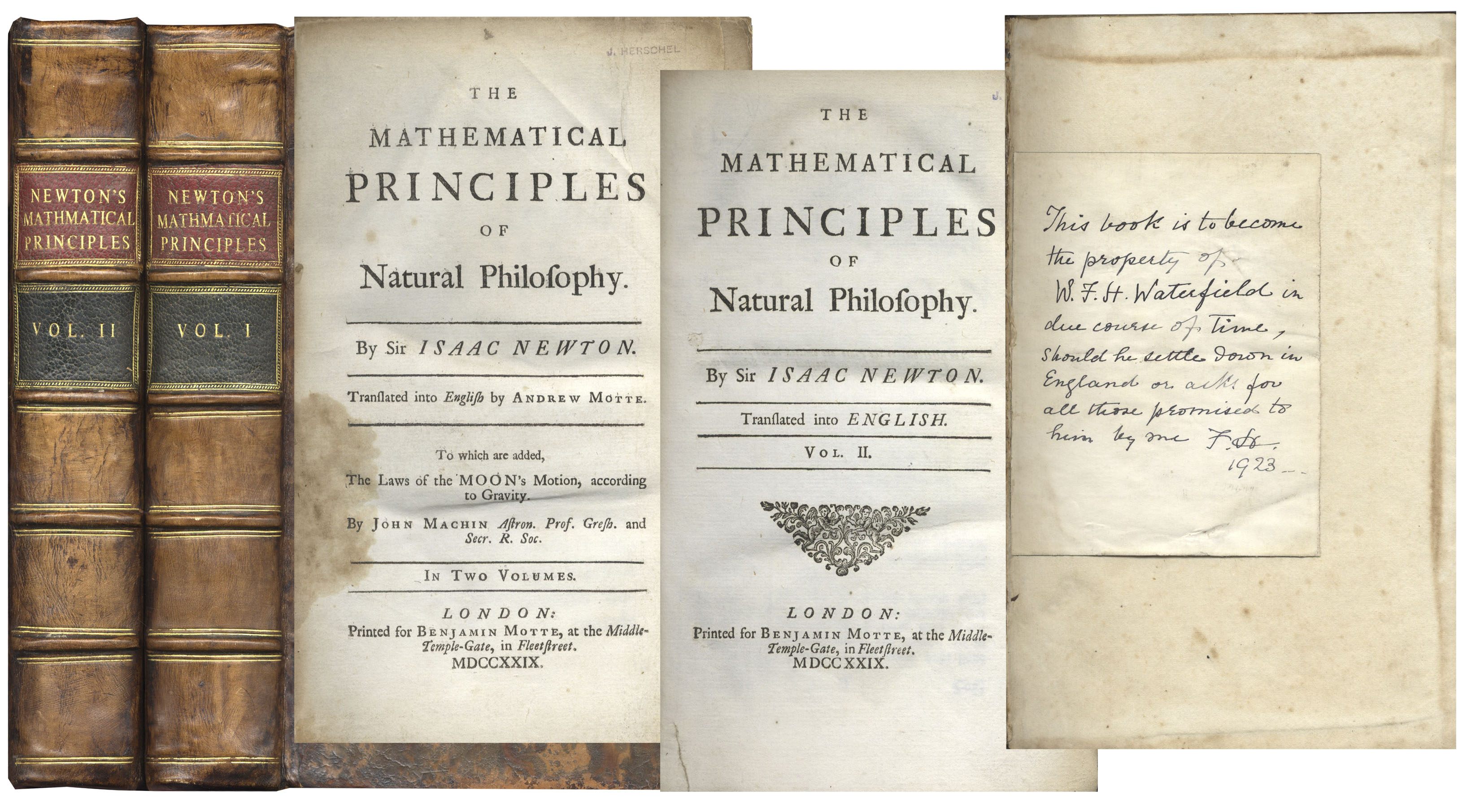
First edition of Sir Isaac Newton’s ”The Mathematical Principles of Natural Philosophy” in two volumes. London: Benjamin Motte, 1729. One of the most important works by the leading mind of the 18th century scientific revolution. Bound in contemporary tree calf, sympathetically rebacked, with gilt tooling to spines. Two octavo volumes measure 5.5” x 8.5” each. Volumes contain two folding letterpress tables and 47 folding engraved plates; the two frontispieces and pp. 385-393 and first 7pp. of index are replaced in facsimile, but hardly distinguishable from the original. The ”Laws of Moon’s Motion” usually found in Vol. II are here bound at end of Vol. I, and with errata for both volumes on verso of E4. Small stain to inner part of title in Vol. I, short tear to lower margin of G1, small section missing from lower margin of M3 and with lower corner cut away of A8 and C4 of ”Laws of Moon’s Motion” (no loss of text). Some marginal dampstaining and occasional soiling and spotting, overall in very good, clean condition with most edges untrimmed. Sold for $22,500.
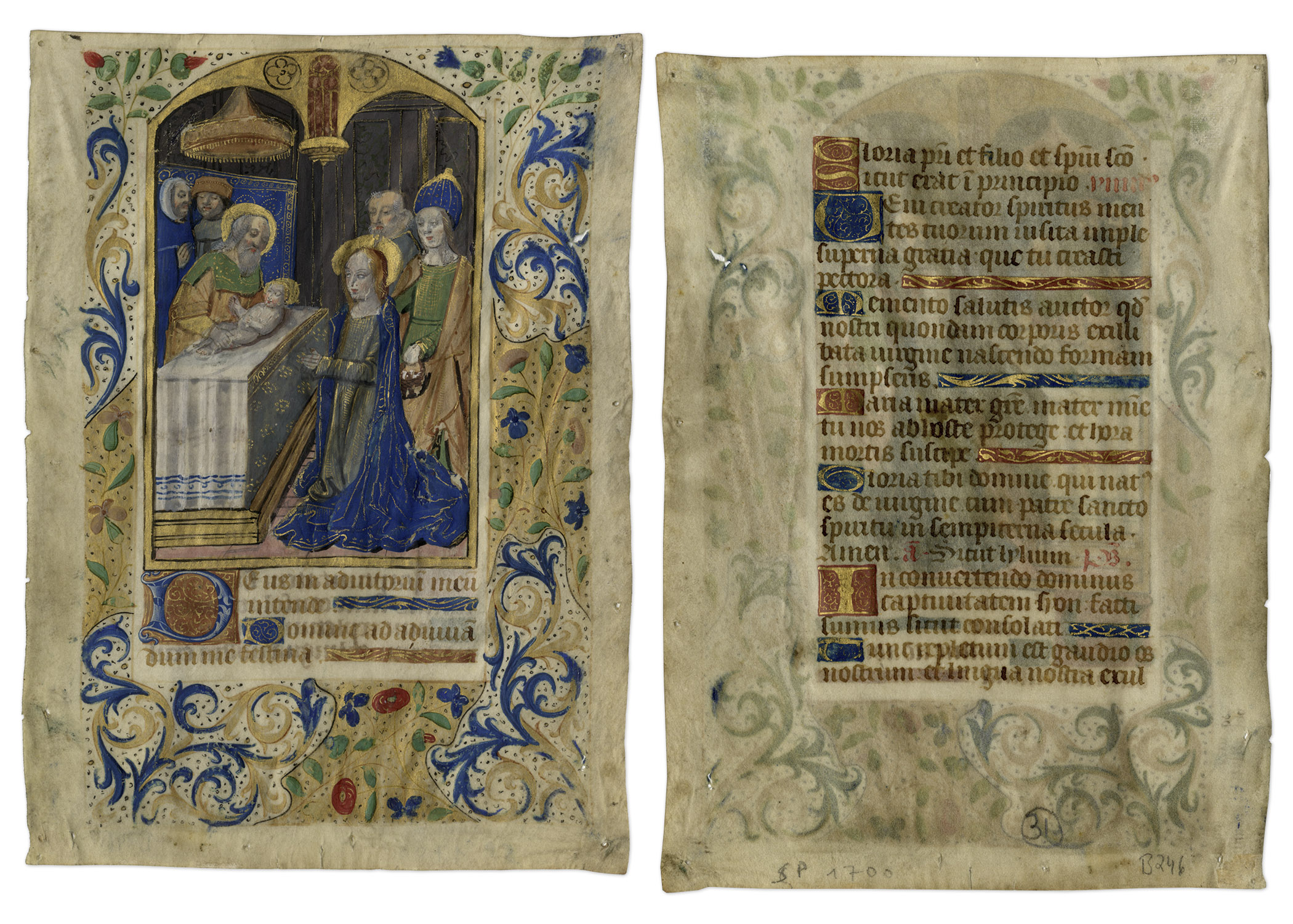
15th Century Hand-Painted Manuscript Page From “Book of Hours” — Illustrates Presentation of Jesus Christ
Hand-painted manuscript page from the liturgical text “Book of Hours”, from Paris, circa 1490. Front of double-sided page illustrates a scene from the presentation of Jesus Christ, who was circumcised on the 8th day after his birth. Includes 3/4 colored acanthus and floral border. Verso has single column with 22 lines of Latin text. Page is made of virgin-vellum and measures 4.25″ x 6″. Near fine condition given age. Sold for $1,469.
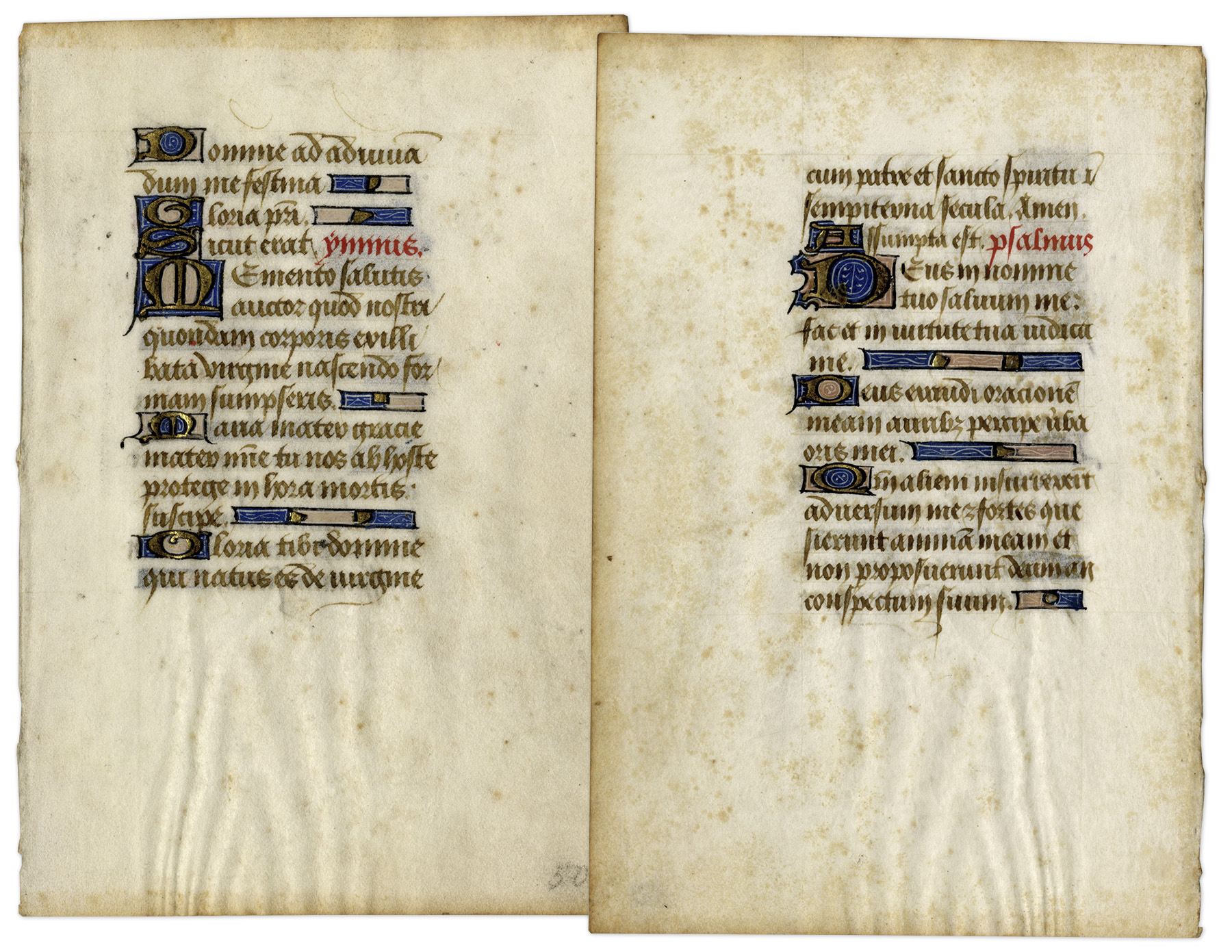
12th Century Hand-Painted Manuscript From ”Book of Hours”
Hand-painted manuscript page from the liturgical text ”Book of Hours”, from Tours in northern France, circa 1250. Double-sided page is beautifully rubricated in bright gold, blue and red. Single columns on each side contain 15 lines of Latin text. Page is made of virgin-vellum and measures 3.5” x 5”. Some rippling to bottom center, minor discoloration to edges and some foxing. Near fine given age. Sold for $1,250.
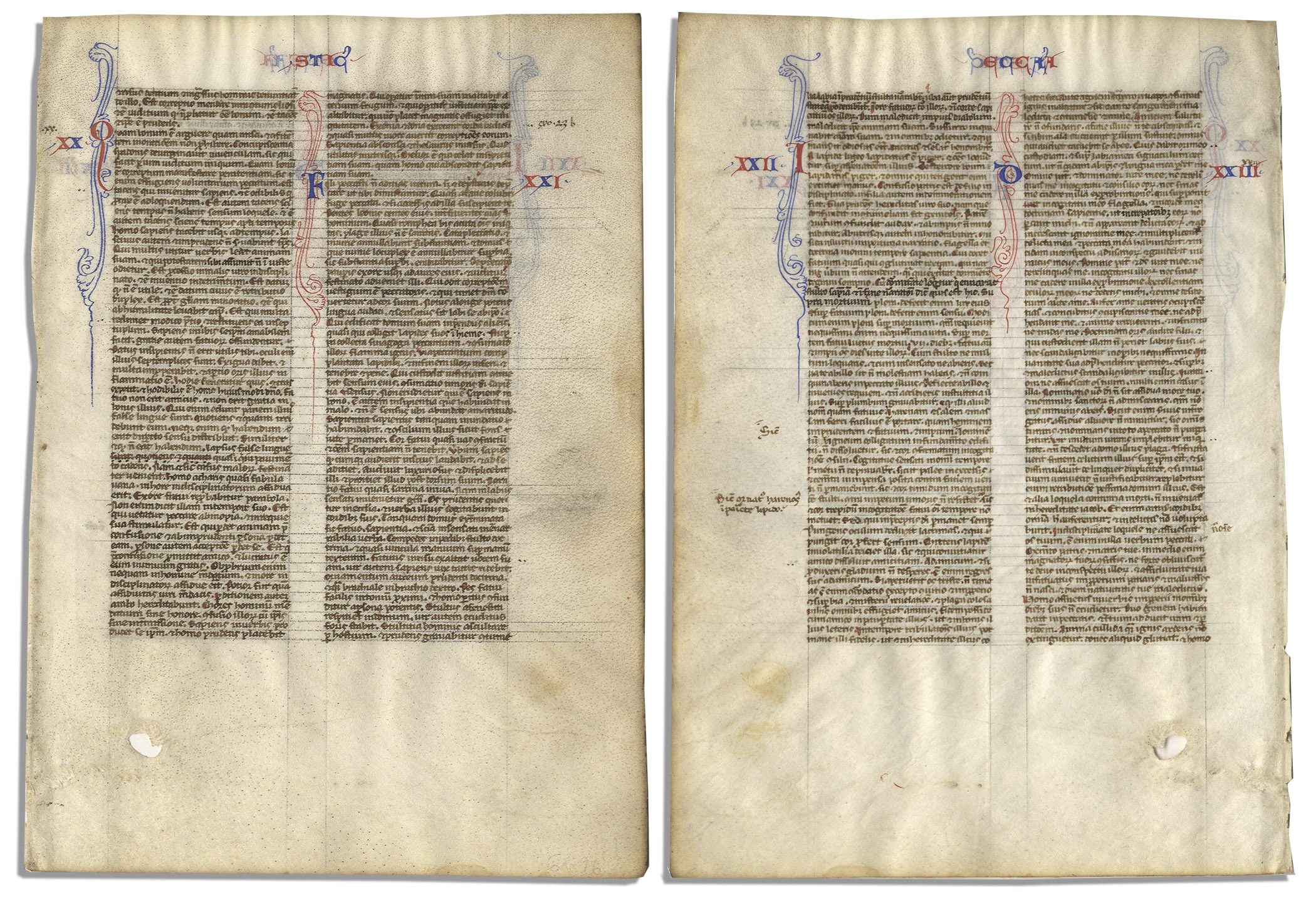
Bible Leaf From the Medieval Age, Circa 1250-1275 — Crusades Era Document on Vellum
Miniature medieval Bible page. Illuminated manuscript Bible page on vellum dates to the mid 13th century when pocket size Bibles were a common means of spreading Christianity to remote areas. Tiny Gothic script in Latin appears in brown ink with red and blue rubrication. Features a total of 56 lines of text, beginning with Ecclesiasticus (Sirach) 20:1 and running through 23:22. Translates in part, ”How much better is it to reprove, than to be angry, and not to hinder him that confesseth in prayer…The slipping of a false tongue is as one that falleth on the pavement: so the fall of the wicked shall come speedily…Flee from sins as from the face of a serpent: for if thou comest near them, they will take hold of thee. The teeth thereof are the teeth of a lion, killing the souls of men…The mourning for the dead is seven days: but for a fool and an ungodly man all the days of their life…” Thin sheet features text on both sides. Measures 4.25” x 6”. Hole in the margin at lower right is likely from original stretching. Very slight buckling to top edge. Near fine given age. Sold for $1,100.
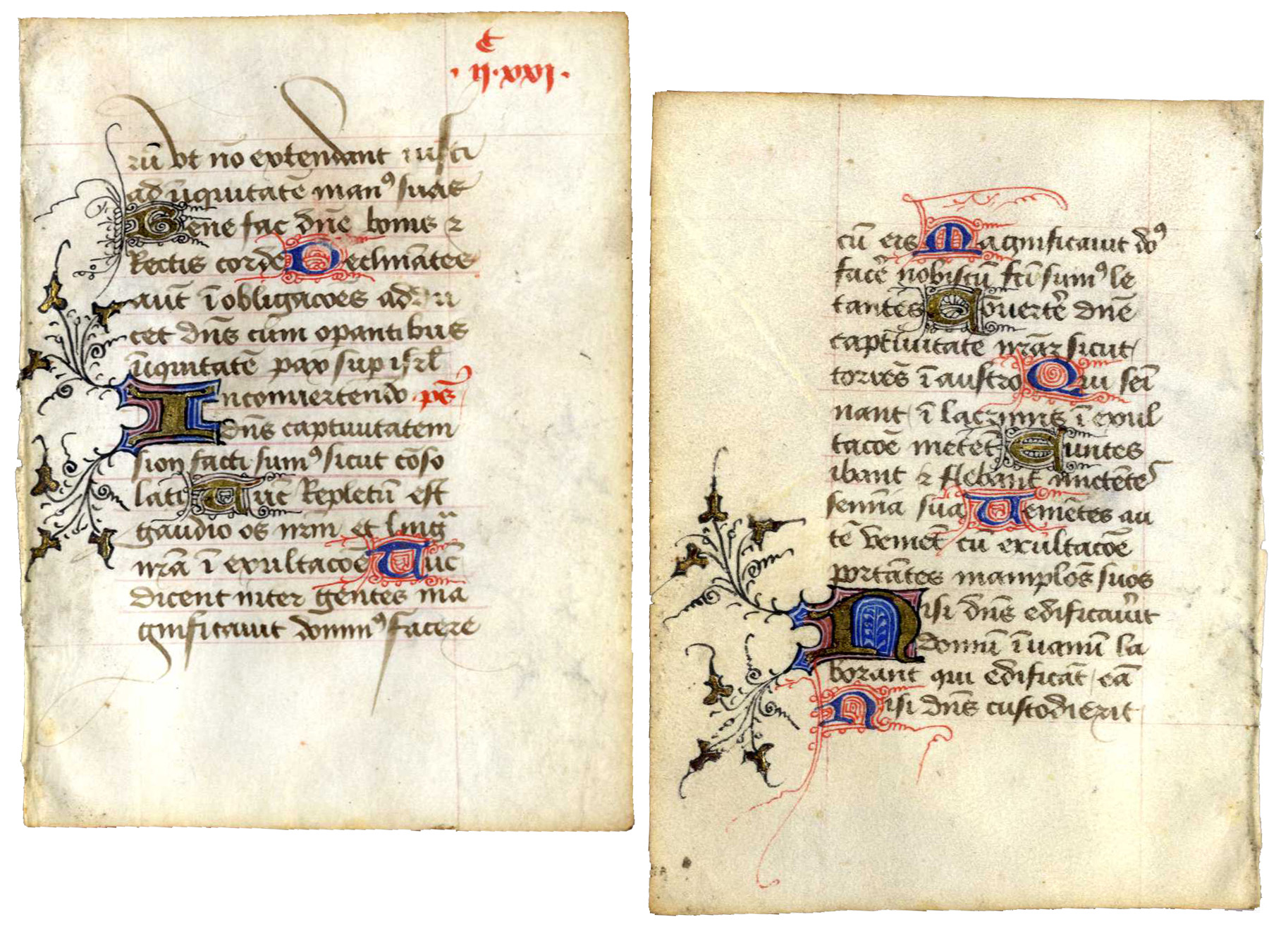
Illuminated Leaf From 15th Century French Psalm Book
Beautiful leaf from a 15th century French Book of Psalms. Fifteen lines of rubricated and gilt text appear on each side of the vellum leaf, written in a Gothic script. These illuminated leaves were created in the middle ages by artist scribes, who wrote in extraordinary detail, embellishing the text with gold, red and blue dyes. Because of the labor involved, the books were quite expensive at the time, and individual leaves have since been collected as works of art. Leaf measures approximately 3″ x 4″. Light toning, else near fine. Sold for $756.
Consign your Thomas Aquinas Quaestiones de duodecim quodlibet 1470s at Nate D. Sanders Auctions. Send a description and images of your Thomas Aquinas Quaestiones de duodecim quodlibet 1470s to us at [email protected].
FREE APPRAISAL. To buy, auction, sell or consign your Thomas Aquinas Quaestiones de duodecim quodlibet 1470s that is for sale, please email your description and photos to [email protected] of Nate D. Sanders Auctions (http://www.NateDSanders.com).