
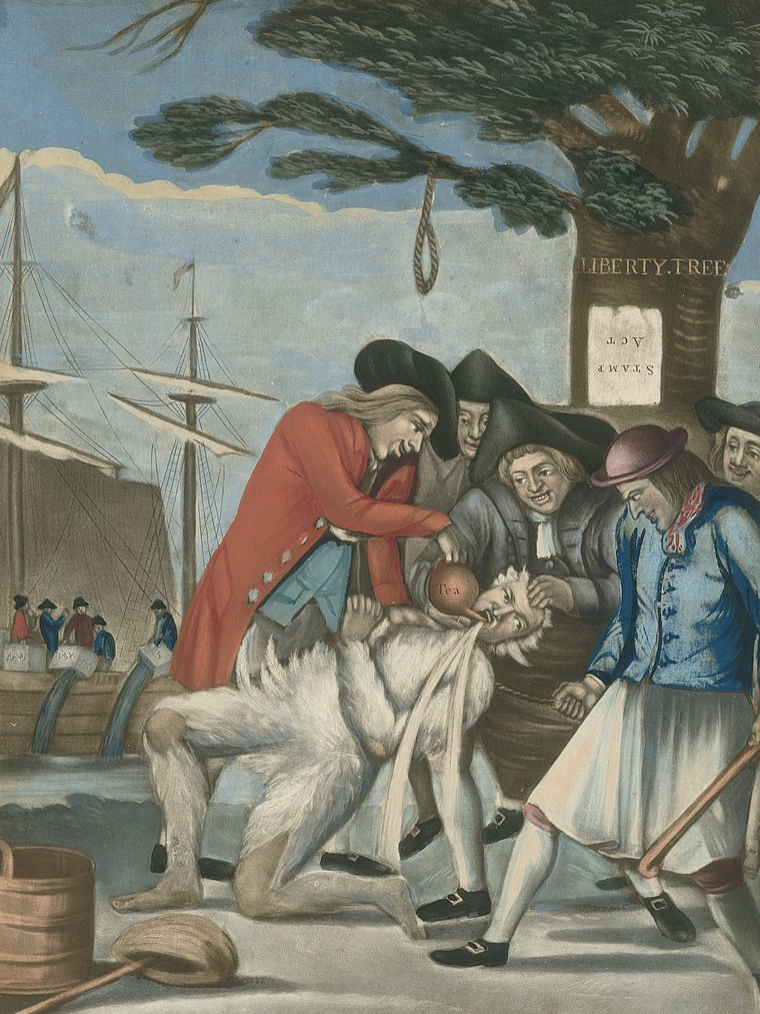
Sell or Auction Your Phillip Dawe Bostonian’s Paying The Excise Man Mezzotint 1774 for Nearly $20,000 or More at Nate D. Sanders Auctions
FREE APPRAISAL. To buy, auction, sell or consign your Phillip Dawe Bostonian’s Paying the Excise Man mezzotint 1774 that is for sale, please email your description and photos to [email protected] of Nate D. Sanders Auctions (http://www.NateDSanders.com).
Sell Your Phillip Dawe Bostonian’s Paying The Excise Man Mezzotint 1774
Philip Dawe (c.1730 – 13 August 1832) was an English mezzotint engraver, artist and political cartoonist. He is thought to have been born in London in the 1730s, the son of a city merchant. He died in Kentish Town, London. He was married to Jane and they had six children, three of whom also became artists: George Dawe, Henry Edward Dawe and James Philip Dawe.
Below is a recent realized price for a Phillip Dawe Bostonian’s Paying the Excise Man mezzotint 1774 item. We at Nate D. Sanders Auctions can obtain up to these amounts or more for you:
Phillip Dawe Bostonian’s Paying The Excise Man Mezzotint 1774. Sold for nearly $20,000.
Here is an example of The Bostonians Paying the Excise-man, or Tarring and Feathering:
Here are some recent items that our auction house, Nate D. Sanders (http://www.NateDSanders.com) has sold:
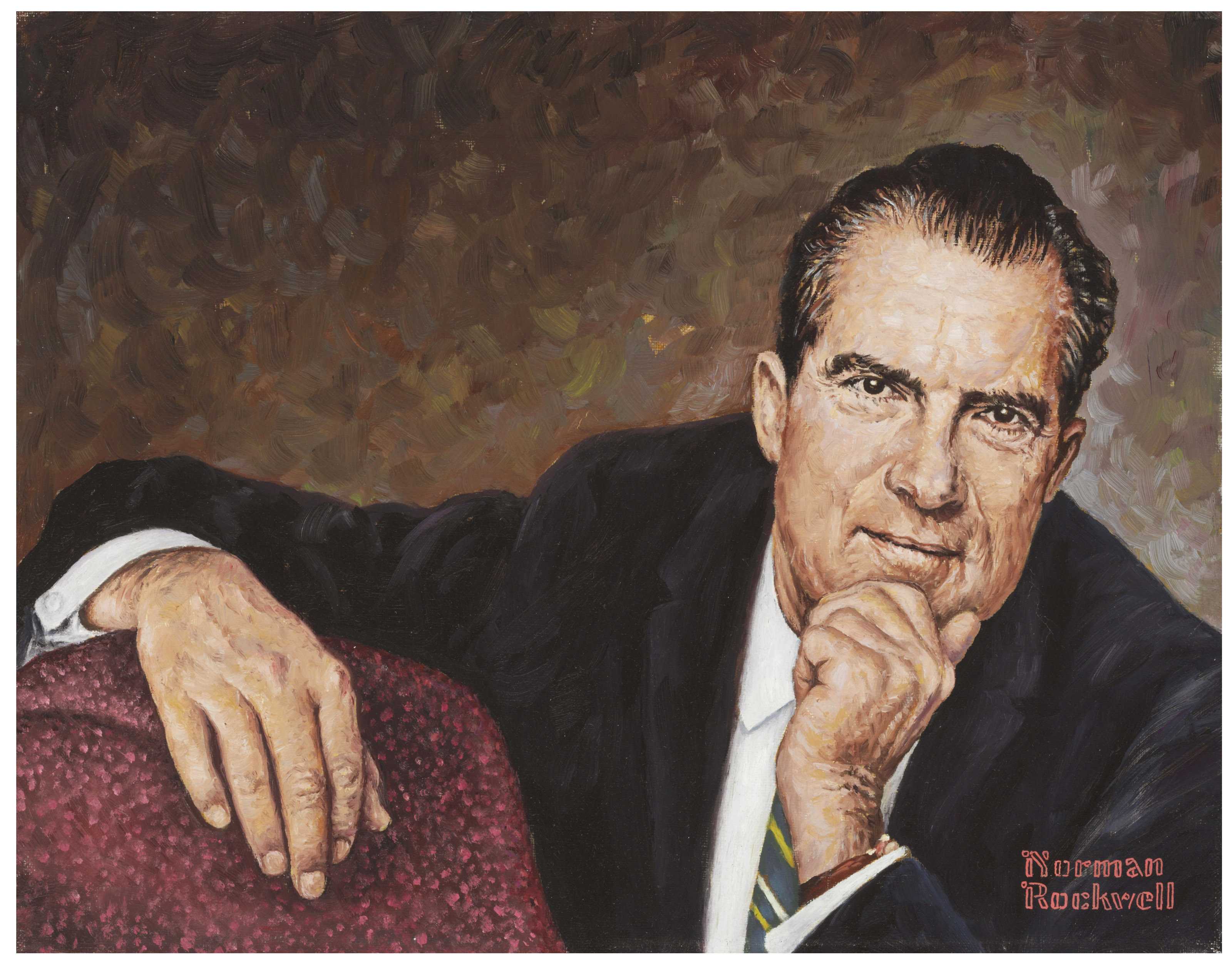
Norman Rockwell oil on canvas painting of Richard Nixon, signed ”Norman / Rockwell” at lower right. Painting is the study for ”Mr. President (Richard Nixon)”, which resides in the National Portrait Gallery, Smithsonian Institution, and was published in the 4 February 1969 issue of ”Look” magazine, captioned ”Weighed, yet buoyed, by the American past and present, Richard M. Nixon, 37th President, faces the future in this Rockwell portrait”.
Rockwell painted this study in late 1968 of then President-Elect Richard Nixon, a man whose portrait he found ”elusive” but whose features here are unmistakenly Nixon, revealing at the same time both the guardedness and warmth of the 37th President. As the premiere portraitist of the 20th century, one would expect no less from Rockwell. Oil on canvas measures 14” x 11”. Provenance is from Judy Goffman Fine Art of New York, and then subsequently the Charles E. Sigety Collection. Exhibited at the Mississippi Museum of Art in ”Norman Rockwell: The Great American Storyteller” from 2 March-15 May 1988, no. 64. Painting is in very good condition, with a stretcher bar mark along upper edge. Wax lined, with no inpainting. Sold for $125,000.
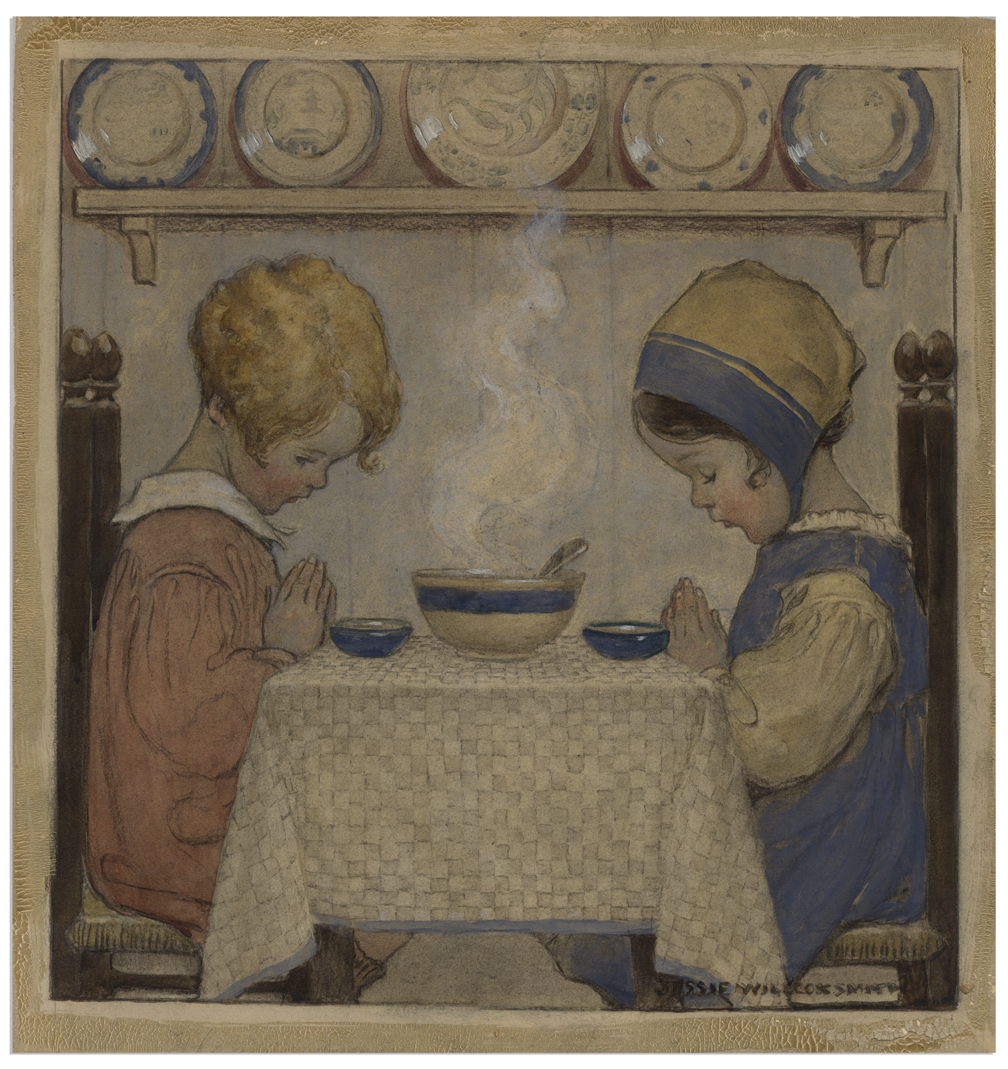
Jessie Willcox Smith Original Cover Art for ”Good Housekeeping” From November 1920 Entitled ”We Give Thee Thanks”
Beloved American illustrator, Jessie Willcox Smith original cover art for the November 1920 issue of ”Good Housekeeping” as well as the April 1922 issue of the UK edition, entitled ”We Give Thee Thanks”. Mixed media on illustration board measures 18.25” x 19”, showing two children praying before their meal. Signed ”Jessie Willcox Smith” at lower right. Artwork is one of Willcox Smith’s most memorable pieces, with limited edition lithographs even being made of it, a quintessential example of her work featuring two gently postured children in a moment of gratitude and familial warmth.
Jessie Willcox Smith was the exclusive cover artist for ”Good Housekeeping” from 1917-1933, and was the second woman inducted into the Society of Illustrators Hall of Fame, followed shortly thereafter by Elizabeth Shippen Green and Violet Oakley, fellow members of the Red Rose Girls, a group of female artists who flourished during the Golden Age of Illustration. Very good condition with no restoration apparent under blacklight. Artwork was given to Anne Champe Orr, the needlework editor for ”Good Housekeeping”, and then by descent to consignor. Sold for $82,500.
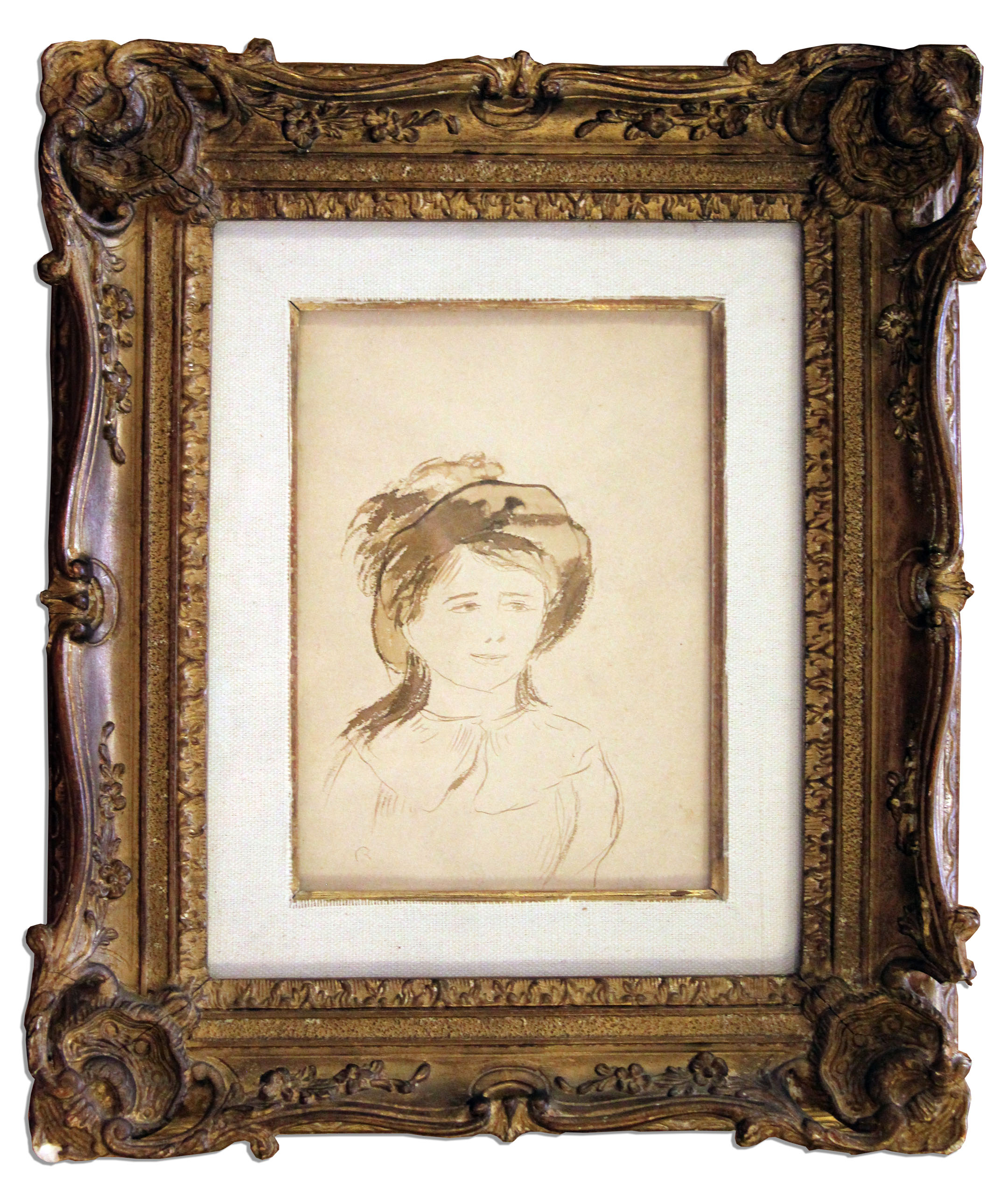
Pierre-Auguste Renoir Drawing — Portrait of a Young Girl ”Fillette”
French Impressionist master Pierre-Auguste Renoir drawing, pen and ink with ink wash of a young girl with a hat, entitled ”Fillette”. The drawing, created circa 1882, is signed with the initial, ”R”. Renoir, who had been painting Parisian scenes for many years, saw his fame take off when, along with other Impressionist painters, including Monet, Degas and Cezanne, his work was represented in the first Impressionist Exhibition in 1874. He painted scenes of people at work and play, often painting women and girls. He was known for his free brush strokes and the warm sensuality present in the light and color of his palette. Two of Renoir’s most famous paintings, ”Luncheon of the Boating Party” and ”Girl With a Hoop”, were completed during the early 1880’s when this drawing was made. The drawing, measuring 5.5” x 7.75”, is in fine condition. With provenance from Sotheby’s. Also featured in: (1) page 171, Vol. II of ”Pastels & Drawings of Pierre-Auguste Renoir” by Ambroise Vollard. Paris: 1918; (2) page 568, Vol. II of ”Renoir. Catalogue Raisonne of the Paintings, Pastels, Drawings and Watercolours 1882-1894” by Guy-Patrice & Michel Dauberville. Paris: 2009. Superb Renoir drawing. Sold for $65,959.
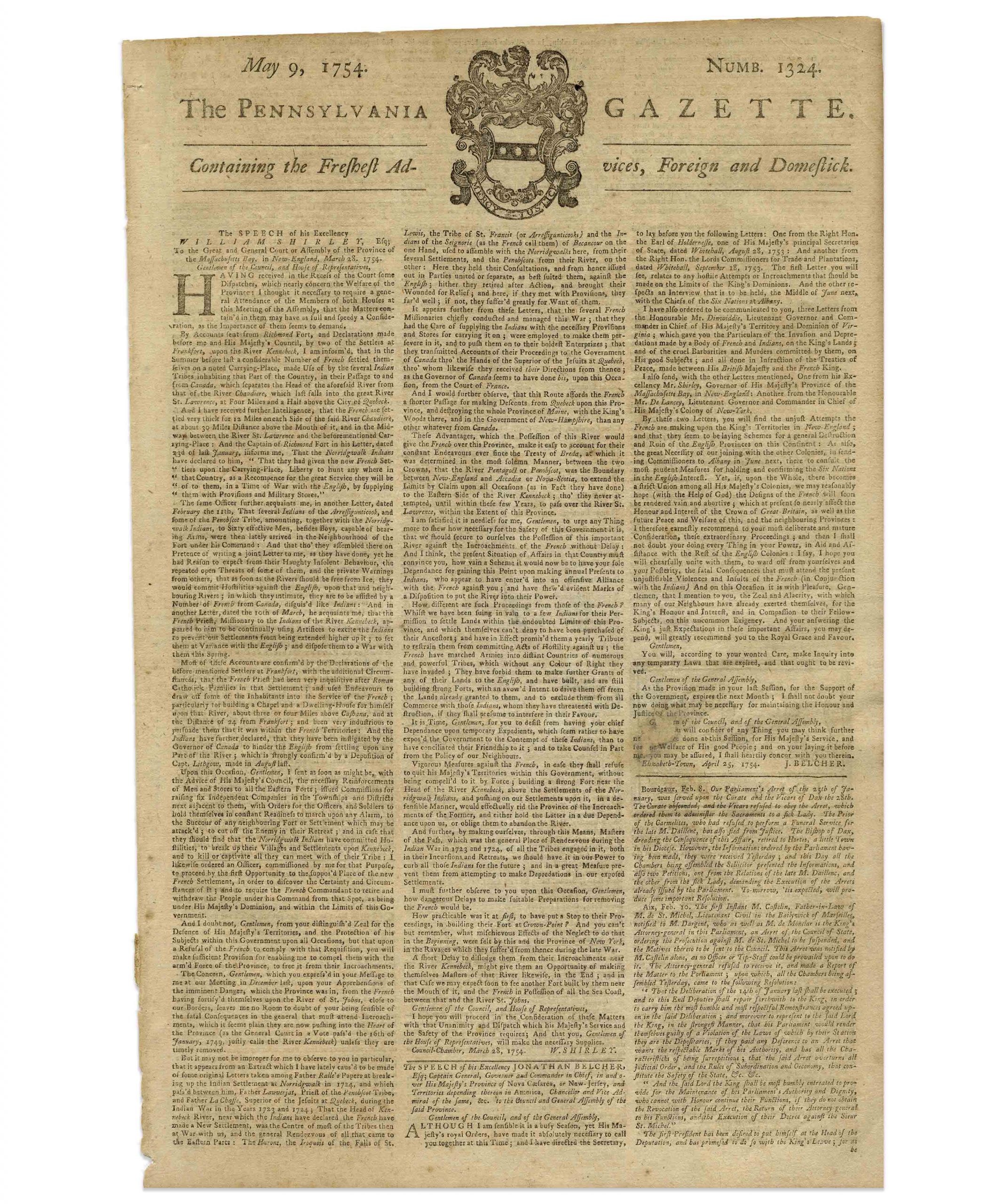
The most influential political cartoon in the history of America, the ”JOIN, or DIE” severed rattlesnake designed by Benjamin Franklin and published in his ”Pennsylvania Gazette” on 9 May 1754. This incredibly scarce newspaper is the very first printing of the ”JOIN, or DIE” cartoon, and the only known copy apart from one other housed in the permanent collection at the Library of Congress.
Frustrated by the colonists’ inability to join forces against westward expansion by the French, Franklin created this cartoon of a rattlesnake, cut into 8 pieces symbolizing the American colonies, to dramatically impart the effective message: join together as one cohesive body, or die. Along with the cartoon, Franklin published an editorial in the newspaper, urging the colonists to work together, reading in part, ”…The Confidence of the French in this Undertaking seems well-grounded on the present disunited State of the British Colonies…while our Enemies have the very great Advantage of being under one Direction, with one Council, and one Purse…”
Little did Franklin know at the time that his symbol of the dis-united rattlesnake would echo over twenty years later to inspire the colonists to unite against the British – Paul Revere added the ”JOIN, or DIE” cartoon to the nameplate of his paper, the ”Massachusetts Spy”, and even later, with the ”Don’t Tread on Me” flag, any individual or group whose personal liberty is threatened. The phrasing has also proved highly enduring, likely influencing John Stark, the Revolutionary War General from New Hampshire whose toast, ”Live free or die: Death is not the worst of evils”, inspired New Hampshire’s motto, and again suggests that personal liberty is one of the highest human values, and a founding tenet of the United States.
Franklin’s choice of a rattlesnake is curious for several reasons: as the timber rattlesnake was found throughout the colonies but not England, Franklin argued in an earlier 1751 editorial that the colonists should ship rattlesnakes to England in exchange for the criminals that England was sending to America. Franklin now, however, seems to fully embrace the rattlesnake as metaphor, and would argue, during the American Revolution, its virtues. Using a pseudonym to conceal his identity, he wrote in 1775, ”…she has no eye-lids-She may therefore be esteemed an emblem of vigilance.-She never begins an attack, nor, when once engaged, ever surrenders…to those who are unacquainted with her, she appears to be a most defenseless animal; and even when those weapons are shown and extended for her defense, they appear weak and contemptible; but their wounds however small, are decisive and fatal:-Conscious of this, she never wounds till she has generously given notice, even to her enemy, and cautioned him against the danger of stepping on her.-Was I wrong, Sir, in thinking this a strong picture of the temper and conduct of America?”
While the British loyalists played upon Franklin’s symbolism of the rattlesnake, arguing that the colonists were deceptive and cunning, Franklin turned the characterization on its head, skilled and interested as he was in the art of propaganda. Ultimately, the symbolism would prove highly enduring and compelling: both the idea of uniting to fight a greater, more powerful enemy, and the power of a sudden, deadly attack by an underestimated opponent.
Four page newspaper (without advertising) measures 9.75” x approximately 15”, with an irregularly trimmed top edge. Expert restoration to head of snake, and light uniform toning, consistent with age. Newspaper has been well-preserved, in very good to near fine condition. One of the most important newspapers in America’s colonial history and a cornerstone of her philosophical underpinnings. Sold for $50,000.
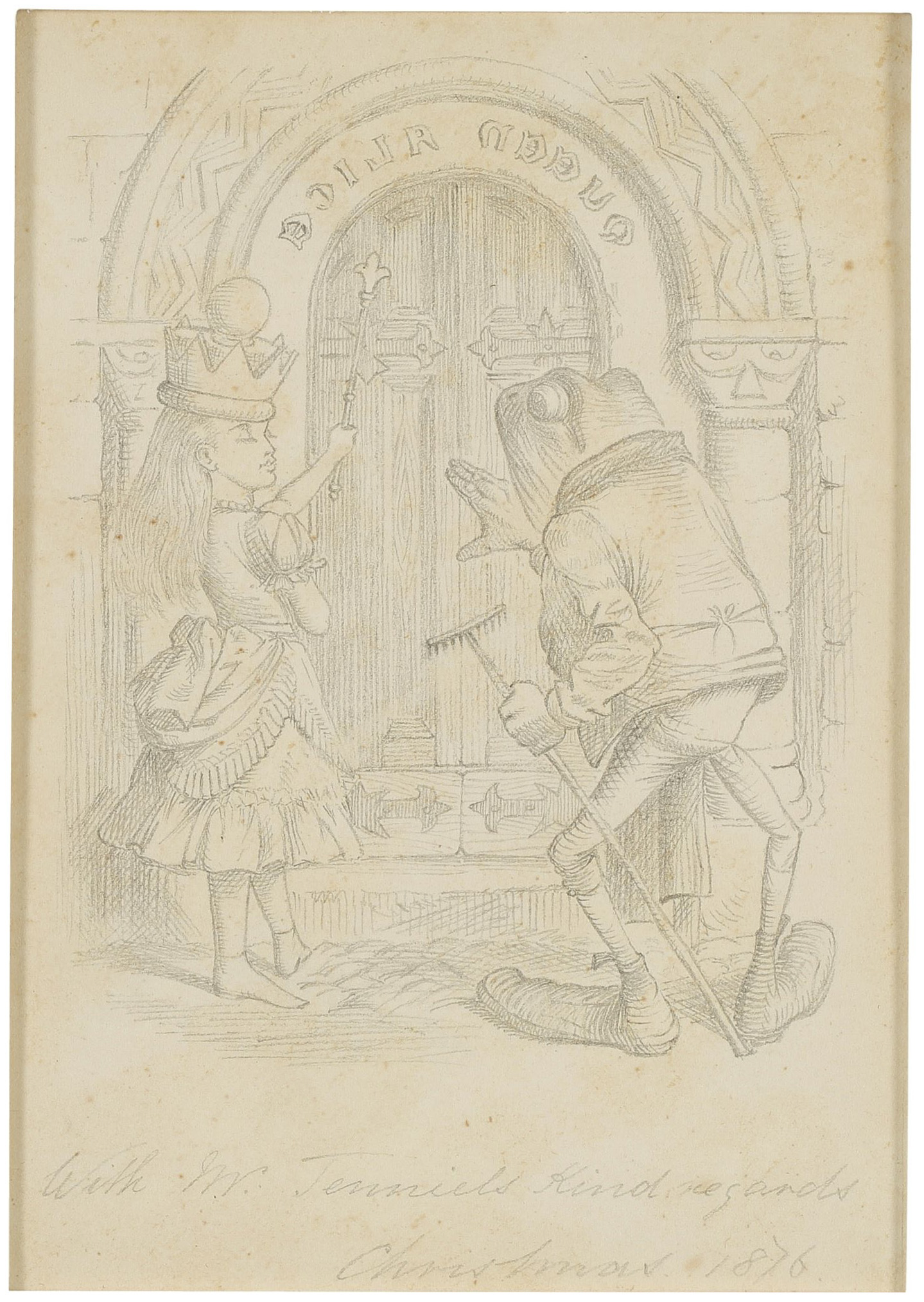
Sir John Tenniel original illustration from ”Through the Looking Glass”, the sequel to the enormously successful ”Alice’s Adventures in Wonderland”. This illustration appears on page 201 of the first edition of ”Looking Glass”, done to illustrate the text, ”She was standing before an arched doorway over which were the words QUEEN ALICE in large letters…” A presentation inscription by Tenniel is written to the lower margin, ”With Mr. Tenniel’s kind regards / Christmas 1876”. Pencil drawing was done sometime between 1869-1871 when Tenniel again collaborated with Lewis Carroll in illustrating his novel, an undertaking that Tenniel first rejected due to the time-consuming nature of the work: after drawing preliminary sketches, Tenniel would transfer the artwork onto woodblocks using tracing paper and then finish shading on the blocks. The Brothers Dalziel would then produce engravings from the blocks. Tenniel at first rejected Carroll’s offer to illustrate ”Looking Glass”, but ultimately relented as Carroll could find no other illustrator that matched Tenniel’s ”grotesque” interpretation of the fantasy creatures he envisioned. Drawing measures 3.25” x 4.5”, archivally matted and framed to 11.25” x 12.75”. Very light foxing to margins and light uniform toning, overall near fine condition. From the Bronson Winthrop collection of Tenniel drawings: Parke-Bernet sale of 12 March 1945, lot 164. Sold for $37,500.
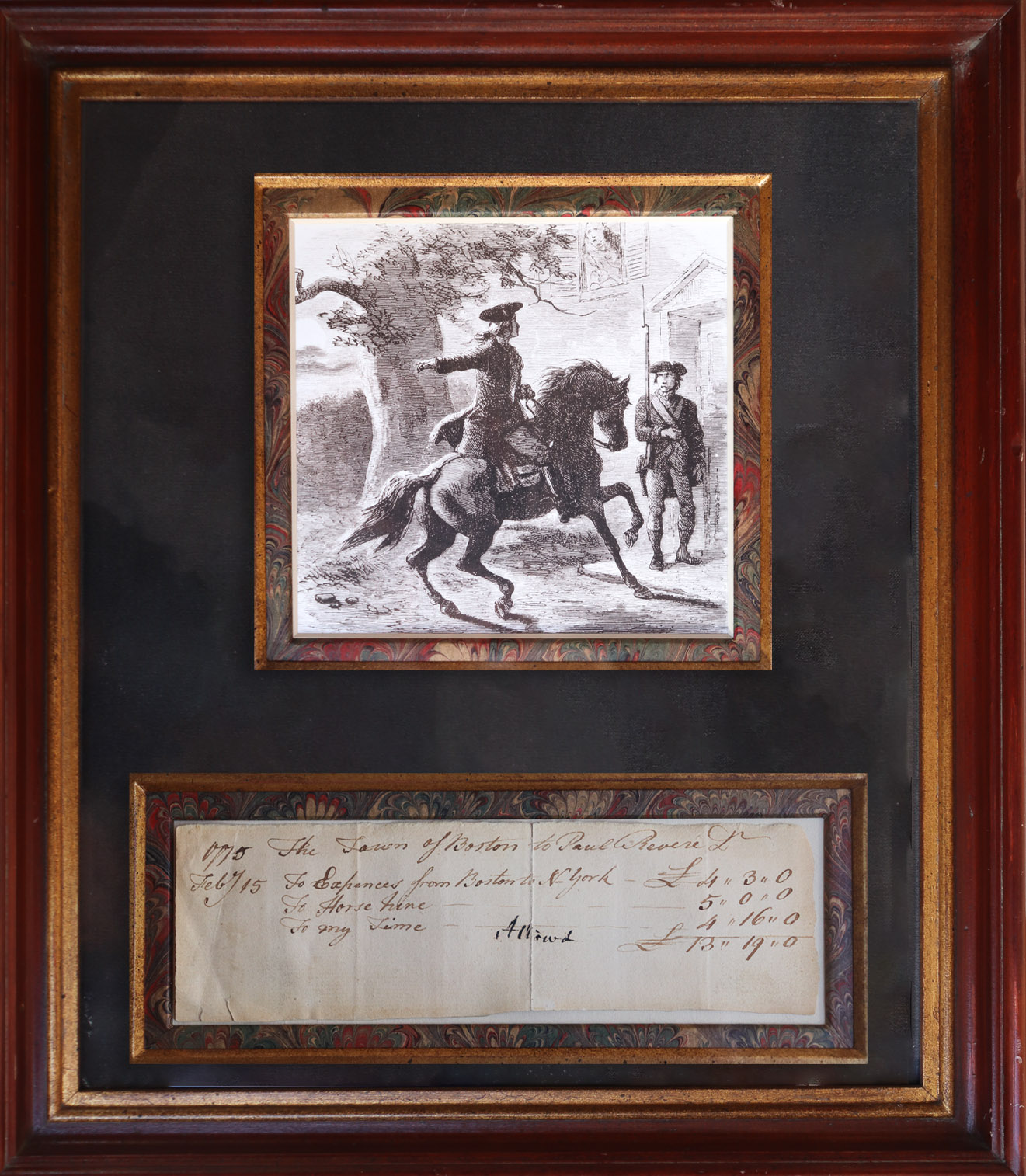
Very scarce receipt signed by Paul Revere regarding one of his famous horseback rides, dated 15 February 1775 just two months before his Midnight Ride warning colonists that ”The British Are Coming” before the Battle of Lexington & Concord. As official courier for the Boston Committee of Public Safety, Revere was tasked with riding from Boston to Philadelphia and New York, with historians documenting 18 such rides from December 1773 to November 1775. This was likely the last of the rides before the Revolutionary War began, and is only one of two receipts for the rides ever to appear at auction, with the other selling at Christie’s for $140,000 in 2002. Composed entirely in the hand of Revere, receipt documents expenses ”from Boston to N. York” in the amount of 4 pounds, 3 shillings, and additional expenses for his Horse, and his time, all totaling 13 pounds, 19 shillings. Dated 15 February 1775 by Revere. Document measures 7.5” x 2.25”, framed with an engraving of Revere on horseback to a size of 15.75” x 18”. Uneven edges, clean vertical separation and light chipping at lower left edge. Overall very good plus condition with legible and strong handwriting. With Profiles in History COA. Sold for $36,603.
Currier & Ives Hand-Colored Lithograph Measuring — 19th Century Print Remains Boldly Colored
Currier and Ives was a successful American printmaking firm based in New York City from 1835 to 1907 headed first by Nathaniel Currier, and later jointly with his partner James Merritt Ives. The prolific firm produced prints from paintings by fine artists as black and white lithographs that were hand colored. Lithographic prints could be reproduced quickly and purchased inexpensively, and the firm called itself “the Grand Central Depot for Cheap and Popular Prints” and advertised its lithographs as “colored engravings for the people”. The firm adopted the name “Currier and Ives” in 1857.
Beautiful Currier & Ives hand-colored lithograph entitled “The Life of a Hunter. ‘A tight fix’”. Produced in 1861 on wove paper, lithograph measures 28″ x 21.5″, framed to 39″ x 32.25″. Very well-preserved with deep, rich colors. A few small repaired tears to margin, with two extending slightly into the image at top and bottom right, though nearly indiscernible; also with faint discoloration to margins, else near fine condition. A rare lithograph so well preserved by the storied print makers. Sold for $31,680.

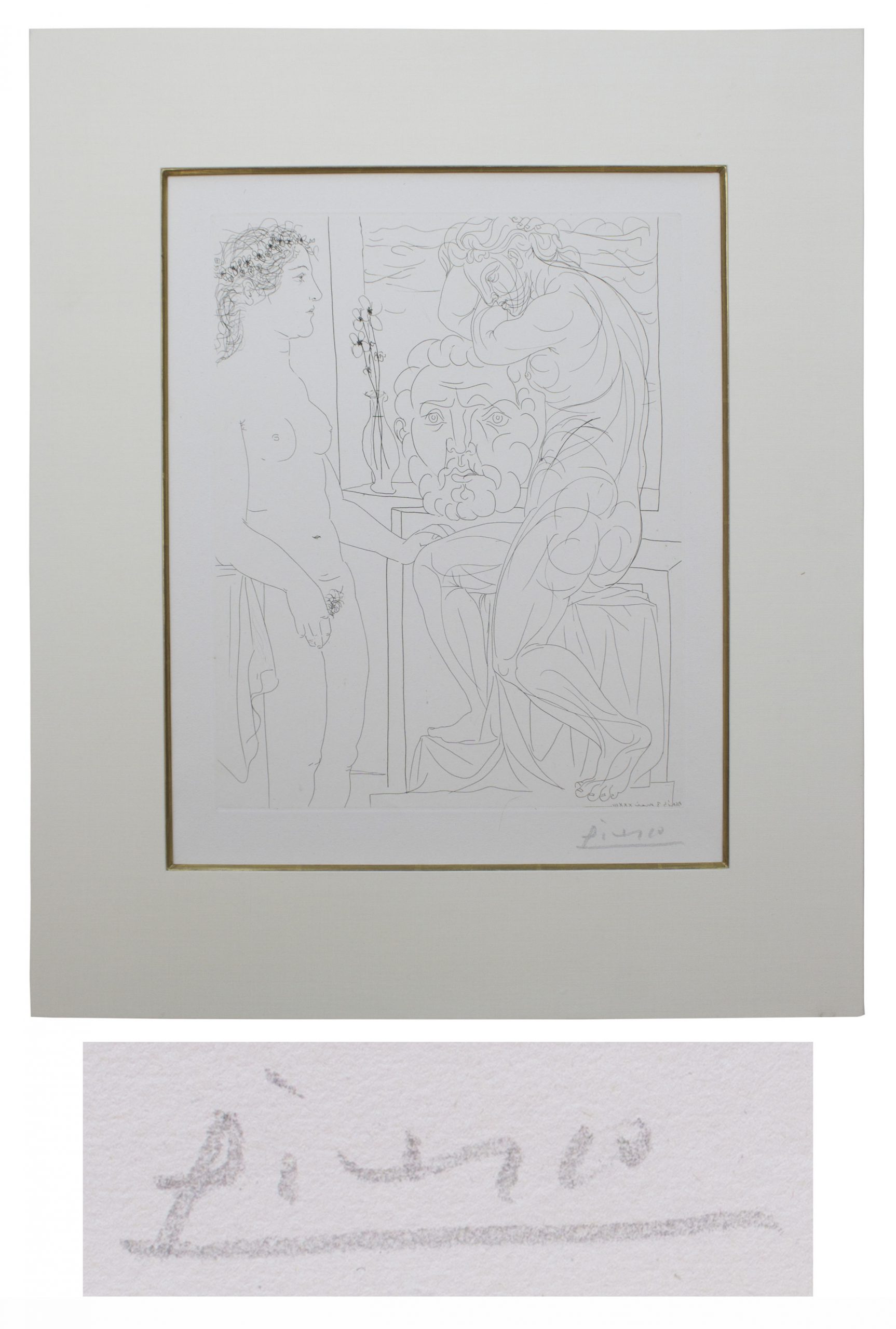
Pablo Picasso Signed “Modele nu et Sculptures” Etching — From the Desirable Vollard Suite of Etchings
Pablo Picasso “Modele nu et Sculptures” etching, signed by Picasso in pencil on the lower margin. Created in May 1933 in Paris, etching is plate 72 of the desirable Vollard Suite, a set of neoclassical etchings commissioned by dealer Ambroise Vollard. From an edition of 250, on Montval laid paper with the Galatea watermark just underneath Picasso’s signature. Paper measures 15.25″ x 19.75″, framed to 24.25″ x 28″. In very good to near fine condition with two imperceptible spots of foxing at edge of image. Catalog raisonne reference: Bloch 185 and Baer 344. Sold for $11,550.
FREE ESTIMATE. To buy, auction, sell or consign your Phillip Dawe Bostonian’s Paying the Excise Man mezzotint 1774 that is for sale, please email your description and photos to [email protected] of Nate D. Sanders Auctions (http://www.NateDSanders.com).