
Sell or Auction Your Lord Charles Beauclerk Canada Insurrection 1840 for up to Over $7,000 or More at Nate D. Sanders Auctions
FREE APPRAISAL. To buy, auction, sell or consign your Lord Charles Beauclerk Canada Insurrection 1840 that is for sale, please email your description and photos to [email protected] of Nate D. Sanders Auctions (http://www.NateDSanders.com).
Free Appraisal, Auction or Sell Your Lord Charles Beauclerk Canada Insurrection 1840
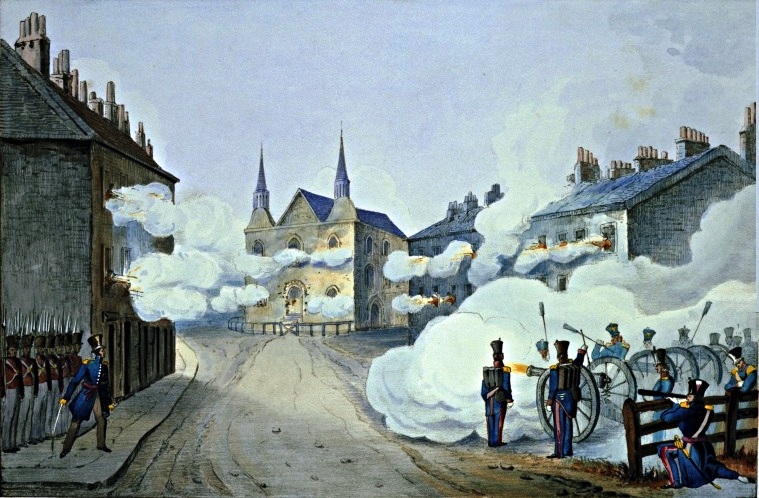

Below is a recent realized price for a collection of lithographs by Lord Charles Beauclerk of the Canada Insurrection 1840. We at Nate D. Sanders Auctions can obtain up to this amount or more for you:
Lord Charles Beauclerk Canada Insurrection 1840. Sold for Over $7,000.
The following are some prices we have realized for related items:
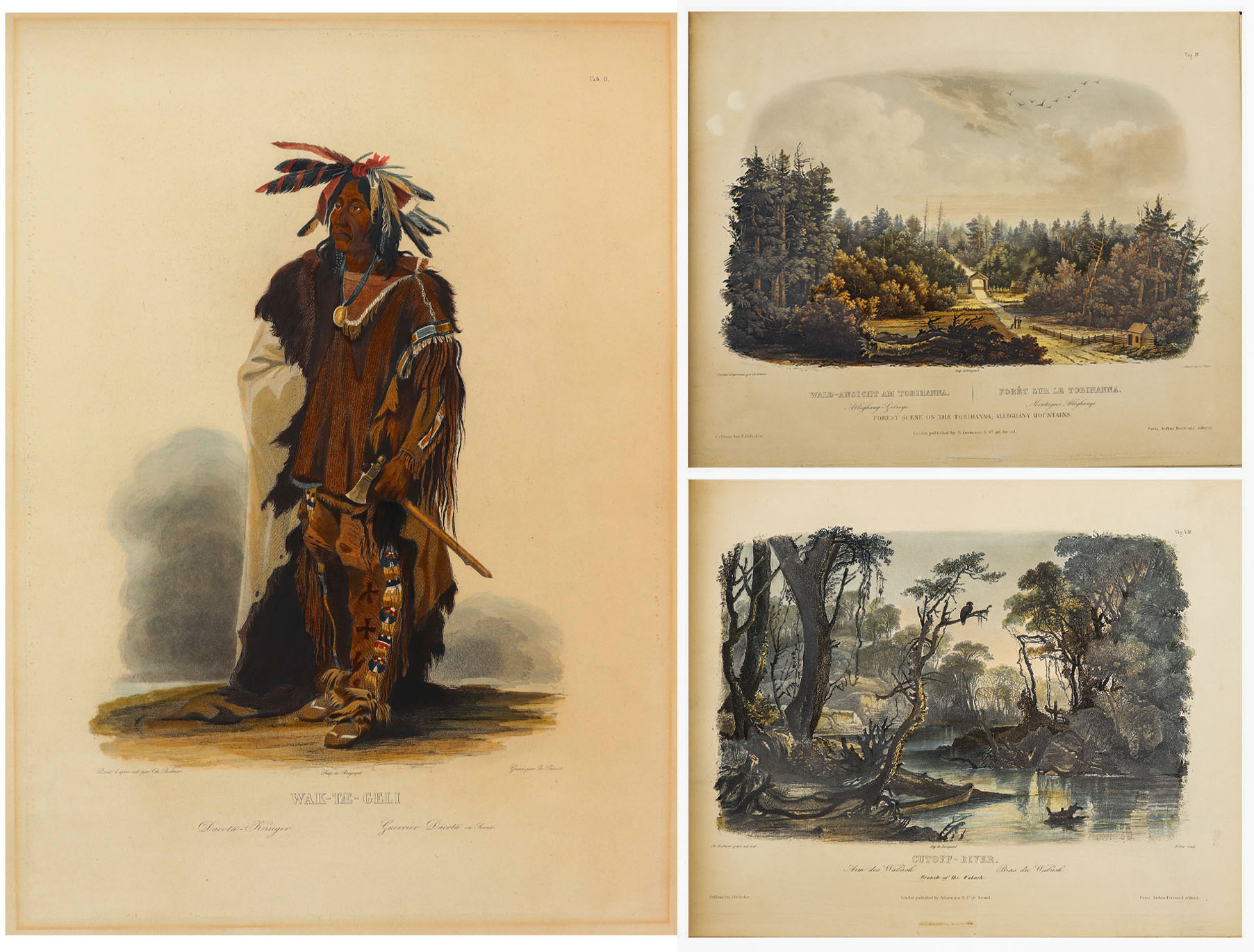
81 Beautiful Hand-Colored Aquatints by Karl Bodmer Depicting the American Frontier in the 1830s — Contained in the Illustrated Travelogue “Prince of Wied’s Travels in the Interior of North America”
Stunningly beautiful collection of 81 hand-colored aquatints by the Swiss artist Karl Bodmer, a complete collection from the illustrated travelogue, “Prince of Wied’s Travels in the Interior of North America”. Bodmer, who journeyed with the German Prince Maximilian of Wied-Neuwied from 1833-34 along the Missouri River, produced what is considered the best depictions of the indigenous peoples and landscapes during the frontier era, an America then still unspoiled by western migration. Of the Native American tribes of the Great Plains that they encountered, Bodmer’s depictions of the Blackfeet and Mandan tribes are especially important as the populations of these tribes were greatly affected by the smallpox epidemic of 1837, thus making Bodmer’s work the last visual testament to their culture.
Prince Max, as he was called, chose Bodmer to accompany him on the expedition along the Missouri River to visually depict the scenes that the Prince would write about. The result is this collection: three volumes of text by the Prince and two volumes of aquatints by Bodmer, in the first Paris edition published by Chez Arthus Bertrand, 1840-43 (“Voyage dans l’interieur de l’Amerique du Nord”). Text volumes in French also include 37 wood-engraved illustrations, only lacking the map in completeness. The two complete volumes of illustrations include the large folio volume with 48 oversized hand-colored aquatints measuring approximately 24.5″ x 18″, and the quarto volume with 33 hand-colored aquatints measuring approximately 12.5″ x 10.25″. The complete set of 81 aquatints is magnificent in their display, a time capsule with their hand-coloring evoking the sense of awe and discovery of the expedition. All volumes are bound in half black morocco and blue paper-covered boards with gilt accenting, and with black morocco labels to illustrated volumes. Minor handling wear to volumes, with a few small repaired tears to plates, some plates supplied with variance to margins, minute toning and foxing, a few plates beginning to separate from binding. Overall a very good plus set with excellent display quality. Sold for $175,000.


Gutenberg Bible Leaf — Scarce Leaf From the 15th Century Bible Made From Moveable Type That Ushered in the Age of Enlightenment
Scarce leaf from the Gutenberg Bible, one of the earliest major books printed from moveable metal type, the invention that ushered in the Age of Enlightenment by democratizing knowledge through mass production of literature. Printed by Johannes Gutenberg in Mainz, Germany from 1450-1455, less than 50 complete or near-complete copies of the Gutenberg Bible are now extant, with nearly all those housed in public institutions. Singular leaves are also scarce, with the leaf presented here having been acquired by bookseller Gabriel Wells, whose purchase of an incomplete Bible in 1920 gave way to selling the individual leaves alongside an essay by A. Edward Newton entitled “A Noble Fragment”. Leaf is number 193 of the full Latin Bible, with the recto being the Prologue to 1 Chronicles of the Old Testament, and the verso the first part of Chapter 1 of 1 Chronicles. Each page features two columns of 42 lines in dark black Gothic type, accented by red and blue rubrication. Each copy of the Gutenberg Bible differs in its rubrication and illumination, with buyers at the time deciding upon these embellishments after the Bible was printed. The six-line rubricated letters of this leaf were likely added later, restored to match the original style. Leaf measures 11.125″ x 15.375″, bound on edge to portfolio measuring 11.75″ x 16″. Paper quality is still bright with very little foxing or discoloration compared to other examples. A stunning example from the book that changed the course of history. Sold for $136,500.

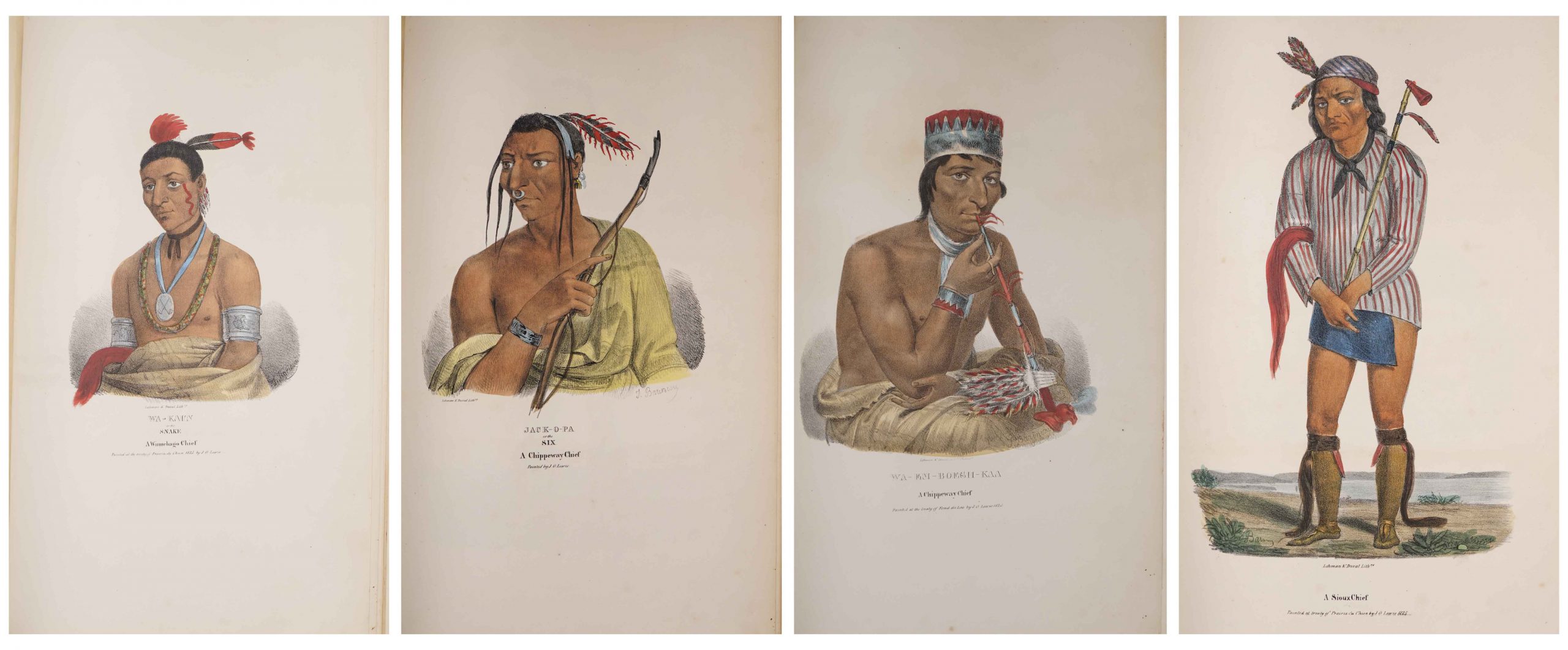
Complete Set of 80 Hand-Colored Lithographs of “The Aboriginal Port Folio” by James Otto Lewis From 1835-1838 — Extremely Scarce Complete Set
Very scarce complete set of the “Aboriginal Port Folio”, containing 80 hand-colored lithographs by Native American visual chronicler James Otto Lewis, whose travels to various treaty ceremonies during the early 19th century produced lasting portraits of Native American leaders and customs. Lewis was the first to create such artwork, preceding McKenney & Hall by several years. Philadelphia: George Lehman and Peter S. Duvall, 1835-1838.
After painting portraits of members from the Sioux, Potawatomi, Winnebago, Fox, Shawnee, Miami, and Iowa tribes, Lewis brought his paintings to Philadelphia for lithography, releasing them by subscription in 10 installments of 8 lithographs apiece. Each installment grew more scarce as subscriptions trailed off with the impending publication of the more comprehensive (and more formally posed) “History of the Indian Tribes of North America” by McKenney & Hall, whose portrait artist Charles Bird King even copied some of Lewis’ paintings. As a result, the full collection of 80 lithographs of “The Aboriginal Port Folio” is so scarce that only five to ten copies are known to exist. To make matters worse, Lewis’ original paintings were destroyed in the Smithsonian fire in 1865.
This set is in very good to near fine condition, with only minor scattered foxing affecting some sheets. In addition to the 80 pictorial lithographs, set also includes the lithograph title page and three leaves of advertisements, making it a truly complete set. Lithographs each measure 11.5″ x 18.125″, housed in three-quarter red morocco clamshell case with custom lettering to spine. One of the few visual remembrances of this important collection preserved for history. Sold for $84,000.

Scarce 1493 First Edition of “Nuremberg Chronicle”, the Lavishly Illustrated High Point of Printing in the Age of Incunable, Published Shortly After the Gutenberg Bible
Scarce first edition, first printing of “Liber Chronicarum” or “Nuremberg Chronicle”, the 15th century illustrated history of the world, widely considered the high point of printed books in the post-Gutenberg incunable era. Nuremberg: Anton Koberger for Sebald Schreyer and Sebastian Kammermeister, 12 July 1493. Written by the Nuremberg doctor and humanist Hartmann Schedel, and largely illustrated by Michael Wolgemut’s workshop, with many views reportedly completed by Albrecht Durer, who apprenticed with Wolgemut at the time. Sold for $31,500.

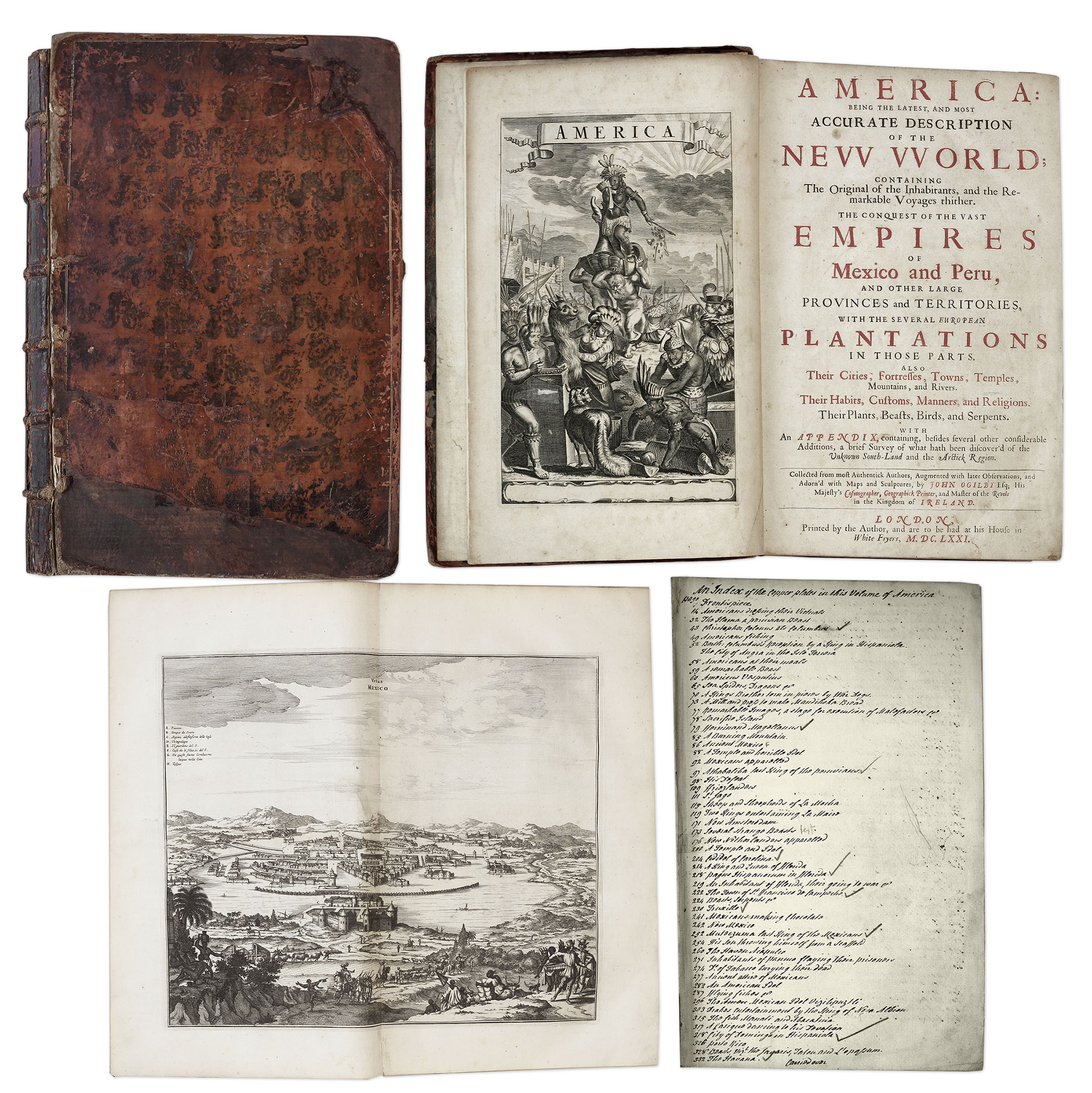
One of the most important books on the history of America (cited by Borba de Moraes, Howes, Sabin and Wing), the 1671 first edition of ”America: Being the Latest and Most Accurate Description of the New World”. Privately printed in London by the author, Arnoldus Montanus, and edited by John Ogilby. In ”America” Montanus goes into great detail of the new continents, with dozens of engravings of Native Americans, species of animals and reptiles, and the landscapes and settlements in the new world, accompanied by text. The book covers speculation regarding the earliest voyages to America, along with later recorded voyages and the settlements of New Netherlands/New York, New England, Hudson’s Bay, Labrador, Canada, Nova Scotia, Maryland, Virginia, (including Captain Smith’s capture and rescue by Pocahontas), Carolinas, Florida and California, plus accounts of Mexico and nearby islands, even including Australia and New Zealand. 674pp. book contains 75 original engravings (64 copper plates within the text and 9 plates throughout), lacking the maps and 28 engravings, which is typical as this edition is almost never found with all plates intact. All text is complete except for missing pages 445-446. Large format book measures 10” x 15”. Bound in original full leather boards, with some loss of leather to covers, cracking along spine and front board detached. Interior text is near fine and very readable. An important and fascinating addition to early knowledge of the American continent. Sold for $9,375.
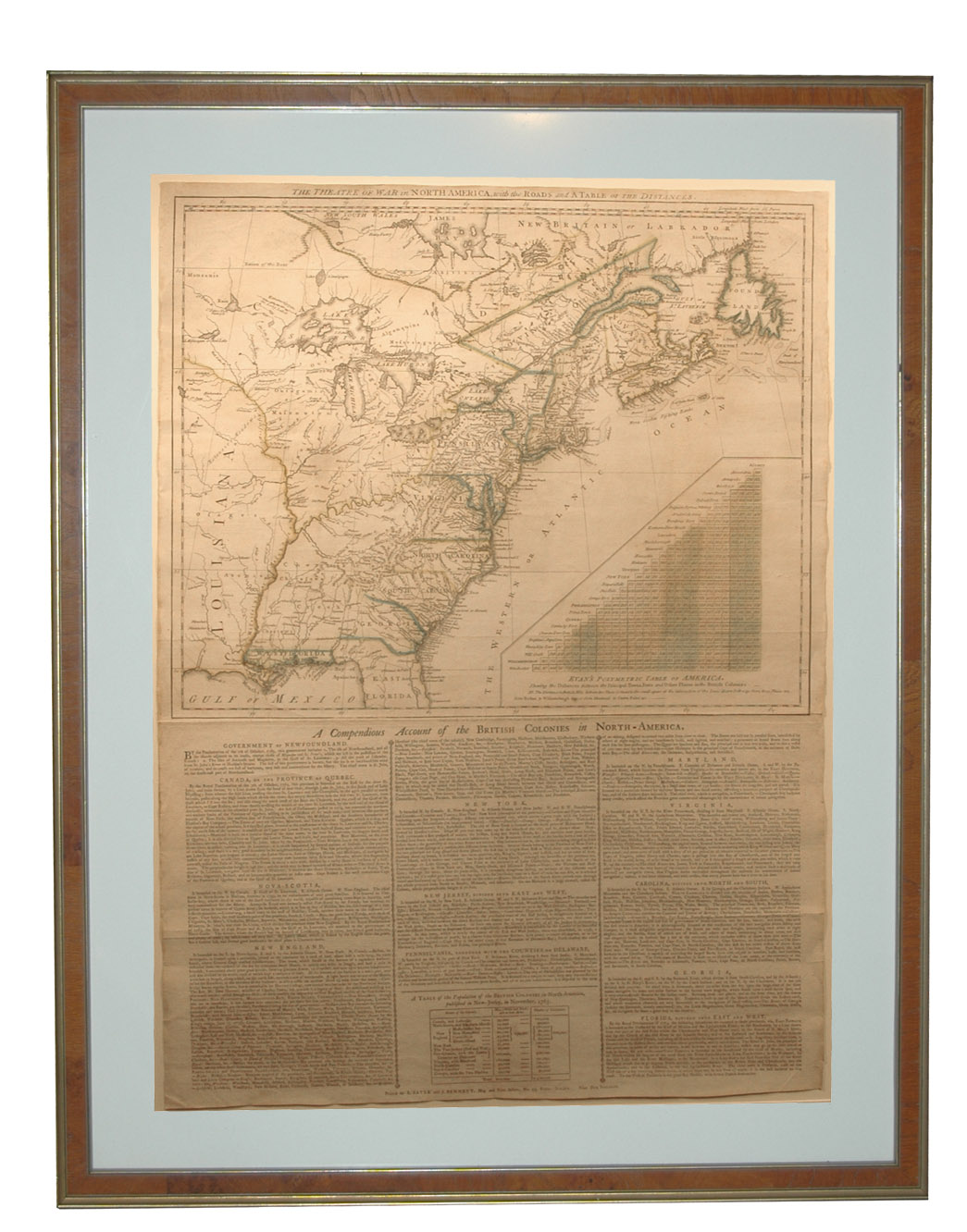
Revolutionary War Map 1776
Revolutionary War map dated March 1776. “The Theatre of War in North America, With the Roads and a Table of the Distances…” Printed in London for R. Sayer and J. Bennett. Map depicts the area east of the Mississippi River from James Bay to Cape Canaveral, and locates provincial boundaries, towns, forts, roads, Indian villages, New England fishing waters, and the like. An inset is comprised of “Evan’s Polymetric Table of America,” which allows one to calculate the distance between most of the prominent towns. Text below the map reads, “A Compendious Account of the British Colonies in North America,” which devotes a paragraph of description to each of the North American colonies, including Florida, Canada, and the Province of Quebec. Issued separately by Sayer and Bennett, who also published “the American Military Pocket Atlas,” that year for the use of British officers. A notable map of the American Revolution, published the same year as the American Declaration of Independence. 20.75″ x 28.5″; 29.25″ x 37.5″ framed. Excellent condition. Sold for $6,000.
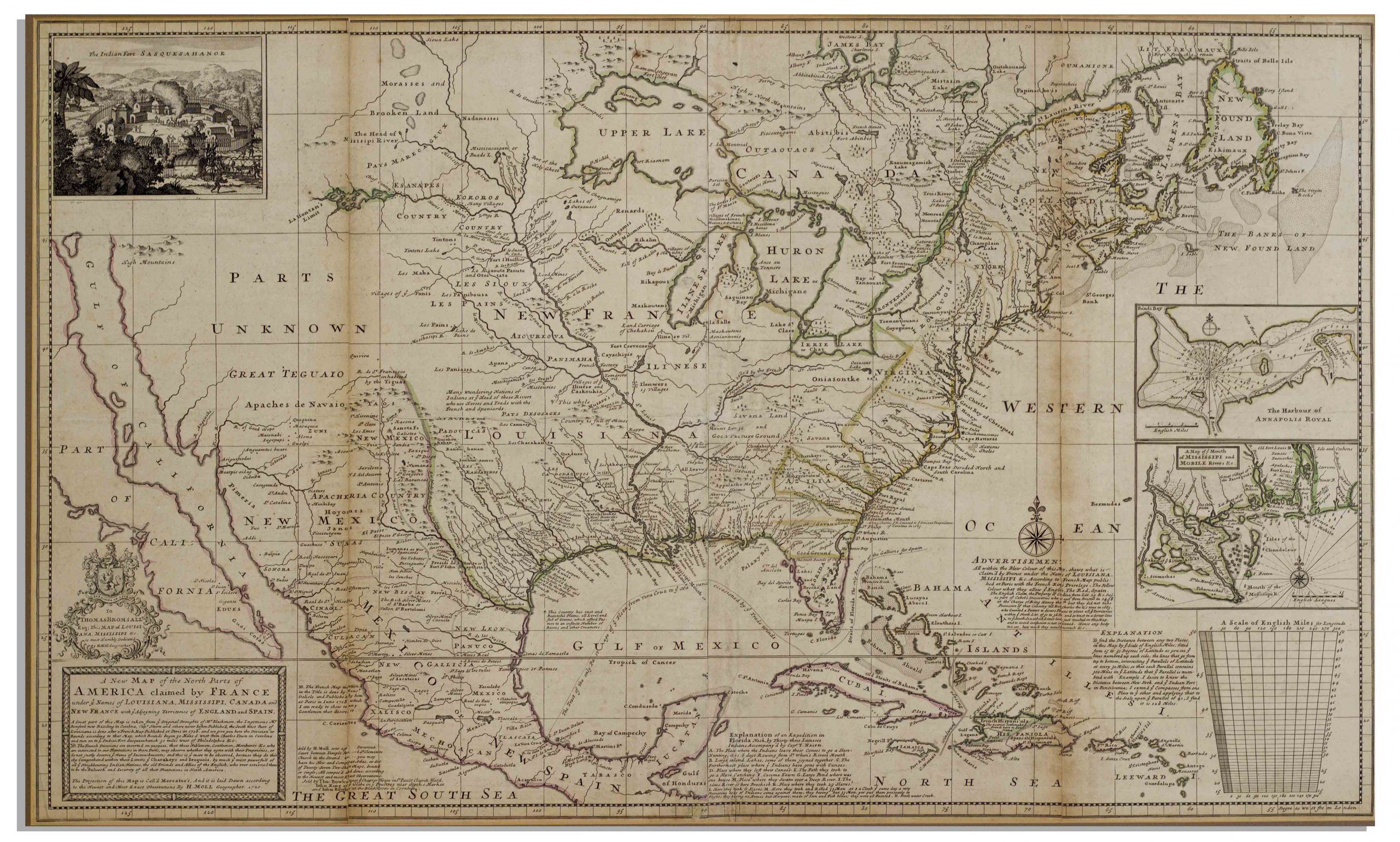
Herman Moll New Map of the North Parts of America
Large map of the Americas, published in 1720 by London cartographer Herman Moll entitled “A New Map of the North Parts of America claimed by France under ye names of Louisiana, Mississipi, Canada and New France with ye adjoyning territories of England and Spain”. Engraved map incorporates the latest surveying of the Americas, such as a French expedition into Texas in 1716. Map is hand-colored at boundaries, featuring a vignette at upper left of “The Indian Fort Sasquesahanok”, and with various “Explanations” of the map printed at bottom, including one of an Indian expedition into Florida, “6 days Rowing”. Insets of the Annapolis Harbor and the mouths of the Mississippi and Mobile Rivers are also included. Map is published in four vertical sections, laid down on archival paper and mounted on board. Map measures 25″ x 40.75″. Minor browning at section lines and a few spots of buckling. An attractive map in very good condition, giving historical insight into the jockeying for land among the major European powers in the early 18th century. Sold for $3,200.
FREE APPRAISAL. To buy, auction, sell or consign your Lord Charles Beauclerk Canada Insurrection 1840 that is for sale, please email your description and photos to [email protected] of Nate D. Sanders Auctions (http://www.NateDSanders.com).
We offer the following services for your Lord Charles Beauclerk Canada Insurrection 1840:
- Appraise Lord Charles Beauclerk Canada Insurrection 1840.
- Auction Lord Charles Beauclerk Canada Insurrection 1840.
- Cosign Lord Charles Beauclerk Canada Insurrection 1840.
- Estimate Lord Charles Beauclerk Canada Insurrection 1840.
- Sell Lord Charles Beauclerk Canada Insurrection 1840.