
Sell or Auction Your Last Only Chance as Cavalry Broadside for up to $3,000 or More at Nate D. Sanders Auctions
FREE APPRAISAL. To buy, auction, sell or consign your Last Only Chance as Cavalry broadside that is for sale, please email your description and photos to [email protected] of Nate D. Sanders Auctions (http://www.NateDSanders.com).
Free Appraisal, Auction or Sell Your Last Only Chance as Cavalry Broadside
Below is a recent realized price for a Last Only Chance as Cavalry broadside. We at Nate D. Sanders Auctions can obtain up to these amounts or more for you:
Last Only Chance as Cavalry Broadside. Sold for $3,000.
Here are some items that our auction house, Nate D. Sanders (http://www.NateDSanders.com), has sold:
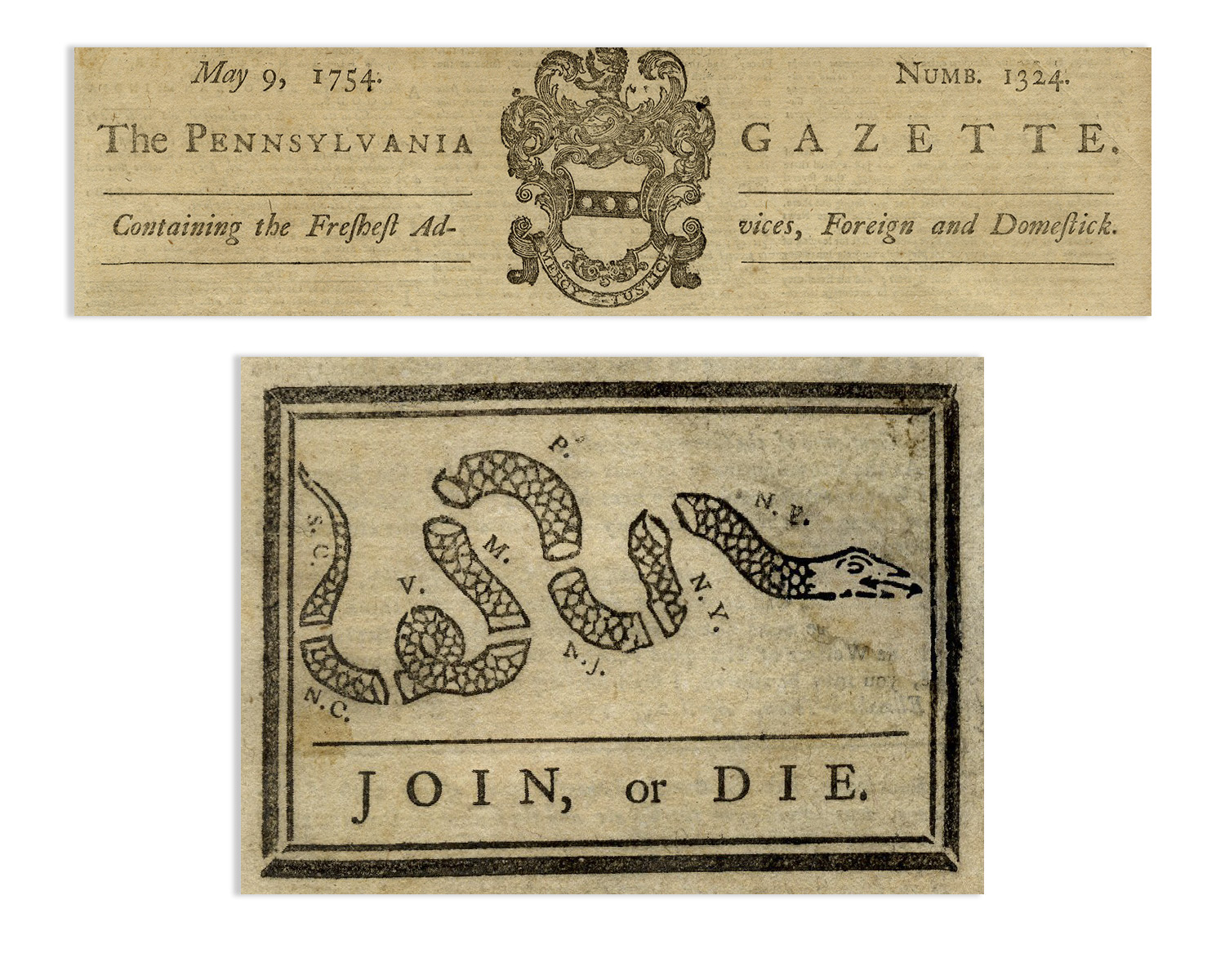
”JOIN, or DIE” Newspaper From Benjamin Franklin’s ”Pennsylvania Gazette” in 1754 — The Most Influential Political Cartoon in America’s History & Only Known Copy Apart From the Library of Congress
The most influential political cartoon in the history of America, the ”JOIN, or DIE” severed rattlesnake designed by Benjamin Franklin and published in his ”Pennsylvania Gazette” on 9 May 1754. This incredibly scarce newspaper is the very first printing of the ”JOIN, or DIE” cartoon, and the only known copy apart from one other housed in the permanent collection at the Library of Congress. Sold for $50,000.

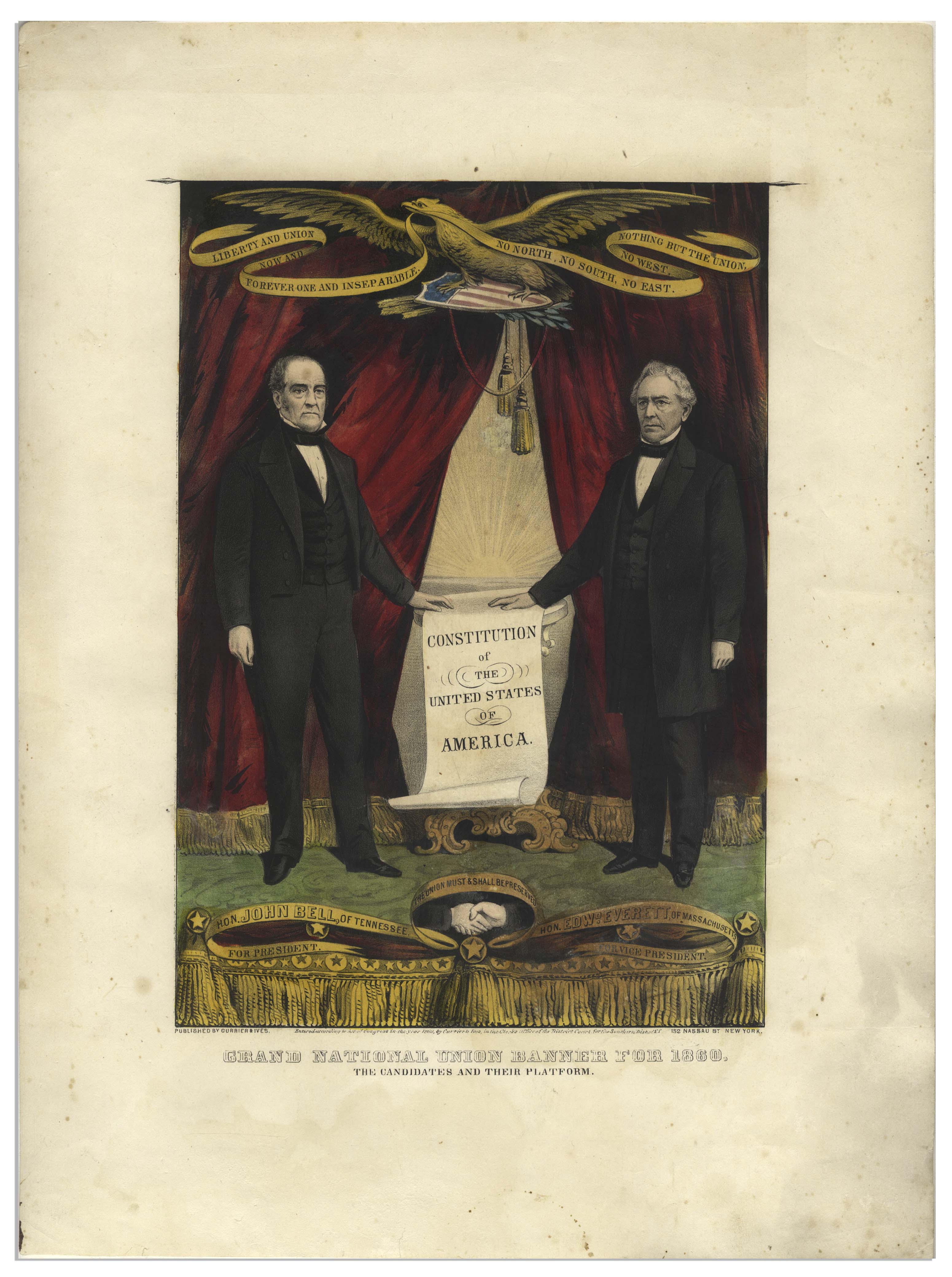
Currier & Ives Broadsides John Bell and Edward Everett
Scarce campaign broadside for John Bell and Edward Everett, the candidates for the Constitutional Union party in the 1860 Presidential campaign. Lithograph is the scarcest of 19th century Currier and Ives broadsides, hand-colored by the storied print makers, and with full margins not usually found on this broadside. Strong unionists who believed that slavery was protected by the U.S. Constitution, the candidacy of Bell and Everett split the southern vote, effectively giving the election to Abraham Lincoln. Their campaign banner reads at top, “Liberty and Union Now and Forever One and Inseparable / No North, No South, No East, No West, Nothing But the Union”. With Currier and Ives copyright in 1860 at bottom, which also reads, “Grand National Union Banner for 1860 / The Candidates and Their Platform”. The candidates’ names of John Bell, of Tennessee and Edward Everett of Massachusetts are also featured in the banner. Broadside is hand-colored by Currier and Ives, with unfaded rich, dark colors. Lithograph measures 13.5″ x 18″, with original borders. Expert restoration including rice paper backing, though no restoration to the coloring except to a small spot of scuffing just below the tassels between the red velvet curtains. Some foxing to margins. Overall in very good to near fine condition. Sold for $12,600.
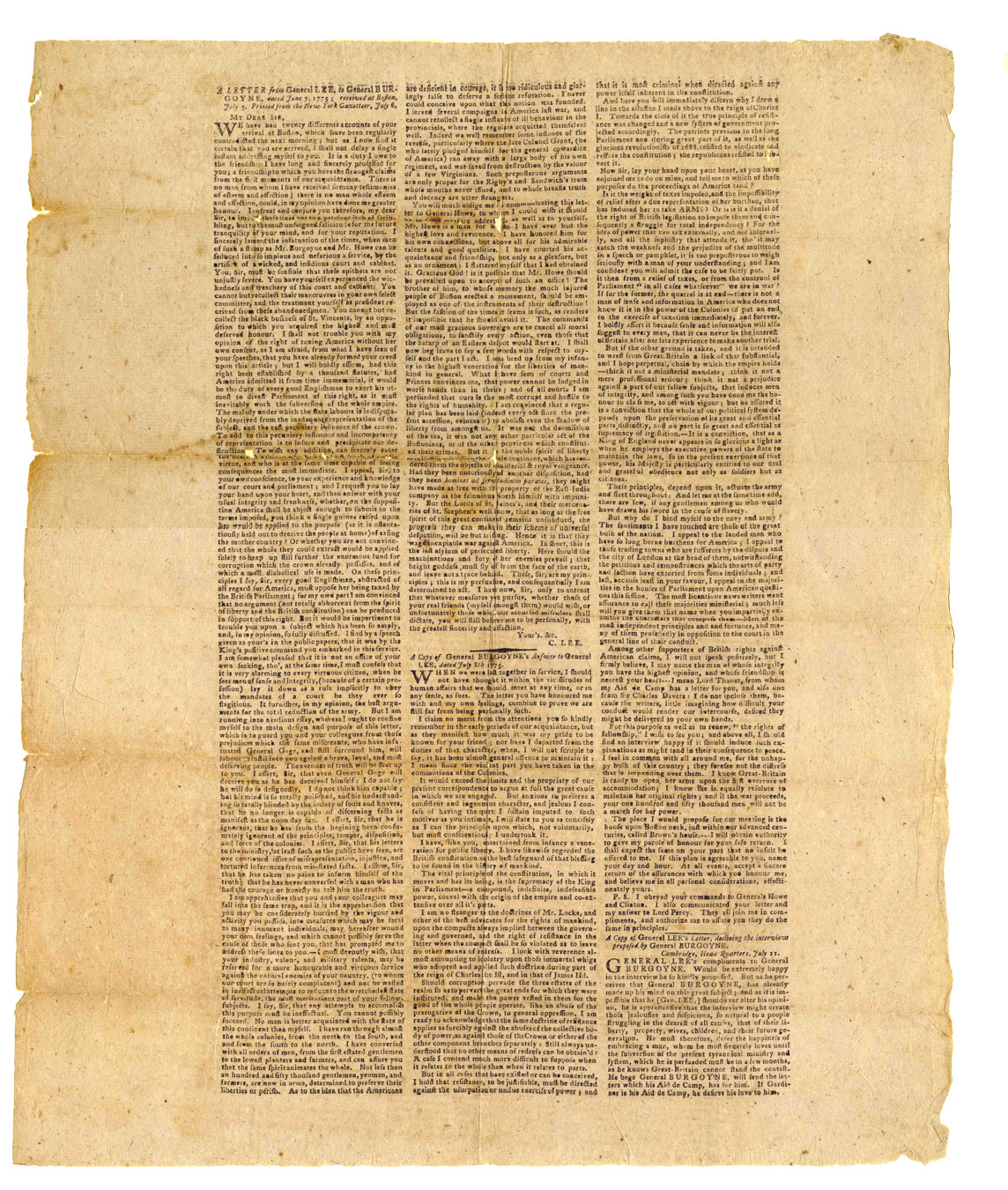
Revolutionary War Broadside 1775
Revolutionary War broadside, “A Letter From General Lee, To General Burgoyne, Dated June 7, 1775″ A broadside containing a spate of correspondence between former colleagues Lee and Burgoyne, including a defense of Lee’s support of the American colonies. Likely published in New York, as it seems unlikely this would have been published in British-occupied Boston. Measures 14″ x 17”. Docketed in contemporary manuscript on verso. Light fold lines, minor separations at folds with partial loss to some letters. Extremely rare. Sold for $5,250.
Revolutionary War Broadside From Boston in 1775, With Loyalists Bidding Farewell to Colonial Governor Thomas Gage, the First British Commander-in-Chief — “…dark Contrivances of ambitious Men…”
General Thomas Gage (10 March 1718/19 – 2 April 1787) was a British Army general officer and colonial official best known for his many years of service in North America, including his role as British commander-in-chief in the early days of the American Revolution.
Scarce Revolutionary War broadside, datelined Boston, 6 October 1775, after the commencement of fighting at Lexington & Concord, and Bunker Hill. Broadside consists of three letters by Tories in America, thanking Massachusetts Bay Governor and British Commander-in-Chief Thomas Gage for his service following his resignation. Each letter is answered, in turn, by Gage. As the first British Commander during the Revolutionary War, Gage was perhaps a scapegoat for the heavy losses sustained by the British at Bunker Hill. After the battle, he wrote to the English Secretary of War, “…They are now spirited up by a rage and enthusiasm as great as ever people were possessed of and you must proceed in earnest or give the business up…” Gage was then promptly relieved of his command and replaced by William Howe, although his reputation improved after the war’s end. Sold for $4,600.

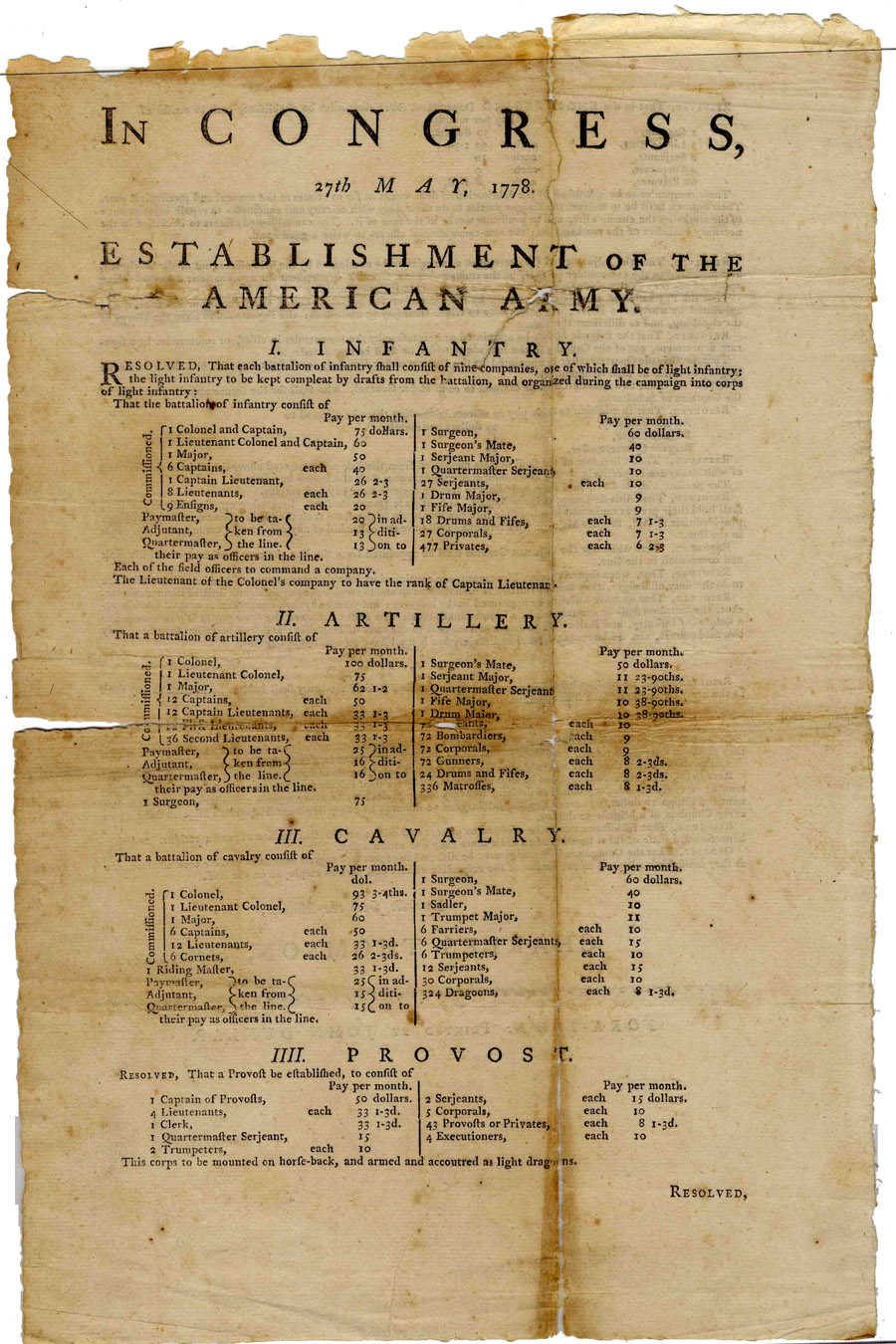
American Army Establishment Broadside
Scarce Revolutionary War “In Congress” broadside entitled, “Establishment of the American Army.” Printed by John Dunlap: York-Town. Dated 27 May 1778 document divides the American army into four parts; infantry, artillery, cavalry and provost and details positions and payments within each department. Further resolutions dated 29 May and 2nd June detail compensation and rations. In part, “…Resolved, That each battalion of infantry shall consist of nine-companies, one of which shall be of light infantry; the light infantry to be kept compleat by drafts from the battalion, and organized during the campaign into corps of light infantry: That the battalion of infantry consist of…Colonel and Captain [etc]…” 2pp. front and verso. Measures approximately 9.25″ x 14″. Fragile paper shows chipping and paper loss to edges and near complete separation at folds. Overall toning, wear and soiling, else good condition. Sold for $4,200.
Franklin D. Roosevelt D-Day Prayer Broadside — One of a Select Few Given to Roosevelt’s Staff at Christmas in 1944
Beautiful presentation broadside of the “D-Day Prayer”, one of the few copies gifted by President Franklin D. Roosevelt to his staff at Christmas 1944. This particular copy was given to one of his Secret Service agents (and then by descent to consignor), and comes with a 1944 Christmas card from the Roosevelts. Lithograph features gilt and colored embellishments, transcribing the famous prayer that President Roosevelt delivered to the nation via radio on 6 June 1944 after the successful D-Day invasion, reading in part, “Last night, when I spoke with you about the fall of Rome, I knew at that moment that troops of the United States and our Allies were crossing the Channel in another and greater operation. It has come to pass with success thus far. / And so, in this poignant hour, I ask you to join with me in prayer…Success may not come with rushing speed, but we shall return again and again; and we know that by Thy grace, and by the righteousness of our cause, our sons will triumph…Christmas-1944-from / F.D.R.” Lithograph measures 14.75″ x 21.75″, framed with the Roosevelt Christmas card, and a ribbon at bottom right, to a size of 15.5″ x 21.75″. Not examined out of frame, but appears in very good to near fine condition with only light toning. Sold for $3,800.

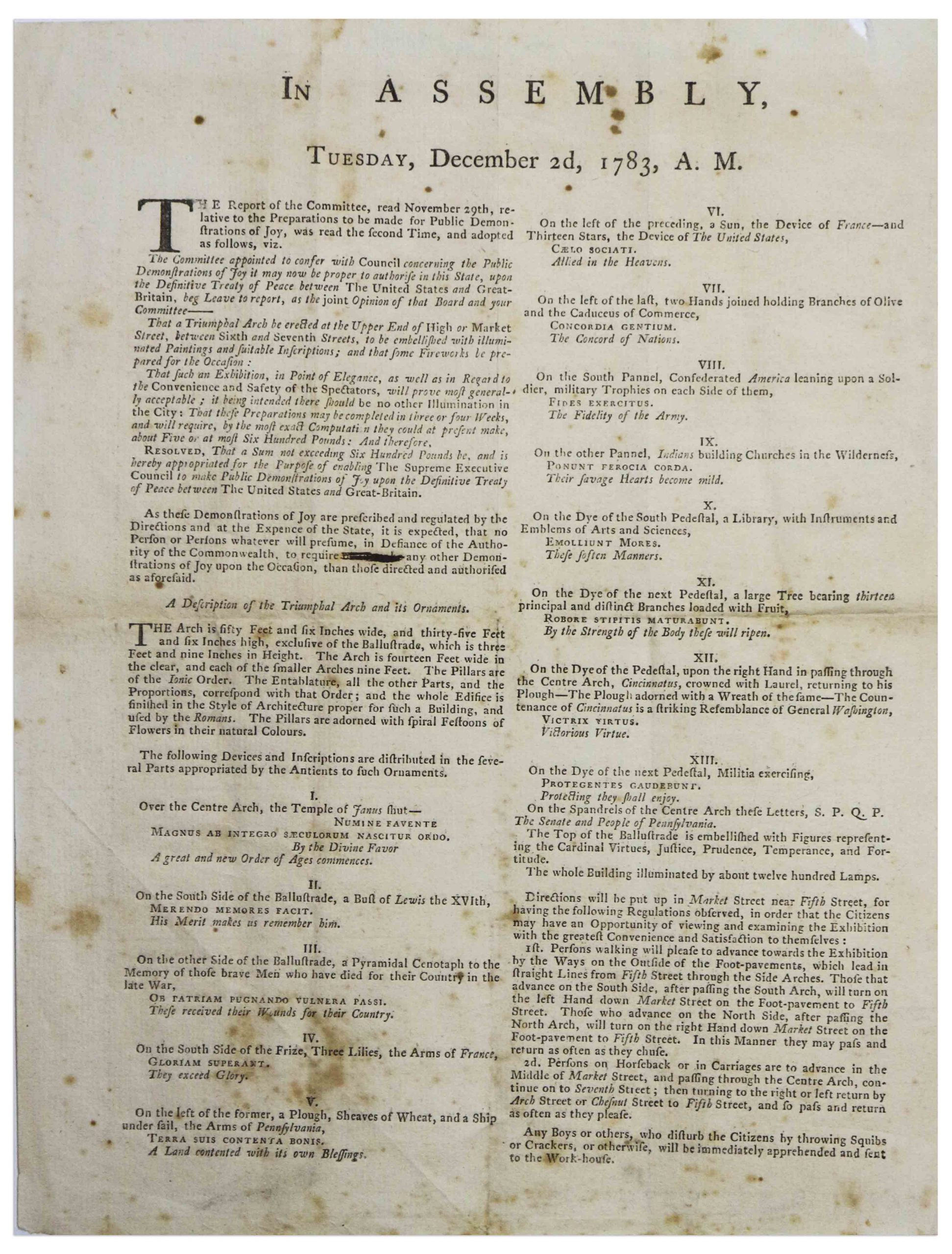
Revolutionary War Broadside Regarding “Demonstrations of Joy” to Mark the War’s End — With Details on the Infamous “Triumphal Arch” in Philadelphia, Which Erupted in Flames the Night of Its Debut
Superb and rare broadside from Philadelphia dated 2 December 1783 shortly after the Treaty of Paris officially ended the Revolutionary War, with details of the “Triumphal Arch” to be constructed in the city. To celebrate the war’s end, carefully planned celebrations – termed “Demonstrations of Joy” – were scheduled in each state to unite the new country in a communal patriotic experience. The celebration in Philadelphia centered around this “Triumphal Arch”, a grand wooden structure over 35 feet tall, to be “illuminated by about twelve hundred Lamps” and “embellished with illuminated Paintings…and that some Fireworks be prepared for the Occasion”. Sold for $3,600.
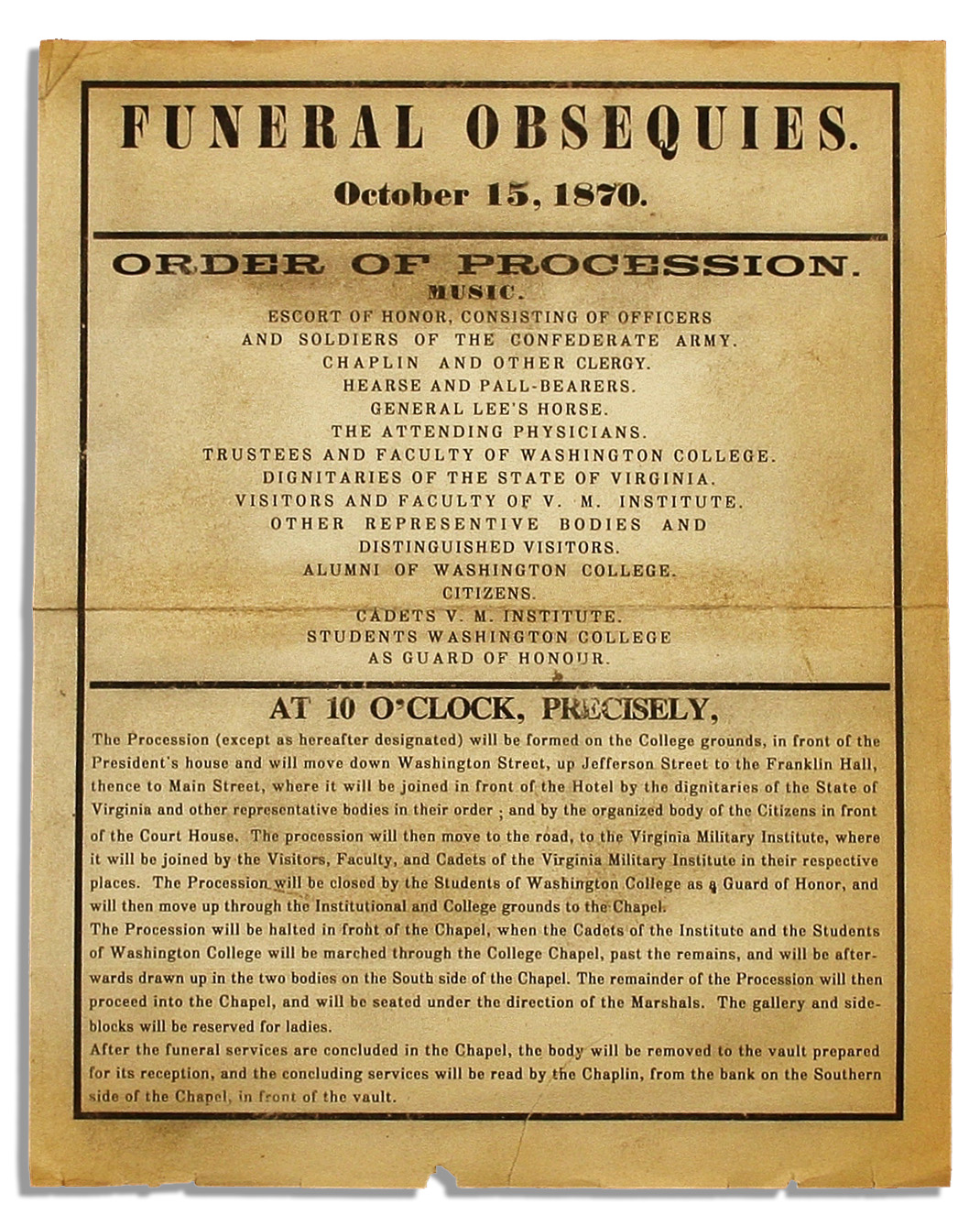
Original Robert E. Lee Funeral Obsequies Broadside — Detailing the Legendary Civil War Leader’s Funeral Procession — ”…Consisting of Officers and Soldiers of the Confederate Army…”
Confederate General Robert E. Lee’s original ”Funeral Obsequies” broadside program, dated 15 October 1870. Lee died on 12 October 1870 in the President’s house at Washington College, now Washington and Lee University, two weeks after suffering a stroke. Lee had been president of the school for four years, doing much to transform the college into a respected center of higher learning. He was buried in the basement of the Lee Memorial Chapel, situated on the college campus. The program lists the Order of Procession at the funeral: ”Escort of Honor, Consisting of Officers and Soldiers of the Confederate Army. Chaplain and other Clergy. Hearse and Pall-Bearers. General Lee’s Horse. The Attending Physicians. Trustees and Faculty of Washington College. Dignitaries of the State of Virginia. Visitors and Faculty of V. M. Institute. Other Representative Bodies and Distinguished Visitors. Alumni of Washington College. Citizens. Cadets V. M. Institute. Students Washington College As Guard of Honour.” It continues, in part, ”At 10 O’Clock, Precisely, The Procession (except as hereafter designated) will be formed on the College ground, in front of the President’s House and will move down Washington Street…The Procession will be halted in front of the Chapel…when the Cadets for the Institute and the Students of Washington College will be marched through the College Chapel, past the remains…After the funeral services are concluded in the Chapel, the body will be removed to the vault prepared for its reception, and the concluding services will be read by the Chaplain, from the bank on the Southern side of the Chapel, in front of the vault.” 1pp. document measures 8” x 10”, with some light soiling throughout, a 1.5” inch tear and small chip at bottom. Also includes a black satin mourning ribbon with small rosette. Very good condition overall. Sold for $3,049.
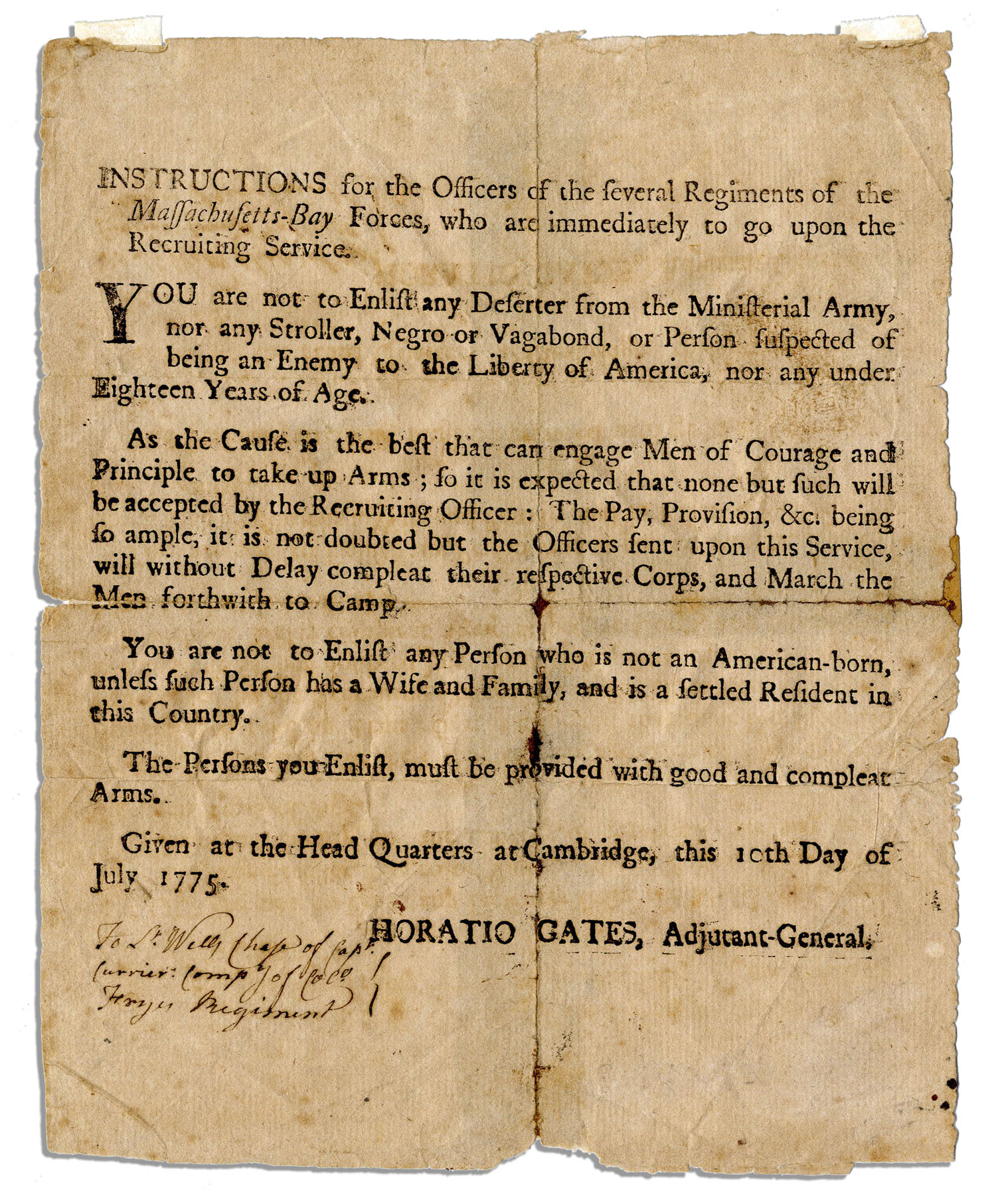
Broadside announces the recruitment of soldiers for the American Revolutionary War. The document, dated 1775 and signed in type by Horatio Gates as Adjutant General reads in full: ”Instructions for the Officers of the several Regiments of the Massachusetts Bay Forces, who are immediately to go upon the Recruiting Services. You are not to Enlist any Deserter from the Ministerial Army, nor any Stroller, Negro or Vagabond, or Person suspected of being an enemy to the Liberty of America, nor any under Eighteen Years of Age. As the cause is the best that can engage Men of Courage and Principle to take up Arms; so it is expected that non but such will be accepted by the Recruiting Officer: The Pay, Provision, etc. being so ample, it is not doubted but the Officers sent upon this Service will without Delay compleat their respective Corps, and March the Men forthwith to Camp. You are not to enlist any Person who is not American-born, unless such Person has a wife and Family, and is a settled Resident in this Country. The Persons you Enlist must be provided with good and compleat Arms. Given at the Head Quarters at Cambridge, this 10th Day of July, 1775. / Horatio Gates, Adjutant General”. Single-page broadside measures 6.5” x 8.25”. Toning, chipping and minor tears along edges, with separation to fold intersection from the left edge. Very good condition. Sold for $2,886.
Beautiful presentation broadside of the ”D-Day Prayer”, one of the few copies gifted by President Franklin D. Roosevelt to his staff at Christmas 1944. This particular copy was given to one of his Secret Service agents (and then by descent to consignor), and comes with a 1944 Christmas card from the Roosevelts. Lithograph features gilt and colored embellishments, transcribing the famous prayer that President Roosevelt delivered to the nation via radio on 6 June 1944 after the successful D-Day invasion, reading in part, ”Last night, when I spoke with you about the fall of Rome, I knew at that moment that troops of the United States and our Allies were crossing the Channel in another and greater operation. It has come to pass with success thus far. / And so, in this poignant hour, I ask you to join with me in prayer…Success may not come with rushing speed, but we shall return again and again; and we know that by Thy grace, and by the righteousness of our cause, our sons will triumph…Christmas-1944-from / F.D.R.” Lithograph measures 14.75” x 21.75”, framed with the Roosevelt Christmas card, and a ribbon at bottom right, to a size of 15.5” x 21.75”. Not examined out of frame, but appears in very good to near fine condition with only light toning. Sold for $2,500.

1778 Revolutionary War Broadside, a Call to Arms
Superb Revolutionary War broadside from April 1778, a scarce “Call to Arms” for the men of Massachusetts to help build the “Great Chain” on the Hudson River that extended from West Point to Constitution Island, constructed in the spring of 1778. The Great Chain was a feat of inspired engineering, comprised of iron links each weighing 114 pounds that extended 600 yards across the bend in the Hudson River at West Point. As control of the River was tantamount to controlling the waterways from New York City to Montreal, several Battles had been waged on the Hudson before the Colonists conceived of the idea to construct chains across specific points in the River, so that the Army could bombard British ships when they were stalled as a result of the chains. The most effective of these chains was the Great Chain, which took advantage of a narrow “S” shaped curve on the River at West Point. Although Benedict Arnold famously told the British that “a well-loaded ship could break the chain”, the Great Chain held and prevented British boats from crossing. The Hudson River would remain in the hands of the Colonists. Sold for $2,500.

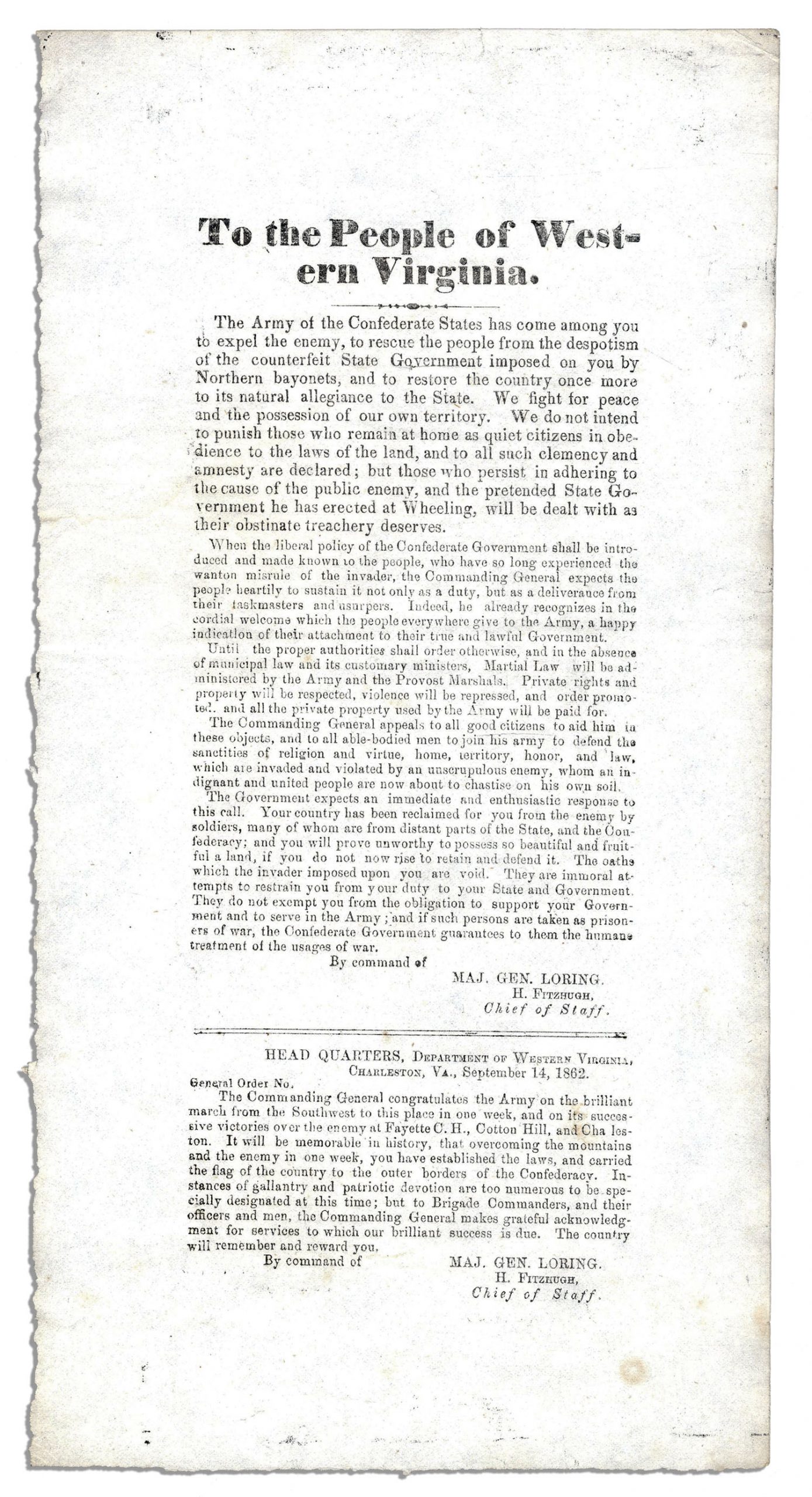
Civil War West Virginia Confederate Broadside re Enemy
Confederate broadside aggressively staking claim to the territory of West Virginia in 1862. In this intimidating broadside, the Confederacy appeals to the people of West Virginia, which formed its own state by seceding from Virginia after she, in turn, seceded from the United States at the start of the Civil War. Broadside entitled, “To the People of Western Virginia” reads in part, “The Army of the Confederate States has come among you to expel the enemy, to rescue the people from the despotism of the counterfeit State Government imposed on you by Northern bayonets…We fight for peace and the possession of our own territory. We do not intend to punish those who remain at home as quiet citizens in obedience to the laws of the land…The Government expects an immediate and enthusiastic response to this call…” A concluding section dated 14 September 1862 contains an update on the Confederate Army’s progress in West Virginia (only days earlier they had captured Harper’s Ferry), however, the state would be hotly contested until the official formation of the new Union state in 1863. Broadside is signed in print by General William Loring. Measures 6.75″ x 13″. Light fading and foxing with one small .5″ tear to right edge. Overall in very good condition. Sold for $1,469.
Revolutionary War Document Regarding Siege of Boston
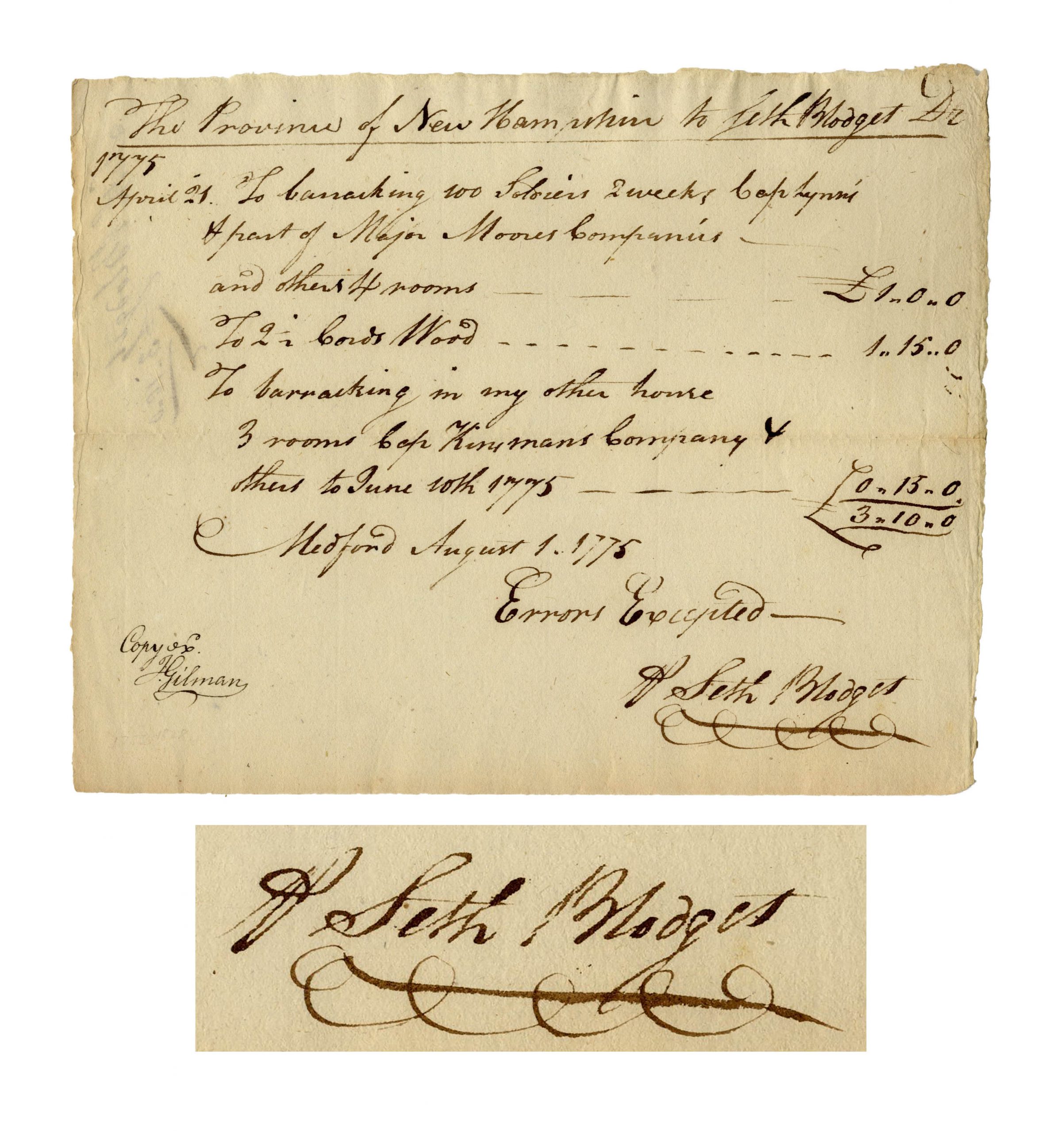
Revolutionary War document regarding the Battle of Bunker Hill, one of the first battles in the Revolutionary War during the Siege of Boston. Datelined 1 August 1775 from Medford, Massachusetts, document serves as a reimbursement receipt to Seth Blodget of Medford, who quartered soldiers who fought at Bunker Hill. Reads in part: “barracking 100 Soldiers [for] 2 weeks” beginning 21 April 1775 (two days after Lexington & Concord) for “Cap Lynn’s & part of Major Moore’s Companies”, as well as “3 rooms Cap Kinsman’s Company & others to June 10th 1775″. On 17 June 1775, the 1st New Hampshire Regiment companies of Captains John Moore and Aaron Kinsman — referenced in this document, fought at Bunker Hill, one week after Kingsman’s company left the residence of Seth Blodget. In fact, in this document dated approximately two weeks after Bunker Hill, Moore is referenced as Major, a promotion he received on 18 June to replace Major McClary who was killed during the Battle. Although the British were able to capture the Charlestown Peninsula as a result of Bunker Hill, it was a pyrrhic victory, as they lost 1,000 men in killed and wounded, including almost 100 officers. After Bunker Hill, the British declined to attack again until they ultimately retreated to Nova Scotia in March 1776, thereby ending the Siege of Boston. Document is signed by J. Gilman, likely John T. Gilman of New Hampshire, who later served as the state’s Treasurer and Governor. Measures 8.25″ x 6.5”. In well-preserved, near fine condition given age. Sold for $1,006.
FREE APPRAISAL. To buy, auction, sell or consign your Last Only Chance as Cavalry broadside that is for sale, please email your description and photos of your Last Only Chance as Cavalry broadside to [email protected] of Nate D. Sanders Auctions (http://www.NateDSanders.com).
Last Only Chance as Cavalry broadside