
Sell or Auction Your John James Audubon Carolina Parrot Plate XXVI 1829 for up to Nearly $35,000 or More at Nate D. Sanders Auctions
FREE VALUATION. To buy, auction, sell or consign your John James Audubon Carolina Parrot Plate XXVI 1829 that is for sale, please email your description and photos to [email protected] of Nate D. Sanders Auctions (http://www.NateDSanders.com).
Free Appraisal, Auction or Sell Your John James Audubon Carolina Parrot Plate XXVI 1829
Below is a recent realized price for a John James Audubon Carolina Parrot Plate XXVI 1829. We at Nate D. Sanders Auctions can obtain up to this amount or more for you:
John James Audubon Carolina Parrot Plate XXVI 1829. Sold for Nearly $35,000.
The following are some related items we have sold:
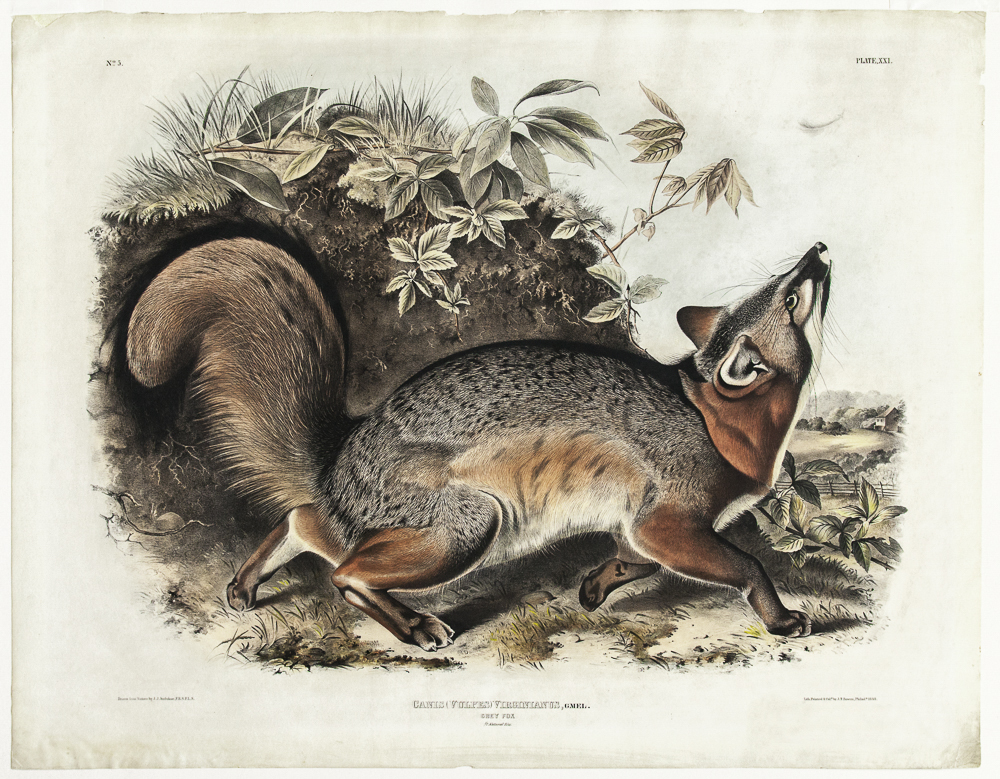
Hand-Colored “Grey Fox” Lithograph From the 1843 Edition of John James Audubon’s “The Viviparous Quadrupeds of North America” — Measures 28″ x 21.75″
Original hand-colored lithograph of “Canis (Vulpes) Virginianus, Grey Fox”, plate XXI, from John James Audubon’s “The Viviparous Quadrupeds of North America”. Philadelphia: J.T. Bowen, 1843. Lithograph measures 28″ x 21.75″. Very light soiling and wear to margins and slight fading, overall in very good plus condition. A beautiful example from Audubon’s masterpiece. Sold for $3,000.
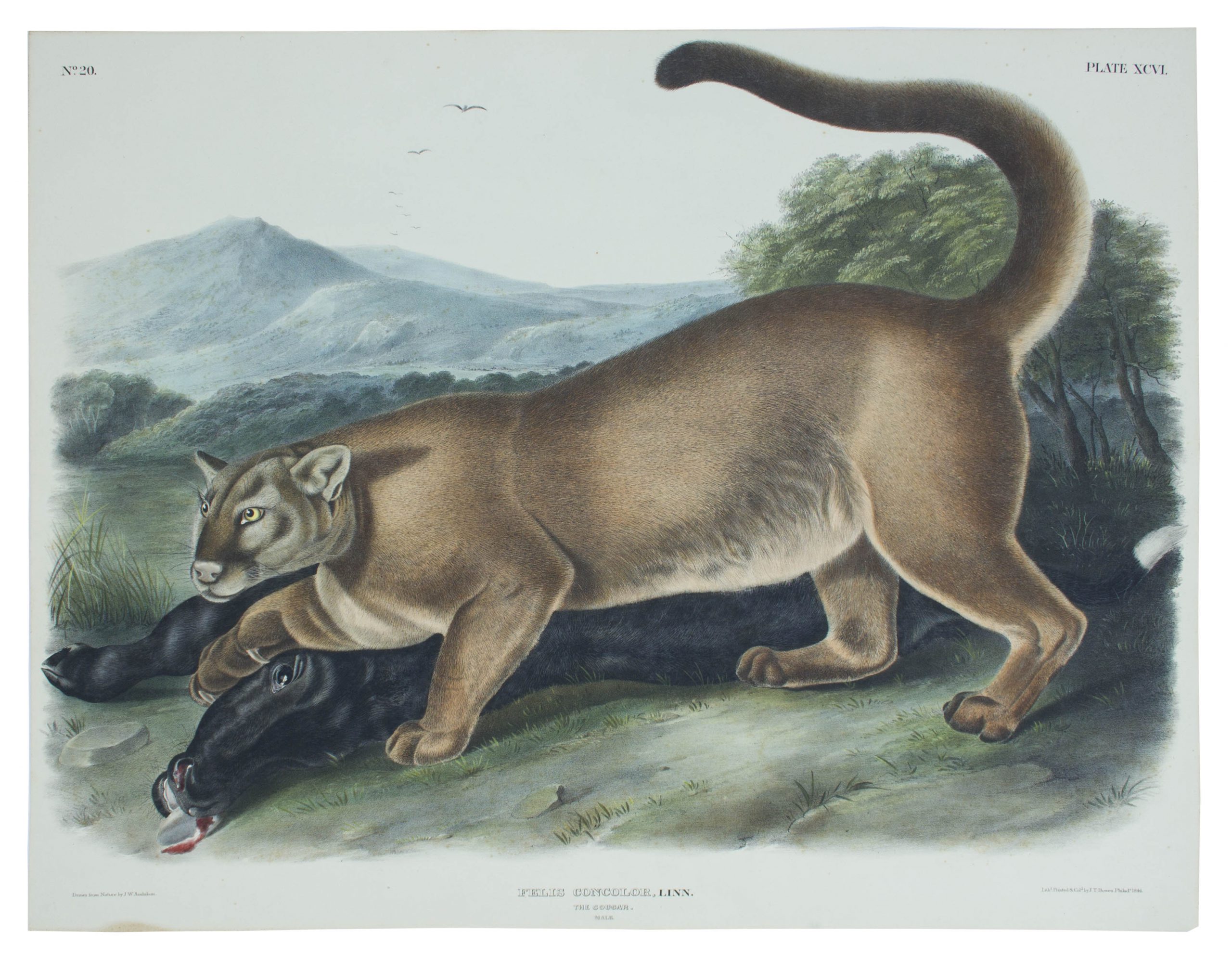
John Audubon 1846 “The Cougar” Lithograph From “The Viviparous Quadrupeds of North America” — Measures 20″ x 26″
Gorgeous lithograph by John Woodhouse Audubon of “The Cougar, Male”, published in “The Viviparous Quadrupeds of North America”. Philadelphia: J.T. Bowen, 1846. Printed and hand-colored by Bowen, lithographed plate is number XCVI. Measures 20″ x 26″. Minute foxing and small spot of discoloration at lower margin. Overall a stunning example in near fine condition. Sold for $1,400.
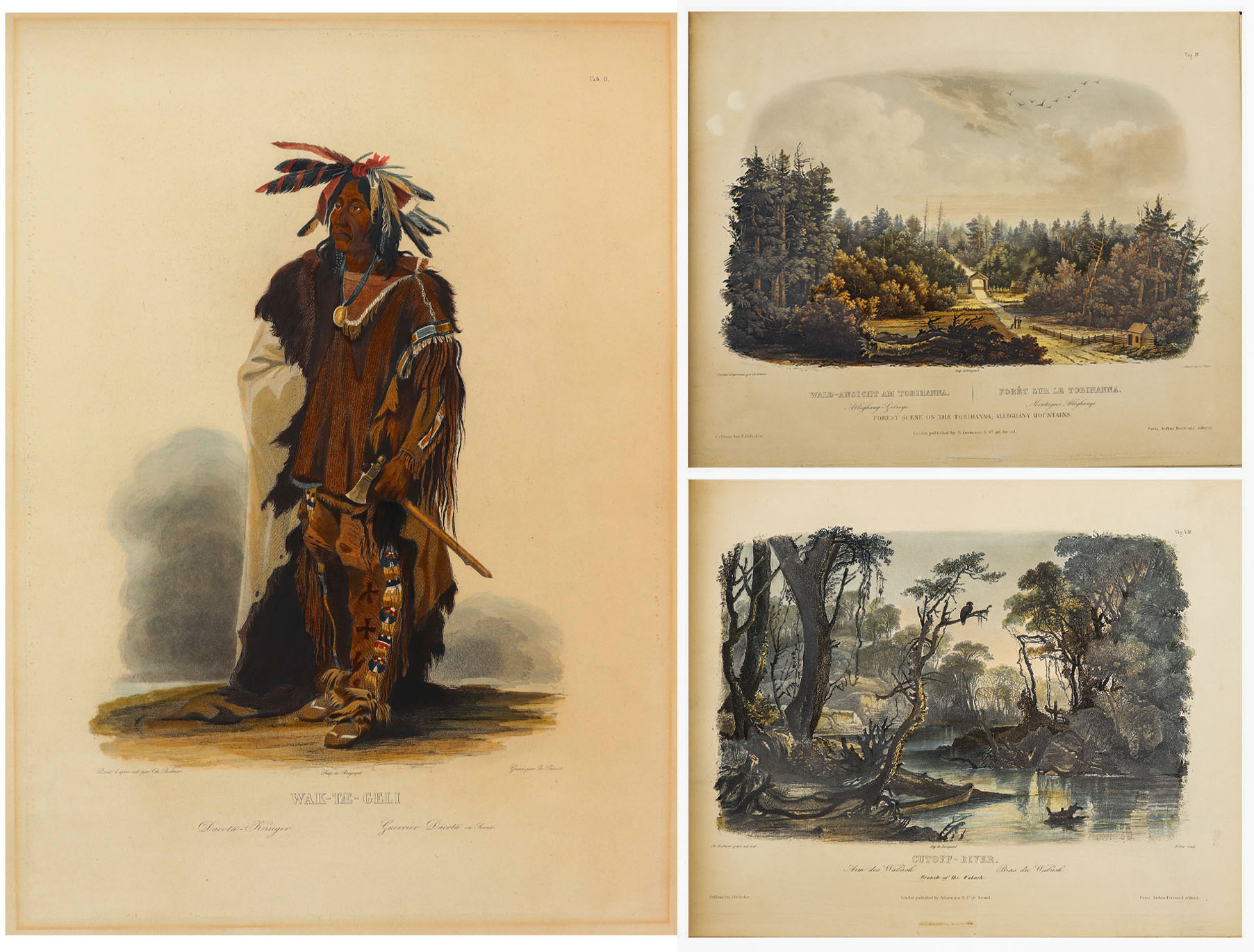
81 Beautiful Hand-Colored Aquatints by Karl Bodmer Depicting the American Frontier in the 1830s — Contained in the Illustrated Travelogue “Prince of Wied’s Travels in the Interior of North America”
Stunningly beautiful collection of 81 hand-colored aquatints by the Swiss artist Karl Bodmer, a complete collection from the illustrated travelogue, “Prince of Wied’s Travels in the Interior of North America”. Bodmer, who journeyed with the German Prince Maximilian of Wied-Neuwied from 1833-34 along the Missouri River, produced what is considered the best depictions of the indigenous peoples and landscapes during the frontier era, an America then still unspoiled by western migration. Of the Native American tribes of the Great Plains that they encountered, Bodmer’s depictions of the Blackfeet and Mandan tribes are especially important as the populations of these tribes were greatly affected by the smallpox epidemic of 1837, thus making Bodmer’s work the last visual testament to their culture.
Prince Max, as he was called, chose Bodmer to accompany him on the expedition along the Missouri River to visually depict the scenes that the Prince would write about. The result is this collection: three volumes of text by the Prince and two volumes of aquatints by Bodmer, in the first Paris edition published by Chez Arthus Bertrand, 1840-43 (“Voyage dans l’interieur de l’Amerique du Nord”). Text volumes in French also include 37 wood-engraved illustrations, only lacking the map in completeness. The two complete volumes of illustrations include the large folio volume with 48 oversized hand-colored aquatints measuring approximately 24.5″ x 18″, and the quarto volume with 33 hand-colored aquatints measuring approximately 12.5″ x 10.25″. The complete set of 81 aquatints is magnificent in their display, a time capsule with their hand-coloring evoking the sense of awe and discovery of the expedition. All volumes are bound in half black morocco and blue paper-covered boards with gilt accenting, and with black morocco labels to illustrated volumes. Minor handling wear to volumes, with a few small repaired tears to plates, some plates supplied with variance to margins, minute toning and foxing, a few plates beginning to separate from binding. Overall a very good plus set with excellent display quality. Sold for $175,000.


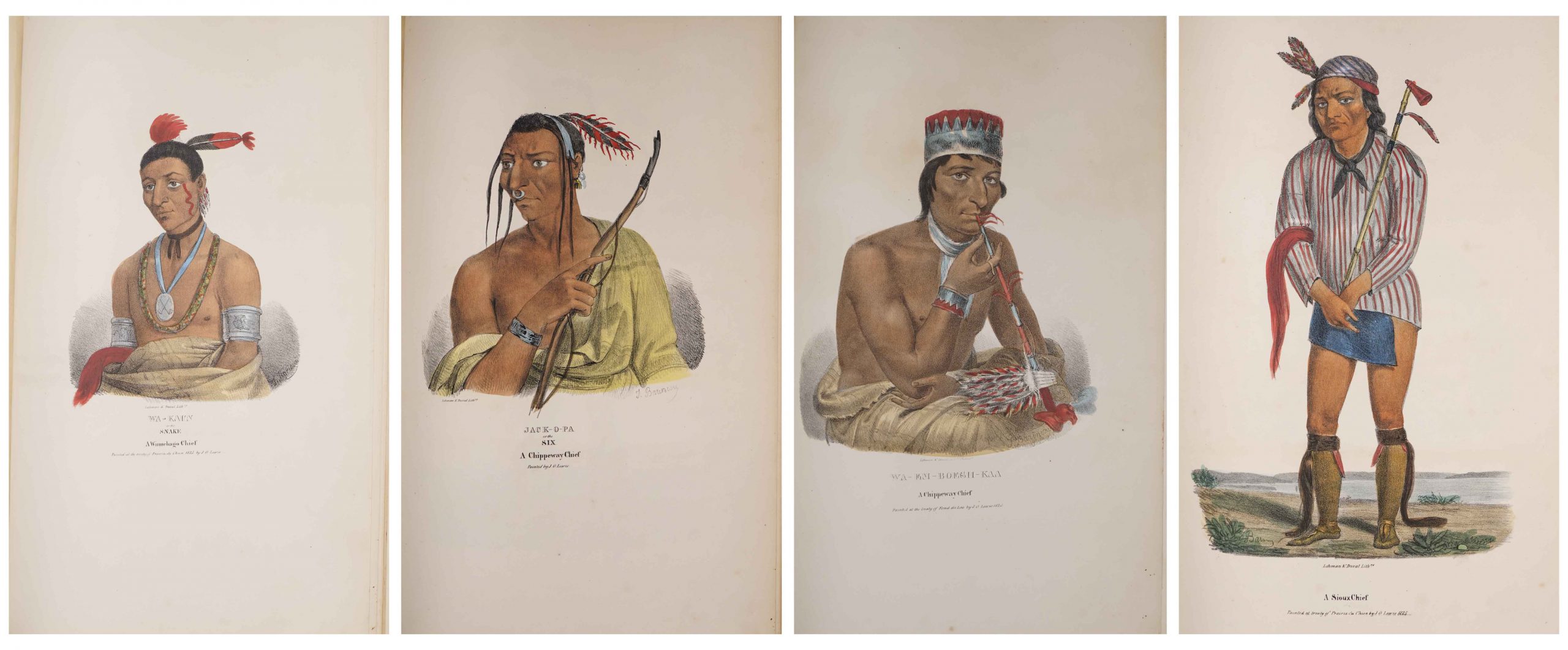
Complete Set of 80 Hand-Colored Lithographs of “The Aboriginal Port Folio” by James Otto Lewis From 1835-1838 — Extremely Scarce Complete Set
Very scarce complete set of the “Aboriginal Port Folio”, containing 80 hand-colored lithographs by Native American visual chronicler James Otto Lewis, whose travels to various treaty ceremonies during the early 19th century produced lasting portraits of Native American leaders and customs. Lewis was the first to create such artwork, preceding McKenney & Hall by several years. Philadelphia: George Lehman and Peter S. Duvall, 1835-1838.
After painting portraits of members from the Sioux, Potawatomi, Winnebago, Fox, Shawnee, Miami, and Iowa tribes, Lewis brought his paintings to Philadelphia for lithography, releasing them by subscription in 10 installments of 8 lithographs apiece. Each installment grew more scarce as subscriptions trailed off with the impending publication of the more comprehensive (and more formally posed) “History of the Indian Tribes of North America” by McKenney & Hall, whose portrait artist Charles Bird King even copied some of Lewis’ paintings. As a result, the full collection of 80 lithographs of “The Aboriginal Port Folio” is so scarce that only five to ten copies are known to exist. To make matters worse, Lewis’ original paintings were destroyed in the Smithsonian fire in 1865.
This set is in very good to near fine condition, with only minor scattered foxing affecting some sheets. In addition to the 80 pictorial lithographs, set also includes the lithograph title page and three leaves of advertisements, making it a truly complete set. Lithographs each measure 11.5″ x 18.125″, housed in three-quarter red morocco clamshell case with custom lettering to spine. One of the few visual remembrances of this important collection preserved for history. Sold for $84,000.

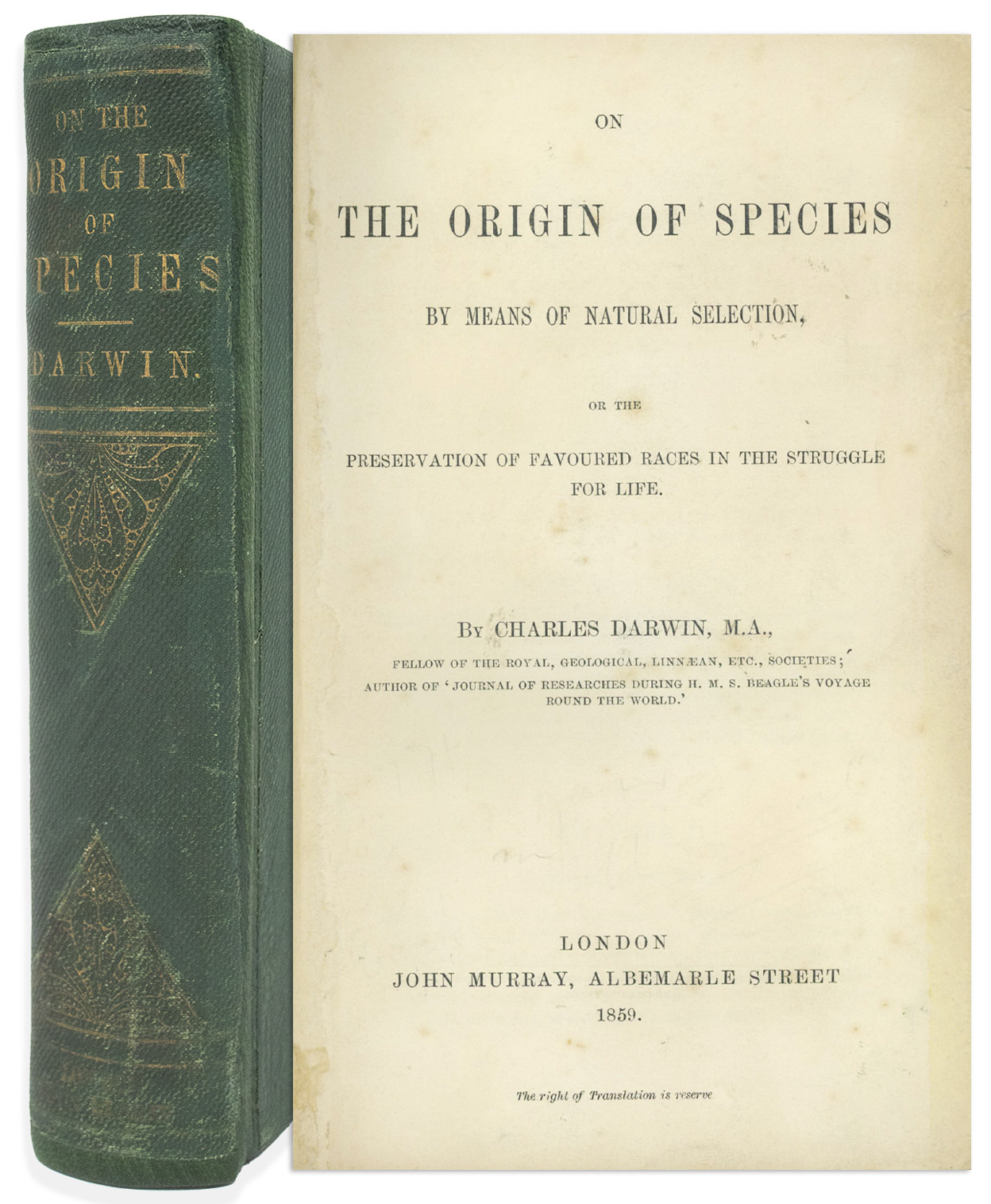
First Edition, First Printing of Charles Darwin’s Masterpiece, “On the Origin of Species” — “The most important biological book ever written”
First edition, first printing of “On the Origin of Species” by Charles Darwin, one of the most important books in the scientific canon. London: John Murray, 1859. In this revolutionary book that upended man’s own view of himself, Darwin posits natural selection as the engine driving species’ evolution, an argument so persuasive that even 19th century religious leaders adjusted their teachings to allow for evolution to work in concert with divine planning. Its importance has only grown in the 150+ years since publication, with Freeman concluding it to be “the most important biological book ever written”. First released on 24 November 1859, its scarcity nearly matches its importance, with the first printing consisting of only 1,250 copies, and the number of extant copies now significantly fewer.
All first printing points are present, including original binding, variant B, title page with copyright information on verso, Table of Contents (pages v-ix) with binder instructions to verso, complete pages 1-502, and folding table present between pages 116-117. Bound in publisher’s full green boards, stamped and lettered in gilt. Overall in very good condition; ads at back of volume have been removed as has half-title page, and endpapers have been replaced. Volume is rebacked using morocco, with original spine laid down. Some shelf wear to boards. Light foxing throughout book, with some chipping, small closed tears with repairs to a few pages, and a few dogeared pages. One small mark on page 109, otherwise no internal writing or marks. Housed in a custom quarter-leather clamshell box. Overall in very good condition, a handsome, presentable copy of this scarce first printing. Sold for $68,250.
Currier & Ives Hand-Colored Lithograph Measuring — 19th Century Print Remains Boldly Colored
Beautiful Currier & Ives hand-colored lithograph entitled “The Life of a Hunter. ‘A tight fix’”. Produced in 1861 on wove paper, lithograph measures 28″ x 21.5″, framed to 39″ x 32.25″. Very well-preserved with deep, rich colors. A few small repaired tears to margin, with two extending slightly into the image at top and bottom right, though nearly indiscernible; also with faint discoloration to margins, else near fine condition. A rare lithograph so well preserved by the storied print makers. Sold for $31,680.

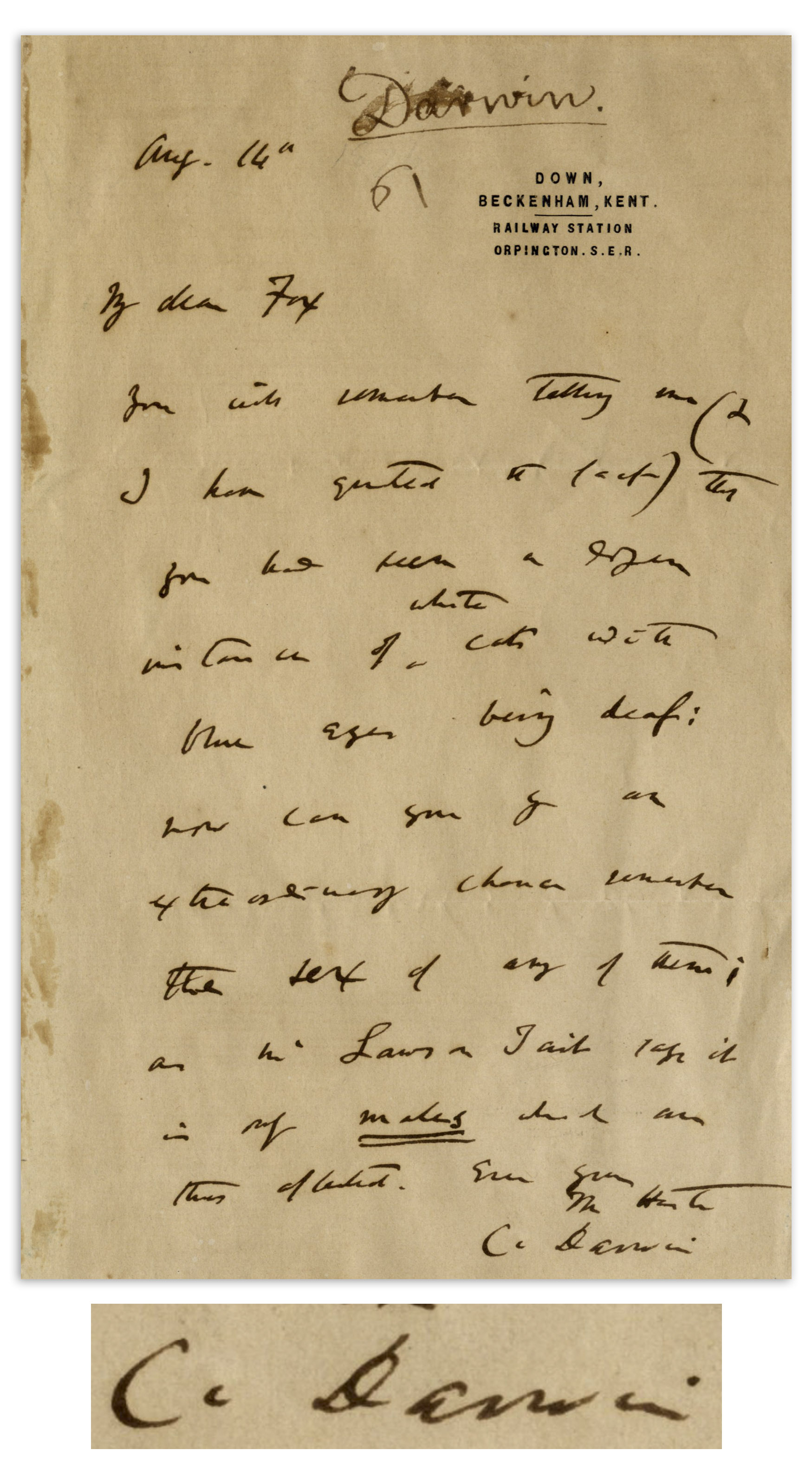
Charles Darwin autograph letter signed with evolution related content written shortly after ”On the Origin of Species” was published. Dated 16 August (1860 or 1861), Darwin writes to his second cousin William Darwin Fox, who introduced Charles Darwin to entomology. Upon Down, Kent stationery, Darwin writes in part, ”…you had seen a dozen instances of white cats with blue eyes being deaf: how can you by an extraordinary chance remember the sex of any of them…C. Darwin”. Fox’s reply to Darwin, giving additional details on the white, blue-eyed, blind cats, is archived in the Darwin Correspondence Project. Single page letter measures 5” x 8”, with an engraving of Darwin measuring 5.5” x 8”. Uniform toning, mounting tape remnants and writing at top not in Darwin’s hand, overall very good condition. Sold for $15,000.
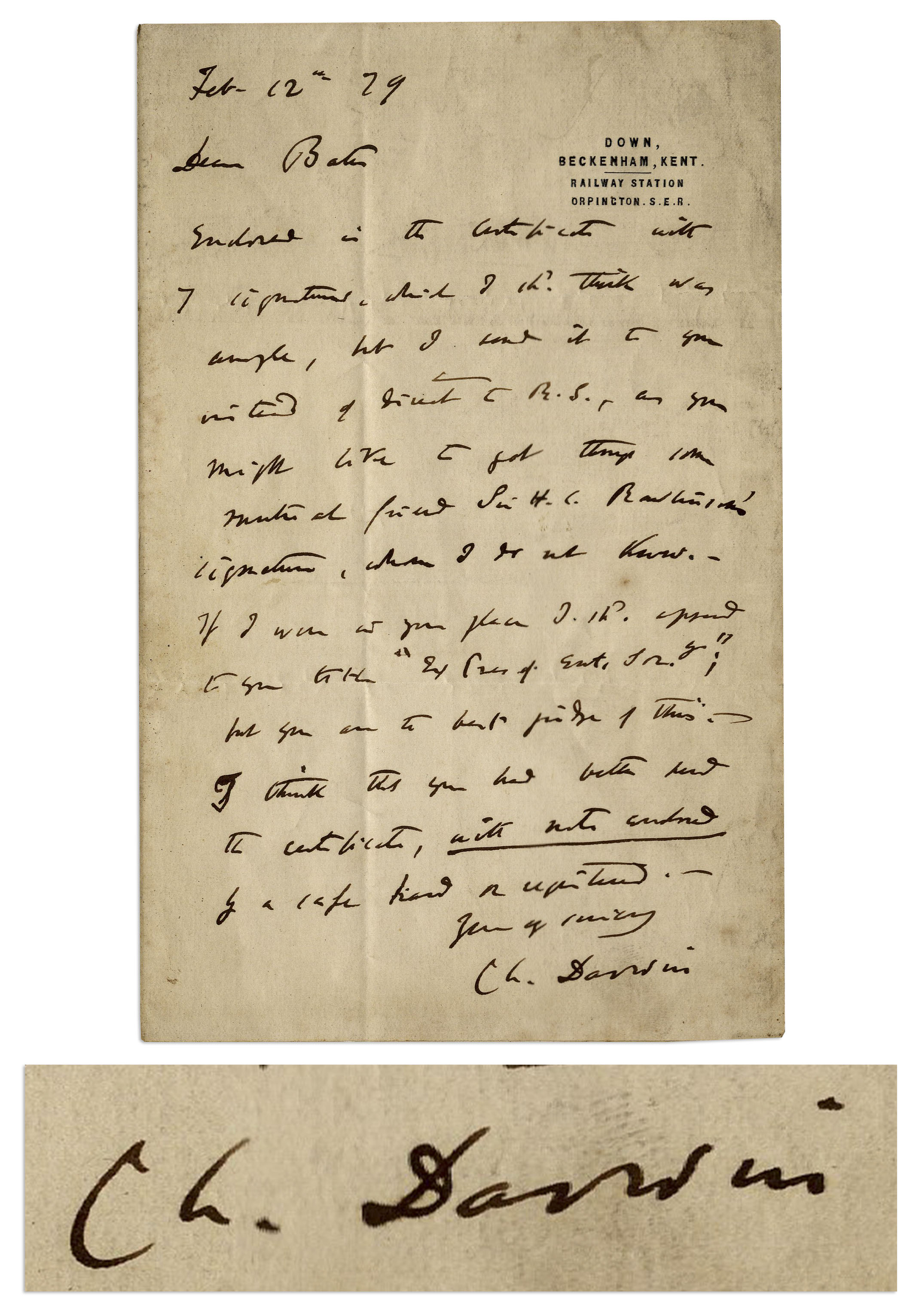
Charles Darwin autograph letter signed, dated 12 February 1879 shortly before his publication ”The Power of Movement in Plants”. Darwin writes fellow English naturalist and explorer Henry Walter Bates regarding a document to be sent to the Royal Society. Letter reads, ”Feb 12th 79 / Dear Bates / Enclosed is the certificate with 7 signatures, which I would think was ample, but I send it to you instead of direct to R.S. [Royal Society], as you might have to get stamps from Martin and friend Sir H.C. Rowlinson’s signature, whom I do not know. If I were in your place I would append to your title ‘Ex Pres [President] of Ent. [Entomological] Soc. [Society] Yr’; but you are the best judge of this. I think that you had better send the certificate, with note enclosed by a safe hand or [?]. Yours sincerely, Ch. Darwin”. Darwin had earlier praised Bates seminal work, ”The Naturalist on the River Amazons”, as the ”best book of Natural History Travels ever published in England”. Single page letter measures 5” x 8”. Light soiling and wear; overall in very good plus condition with very bold handwriting and signature. Sold for $6,250.
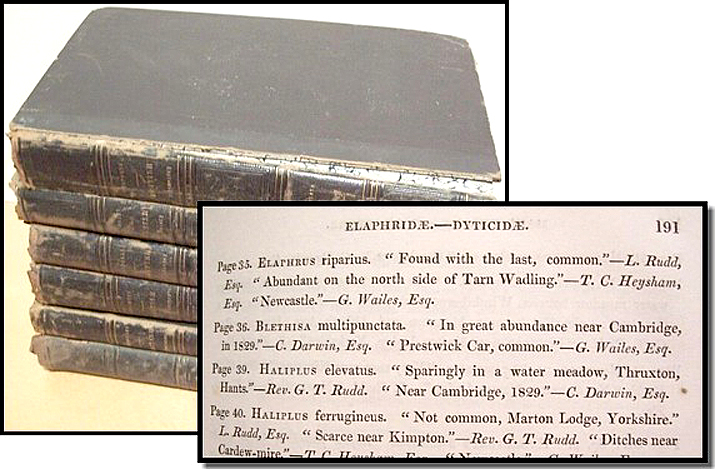
Darwin’s “First Words”
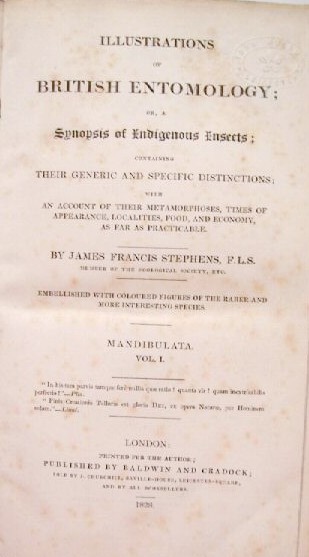
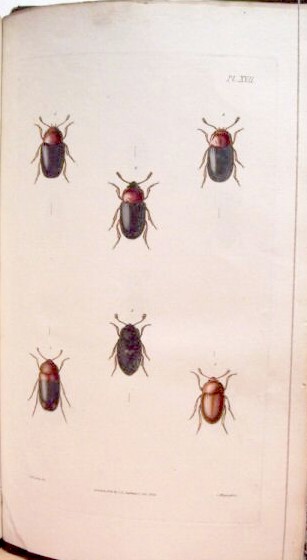
London: Baldwin & Cradock, 1827-35 and Henry Bohn 1846. 2,202pp., 7 volumes of 11. Bound in six volumes, (the first and second volumes bound as one). Contains Mandibulata portion of work only, plus one supplementary volume (lacks four volumes of Haustellata). Contains 47 hand-colored engraved plates, bound from arts in quarter morocco, gilt rules, lettering to spines. Plain-paper sides, marbled endpapers. Bindings worn, rubbed, scuffed at head, tail of spines. Two volumes lacking .5″ piece at spine’s head. Volume VI split at head, tail of hinges. Covers detached on Volume I. Endpapers, title pages foxed, small embossed library stamp to top corner of title pages. Toning to pages, occasional light pencil note, tick to margins. Bindings tight. Good. Sold for $2,040.
FREE VALUATION. To buy, auction, sell or consign your John James Audubon Carolina Parrot Plate XXVI 1829 that is for sale, please email your description and photos to [email protected] of Nate D. Sanders Auctions (http://www.NateDSanders.com).