
Sell or Auction Your Elie Metchnikoff Signed Photo for up to Over $2,000 or More at Nate D. Sanders Auctions
FREE APPRAISAL. To buy, auction, sell or consign your Elie Metchnikoff signed photo that is for sale, please email your description and photos to [email protected] of Nate D. Sanders Auctions (http://www.NateDSanders.com).
Free Appraisal, Auction or Sell Your Elie Metchnikoff Signed Photo


Below is a recent realized price for a signed photo from Russian zoologist Elie Metchnikoff. Metchnikoff and Paul Ehrlich won the Nobel Prize in Physiology or Medicine in 1908. We at Nate D. Sanders Auctions can obtain up to this amount or more for you:
Elie Metchnikoff Signed Photo. Sold for Over $2,000.
Here are some related items we have sold:
The 1963 Nobel Prize in Physiology or Medicine, awarded to physiologist Alan Lloyd Hodgkin for establishing the propagation mechanism of nerve impulses called action potentials — consequently helping to understand the mechanism behind disorders such as multiple sclerosis, seizures and Parkinson’s disease. Hodgkin is also responsible for identifying the Hodgkin Cycle and, along with colleagues Andrew Fielding Huxley and John Carew Eccles, hypothesized the existence of ion channels on cell membranes, a concept which took over 20 years to confirm; that confirmation earned Erwin Neher and Bert Sakmann the 1991 Nobel Prize. This Nobel Prize medal is made of 23k gold and features the relief portrait of Alfred Nobel, with his name and the years of his birth and death. Verso features the words, ”INVENTAS VITAM JUVAT EXCOLUISSE PER ARTES”, which translates from Latin to, ”Inventions enhance life which is beautified through art”. A.L. Hodgkin’s name and the year 1963 in Roman numerals are engraved on a plaque below the relief, framed by the words, ”REG. UNIVERSITAS MED-CHIR-CAROL”. On the right side is the name ”E LINDBERG”, who designed the prize. Comes with 6 original photographs of Hodgkin (at least 4 of which are from the ceremony in Oslo on 10 December 1963), a New York Times article on Hodgkin dated 18 October 1963, a portion of a 1976 issue of ”The Journal of Physiology” featuring an essay by Hodgkin, and the official 1963 English edition of the Nobel Prize publication, featuring Hodgkin and partner Huxley on the cover. Medal is housed in the maroon leather presentation box with a white satin lining and Hodgkin’s name printed on the front. Box measures 5.5” x 5.5” x 1”. Medal measures 6.5 cm or 2.56” in diameter, and weighs 196 g or 6.9 oz, consistent with the original Nobel Prizes awarded in 1963. Presented in near fine condition. With an LOA from the daughter of Dr. Alan Hodgkin. Sold for $795,614.


The 1988 Nobel Prize in Physics, awarded to particle physicist Leon Lederman for his discovery of the muon neutrino, a particle 200 times the size of an electron. Lederman, along with colleagues Melvin Schwartz and Jack Steinberger, found the muon neutrino in 1962 while using a high energy particle accelerator. They discovered that in some cases a muon (rather than an electron) was produced, illuminating the existence of a new atomic particle. Lederman was also instrumental in the discovery of the bottom quark in 1977, and was the champion of the Superconducting Super Collider. His popular 1993 book ”The God Particle: If the Universe is The Answer, What is The Question” was released to critical acclaim. This Nobel Prize is made of 18kt gold, plated in 24k gold, as were all Nobel Prize medals awarded after 1980. Medal features the relief portrait of Alfred Nobel to front, with his name and the years of his birth and death. Verso features a relief of the Goddess Isis, whose veil is held up by a woman who represents the genius of science. Encircling the medal are the words ”Inventas vitam juvat excoluisse per artes”, translating to ”And they who bettered life on earth by their newly found mastery”. Lederman’s name and 1988 in Roman numerals are engraved on a plaque below the relief of the two women, with ”Reg. Acad. Scient. Suec.” also written, an abbreviation for The Royal Swedish Academy of Sciences. Etched upon the medal is the name of Erik Lindberg, designer of the Nobel medal. Housed in the original red leather case with Leon Lederman’s name gilt stamped. Medal weighs 173 grams or just over 6 oz. and measures 2.5” in diameter, consistent with the original Nobel Prize awarded in 1988. Case measures 5.5” x 5.5” x 1”. Presented in near fine condition, and with an LOA from Leon Lederman. Sold for $765,002.


Nobel Prize Won by Walter Kohn, One of the Children Saved by Kindertransport During World War II
Nobel Prize in Chemistry won by Walter Kohn in 1998, unique not only for the scientific impact of Kohn’s work, but also for his life experience as one of the children rescued from Nazi-occupied territories in World War II through the Kindertransport program. Kindertransport was established by the United Kingdom in 1938 immediately after the ”Night of Broken Glass” pogrom in Germany, authorizing the safe passage of almost 10,000 children into the UK. The children were placed in homes throughout the British empire, with Kohn ultimately finding a home in Canada after both his parents were killed in the Holocaust. In addition to his Nobel Prize, lot also includes three science books that Kohn purchased at the temporary internment camp in Canada, all still housed in their well-worn homemade dust jackets: ”A Course of Pure Mathematics”, ”Dent’s Modern Science Series”, and ”Properties of Matter”.
The books are a foreshadowing to the incredible achievements that Kohn made to the world through his Nobel Prize-winning work. As the architect of density functional theory (DFT), Kohn devised the computational quantum mechanical modelling system that has allowed scientists to understand the nuclear structure of microscopic matter. Though the underlying structure of NFT is complex, the actual equations are now commonplace among scientists, with countless practical results deriving from it – from discovering trace impurities in chemicals to modeling planetary systems.
Nobel Prize is made of 18kt gold, plated in 24kt gold, consistent with the 1998 medals. Medal features the relief portrait of Alfred Nobel to front, with his name and the years of his birth and death. Reverse features a relief of the Goddess Isis, whose veil is held up by a woman who represents the genius of science. Encircling the medal are the words ”Inventas vitam juvat excoluisse per artes”, translating to ”And they who bettered life on earth by their newly found mastery”. Kohn’s name and 1998 in Roman numerals are engraved on a plaque below the relief of the two women, with ”Reg. Acad. Scient. Suec.” also written, an abbreviation for The Royal Swedish Academy of Sciences. Etched upon the medal is the name of Erik Lindberg, who designed the Nobel medal. Medal weighs 173 grams or just over 6 oz. and measures 2.5” in diameter. Near fine condition. With an LOA from the Kohn family. Sold for $457,531.

The 1927 Nobel Prize in Chemistry, awarded to Dr. Heinrich Otto Wieland, considered the father of modern biochemistry. This Nobel is the only Prize in Chemistry to ever be auctioned. Wieland spent his life’s work investigating the oxidation processes in living cells, and has been credited with unifying the disciplines of organic chemistry and biochemistry, which had been split since the work of chemist Justus von Liebig in the 1870’s. Wieland’s research into bile acid was used as the basis for the manufacture of drugs for the treatment of a wide variety of cardiovascular diseases, underpinning his recognition as the founder of modern biochemistry. As a result of his groundbreaking work in the field of chemistry, the Heinrich Wieland Prize was established and endowed in his honor in 1964, awarded to leading scientists for their work in the fields of biochemistry, chemistry and physiology, and counting four Nobel Laureates among its recipients. Wieland was also a strident opponent of the Nazi party; he employed and hid several Jews and supporters of the White Rose Nazi resistance movement in his laboratory at the University of Munich, which was given the nickname ”The Ghetto Room”. Wieland even courageously defended his student Hans Leipelt in court, who was convicted for collecting money for the widow of Kurt Huber, Wieland’s colleague who moonlighted as a White Rose resistance leader. Huber and Leipelt were both tried and executed in 1943. This Nobel Prize is made of 23kt gold and features the relief portrait of Alfred Nobel to front, with his name and the years of his birth and death. Verso features a relief of the Goddess Isis, whose veil is held up by a woman who represents the genius of science. Encircling the medal are the words ”Inventas vitam juvat excoluisse per artes”, translating to ”And they who bettered life on earth by their newly found mastery”. Wieland’s name and 1928 in Roman numerals are engraved on a plaque below the relief of the two women, with ”Reg. Acad. Scient. Suec.” also written, an abbreviation for The Royal Swedish Academy of Sciences. Etched upon the medal is the name of Erik Lindberg, who designed the Nobel medal. Medal is housed in a green leather box with a pale blue felt bottom and white satin lining. Box measures 5” x 5”. Medal measures 66 mm or 2.5” in diameter, and weighs 206 g or 7.25 oz, consistent with the original Nobel Prizes awarded in 1928. Presented in near fine condition. With an LOA from the consignor, Dr. Heinrich Wieland’s grandson. Sold for $395,000.


The 1980 Nobel Prize in Physiology or Medicine, awarded to George D. Snell for his scientific discovery that directly led to saving lives through organ transplantation. Snell – known as the Father of Immunogenetics, won the Nobel Prize for his discovery of the major histocompatibility complex, or MHC, the genetic foundation of a body’s immunological response to tissue and organ transplants, determining whether an organ is accepted by the body or rejected as a foreign invader. Prior to Snell’s work, organ transplantation was entirely dependent on chance as to whether a genetic match would allow an organ to be accepted; afterwards, the only impediment was the availability of organs. Nearly 150,000 organ transplants are now performed each year, with millions of lives over the course of 40 years saved as a result.
As the Father of Immunogenetics, Snell’s work also laid the groundwork for research into genetic-based immunological responses to other diseases, such as cancer, neurodegeneration and cardiovascular disease, as well as infectious and autoimmune diseases such as type 1 diabetes and lupus, with the goal towards developing new and effective clinical therapies. Snell’s Nobel-Prize winning research was performed at the Jackson Laboratory (JAX) in Bar Harbor, Maine, where he’s remembered by Professor Derry Roopenian as being “more interested in encouraging young scientists than in accolades of his own monumental achievements.”
Nobel Prize is made of 18kt gold, plated in 24kt gold, consistent with the 1980 medals. Medal features the relief portrait of Alfred Nobel to front, with his name and the years of his birth and death. Verso features a relief of a woman representing the Genius of Medicine, holding a book in her lap, as she collects water to nourish a girl. Encircling the medal are the words ”INVENTAS VITAM JUVAT EXCOLUISSE PER ARTES”, which translates from Latin to “The benefits of improved life through discovered arts”. Snell’s name and 1980 in Roman numerals are engraved on a plaque framed by the words “REG UNIVERSITAS MED-CHIR CAROL”, representing the Karolinska Institute that awards the Nobel Prize in Physiology or Medicine. Etched upon the medal is the name of Erik Lindberg, designer of the Nobel medal. Medal weighs 173 grams or just over 6 oz. and measures 2.5” in diameter. Presented in fine condition. With an LOA from George Snell’s son. Sold for $275,000.

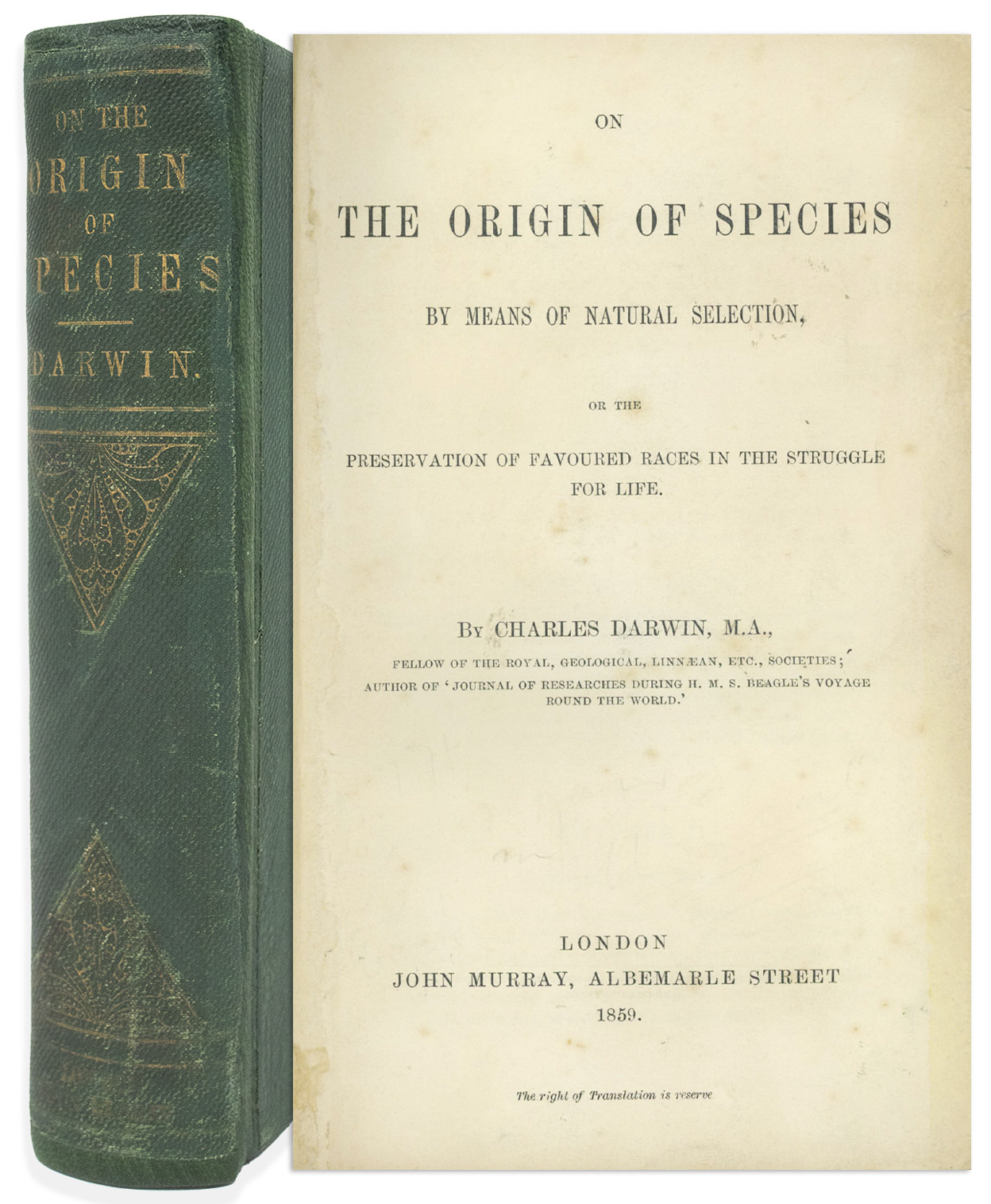
First Edition, First Printing of Charles Darwin’s Masterpiece, “On the Origin of Species” — “The most important biological book ever written”
First edition, first printing of “On the Origin of Species” by Charles Darwin, one of the most important books in the scientific canon. London: John Murray, 1859. In this revolutionary book that upended man’s own view of himself, Darwin posits natural selection as the engine driving species’ evolution, an argument so persuasive that even 19th century religious leaders adjusted their teachings to allow for evolution to work in concert with divine planning. Its importance has only grown in the 150+ years since publication, with Freeman concluding it to be “the most important biological book ever written”. First released on 24 November 1859, its scarcity nearly matches its importance, with the first printing consisting of only 1,250 copies, and the number of extant copies now significantly fewer.
All first printing points are present, including original binding, variant B, title page with copyright information on verso, Table of Contents (pages v-ix) with binder instructions to verso, complete pages 1-502, and folding table present between pages 116-117. Bound in publisher’s full green boards, stamped and lettered in gilt. Overall in very good condition; ads at back of volume have been removed as has half-title page, and endpapers have been replaced. Volume is rebacked using morocco, with original spine laid down. Some shelf wear to boards. Light foxing throughout book, with some chipping, small closed tears with repairs to a few pages, and a few dogeared pages. One small mark on page 109, otherwise no internal writing or marks. Housed in a custom quarter-leather clamshell box. Overall in very good condition, a handsome, presentable copy of this scarce first printing. Sold for $68,250.
Charles Darwin autograph letter signed with evolution related content written shortly after ”On the Origin of Species” was published. Dated 16 August (1860 or 1861), Darwin writes to his second cousin William Darwin Fox, who introduced Charles Darwin to entomology. Upon Down, Kent stationery, Darwin writes in part, ”…you had seen a dozen instances of white cats with blue eyes being deaf: how can you by an extraordinary chance remember the sex of any of them…C. Darwin”. Fox’s reply to Darwin, giving additional details on the white, blue-eyed, blind cats, is archived in the Darwin Correspondence Project. Single page letter measures 5” x 8”, with an engraving of Darwin measuring 5.5” x 8”. Uniform toning, mounting tape remnants and writing at top not in Darwin’s hand, overall very good condition. Sold for $15,000.

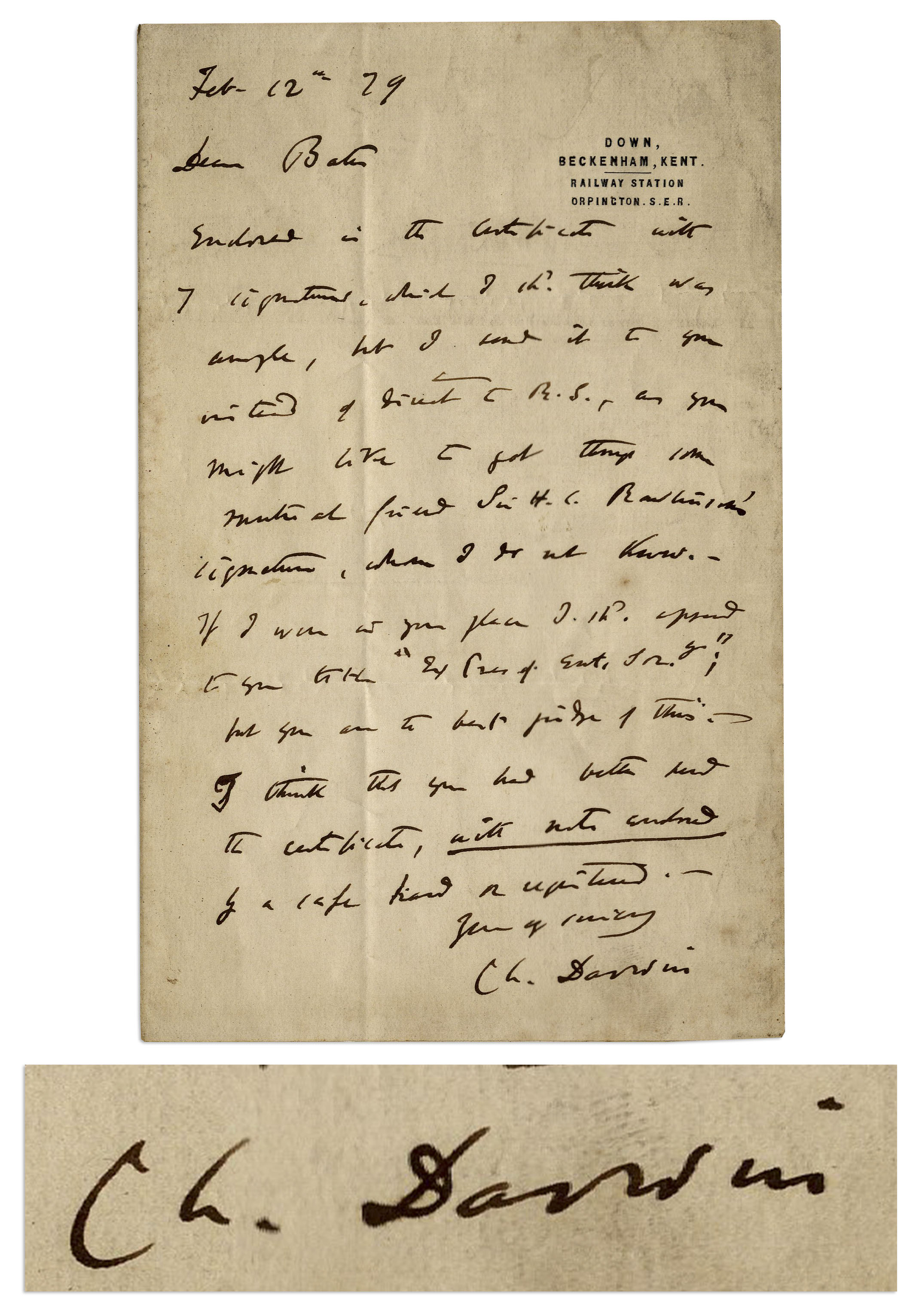
Charles Darwin autograph letter signed, dated 12 February 1879 shortly before his publication ”The Power of Movement in Plants”. Darwin writes fellow English naturalist and explorer Henry Walter Bates regarding a document to be sent to the Royal Society. Letter reads, ”Feb 12th 79 / Dear Bates / Enclosed is the certificate with 7 signatures, which I would think was ample, but I send it to you instead of direct to R.S. [Royal Society], as you might have to get stamps from Martin and friend Sir H.C. Rowlinson’s signature, whom I do not know. If I were in your place I would append to your title ‘Ex Pres [President] of Ent. [Entomological] Soc. [Society] Yr’; but you are the best judge of this. I think that you had better send the certificate, with note enclosed by a safe hand or [?]. Yours sincerely, Ch. Darwin”. Darwin had earlier praised Bates seminal work, ”The Naturalist on the River Amazons”, as the ”best book of Natural History Travels ever published in England”. Single page letter measures 5” x 8”. Light soiling and wear; overall in very good plus condition with very bold handwriting and signature. Sold for $6,250.
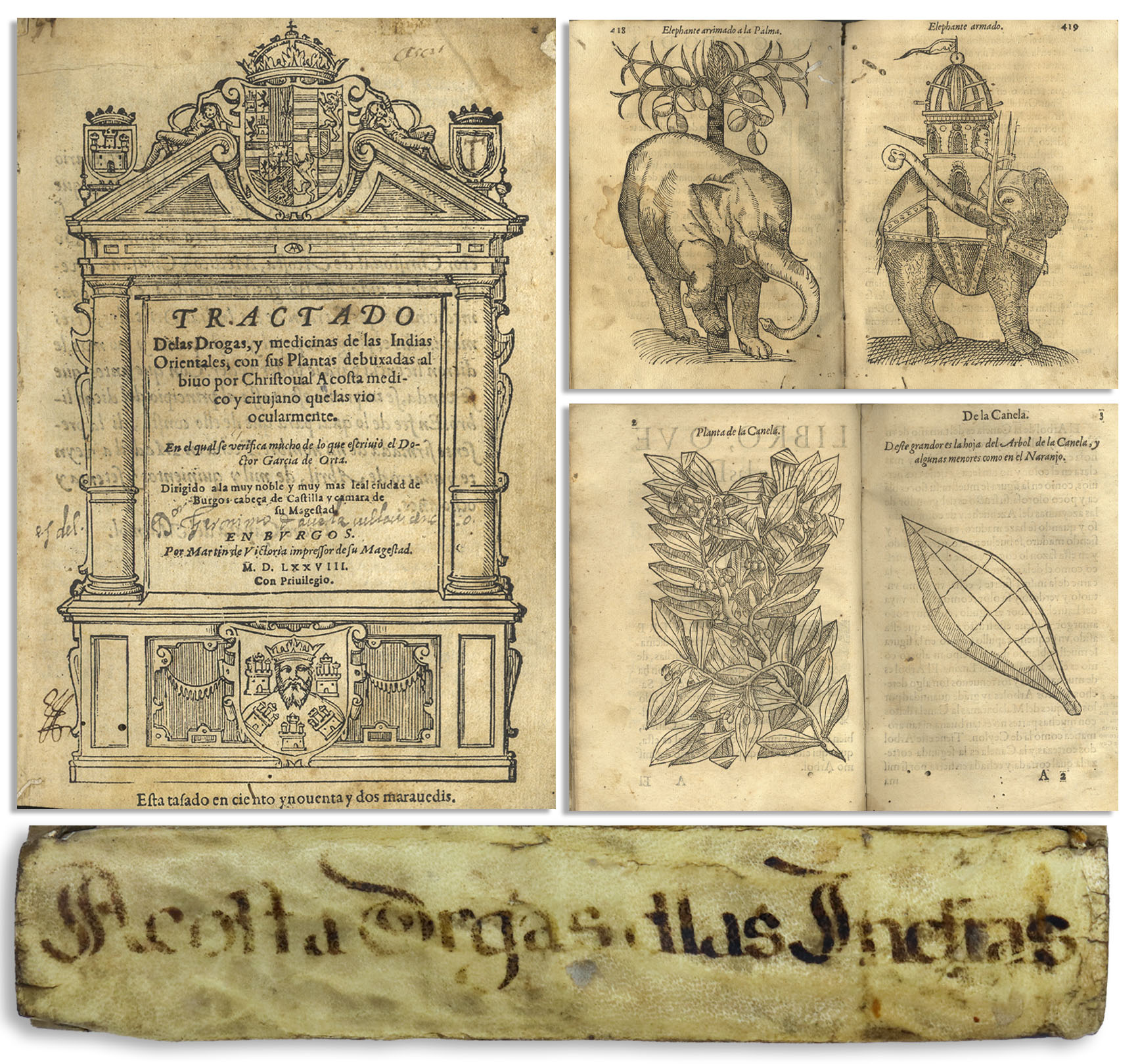
1578 First Edition of “Tractado de las drogas, y medicinas de las Indias Orientales” — The Important Reference of Therapeutic Botany From the Age of Exploration, Complete With All 48 Woodcuts
Rare 1578 first edition of “Tractado de las drogas, y medicinas de las Indias Orientales” (“Treatise of the drugs and medicines of the East Indies”) by physician and naturalist Cristobal Acosta. Burgos, Spain: Martin de Victoria, 1578. Bound in original vellum boards with leather ties, rare volume is complete with all woodcuts: title page featuring a portrait of the author, 45 pages of medicinal plants and herbs, and two pages of Asian elephants. Book also features woodcut initials heading each chapter. Acosta’s tomb of therapeutic botany was highly important in its day, giving illustration to exotic plants, animals, herbs and spices from the East Indies during the Age of Exploration, including cinnamon, garlic, nutmeg, coconut, sandalwood, and pineapple, all relatively unknown to Europe at the time. There is even a chapter on opium (“muy usual, y necessaria”), and a chapter on Asian elephants, then described for the first time in a scientific publication. Book measures 5.5″ x 7.375″. Some faint dampstaining, worming to several pages towards the end, and expected age wear. Overall very good plus condition. Sold for $3,900.
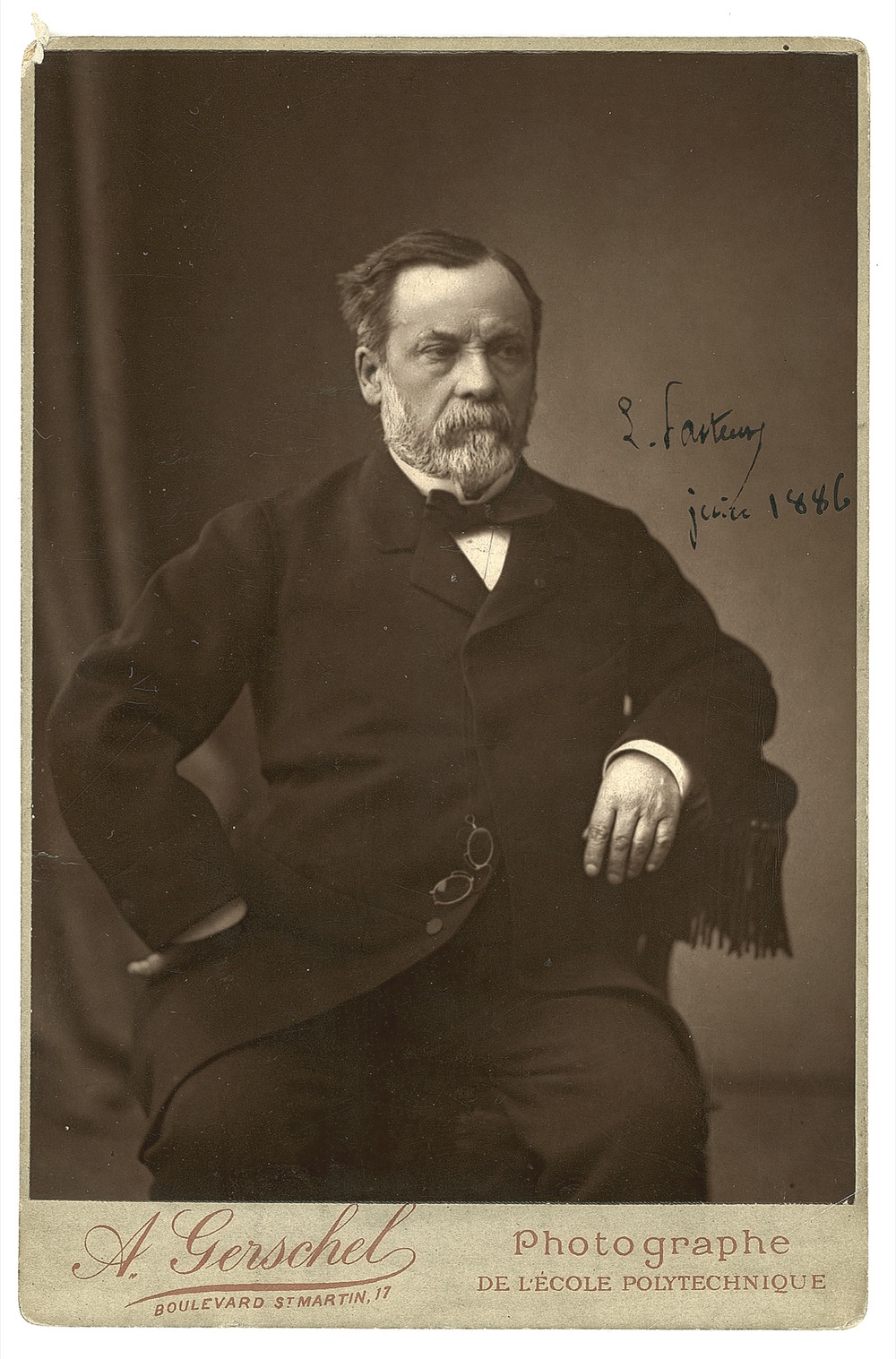
Scarce and Distinguished Signed Portrait of the History-Altering Scientist, Louis Pasteur
Signed photo of Louis Pasteur, the pioneering French microbiologist and chemist who demonstrated the germ theory of disease and developed the first vaccine against rabies. Exceptional 4.25″ x 6.5″ formal seated cabinet portrait by A. Gershel of Paris, signed beside his image in ink, “L. Pasteur / Juin 1886.” Pasteur’s signature here came less than a year after he first showed the French Academy of Sciences promising results of his treatment against rabies in humans, and three months following his March 1886 presentation of a study of 350 inoculated with his rabies vaccine – of which there was only one unsuccessful treatment. In near fine condition, with a few trivial surface marks, a tiny wrinkle near left edge, and a slight bowing to the image. Sold for $2,912.
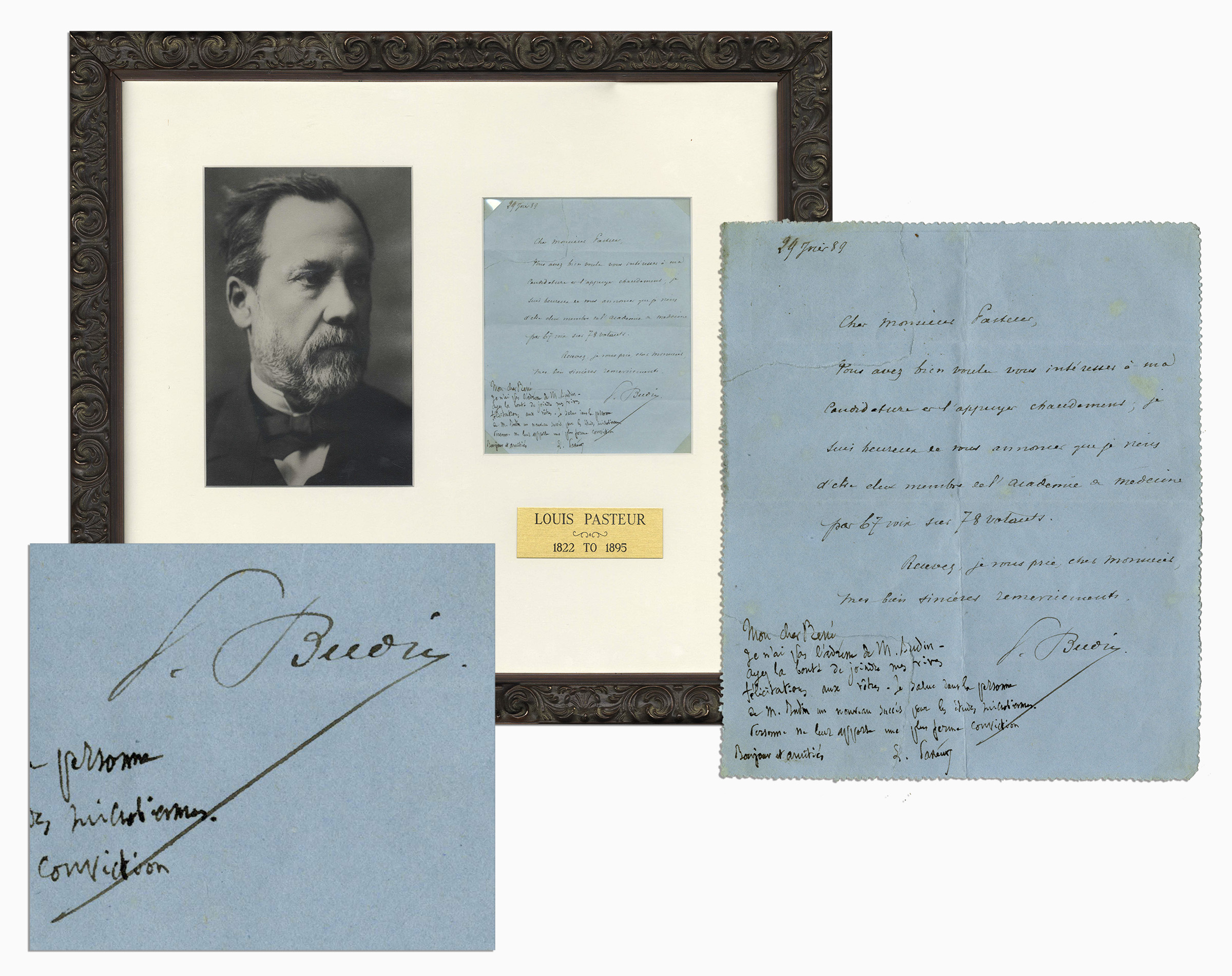
Louis Pasteur autograph letter signed, and written at lower portion of another letter addressed to him, dated 29 June 1889. Translated from French and reading in full, ”My dear Rene, I do not have Mr. Audin’s address. Have the kindness to add my heartfelt congratulations to yours. I salute through Mr. Audin a new success for microbial studies. No one can bring to them a more firm conviction. Hello and friendship.” Signed ”L. Pasteur”, one page letter measures 4.25” x 5” and is matted and framed with a portrait of Pasteur and a small plaque to an overall size of 15.5” x 13.5”. Some intersecting folds and repaired tears to left corner, else very good to near fine condition. Sold for $2,500.
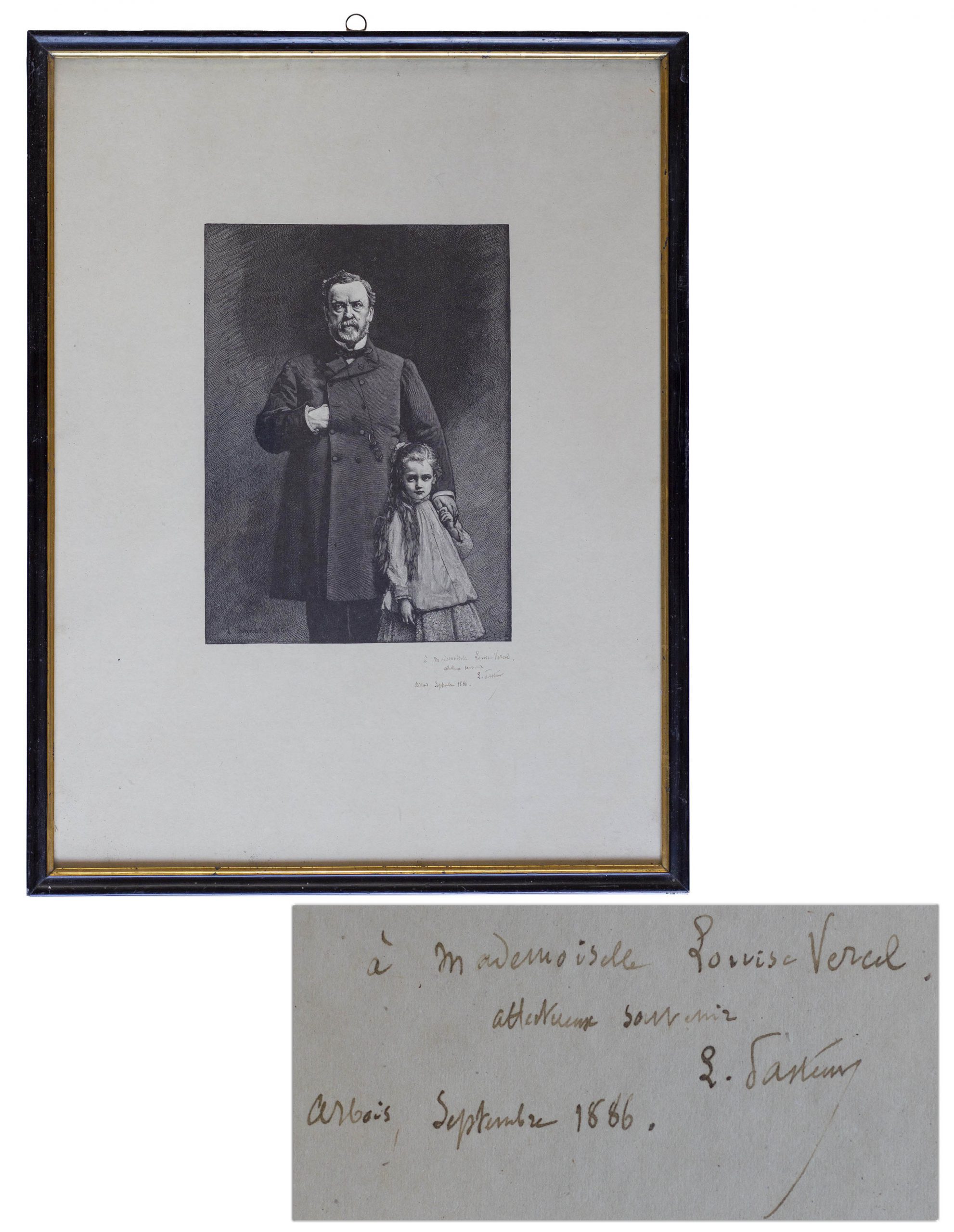
Louis Pasteur Signed 15″ x 20″ Portrait Engraving
Louis Pasteur signed portrait engraving, showing the scientist with his granddaughter Camille Vallery-Radot. Engraving by Leon Bonnat is the same that hangs in the Pasteur Museum. Pasteur’s autograph dedication reads, “to Mademoiselle Louise Vercel / affectionate recollection / L Pasteur / Arbois September 1886″. Engraving on a large sheet of Japanese paper measures 15″ x 20″, framed to 16.25″ x 21”. Very good to near fine condition. Sold for $1,785.
Very Scarce Signature by Famed Scientist Edward Jenner, the ”Father of Immunology”
Scarce signature by smallpox vaccine inventor Edward Jenner, considered by science historians to have ”saved more lives than the work of any other man.” He signs the title page of ”Memoirs of Lady Hamilton,” which was apparently gifted to him by his friend and colleague, Dr. William Fermor. At the top right Jenner signs ”Edwd. Jenner / from” under which is signed ”W Fermor”. Publication information for the book reads, ”Printed for Henry Colburn, Public Library, Conduit-street, Hanover-square, 1815”. Lady Emma Hamilton, a contemporary of Jenner and Fermor, was a risque companion to many leading men of the period and muse to artist George Romney; the frontispiece of the book features her portrait by Romney. Book runs 399pp. and measures 5.25” x 8.25”. Bound in paper boards, which are detached and have significant wear to edges. Entire loss of backstrip to the spine. Toning to leaves and detachment of Chapter 1. All pages are present, and signature page, most importantly, remains in very good condition with only some discoloration. Signatures are bold. Sold for $1,664.

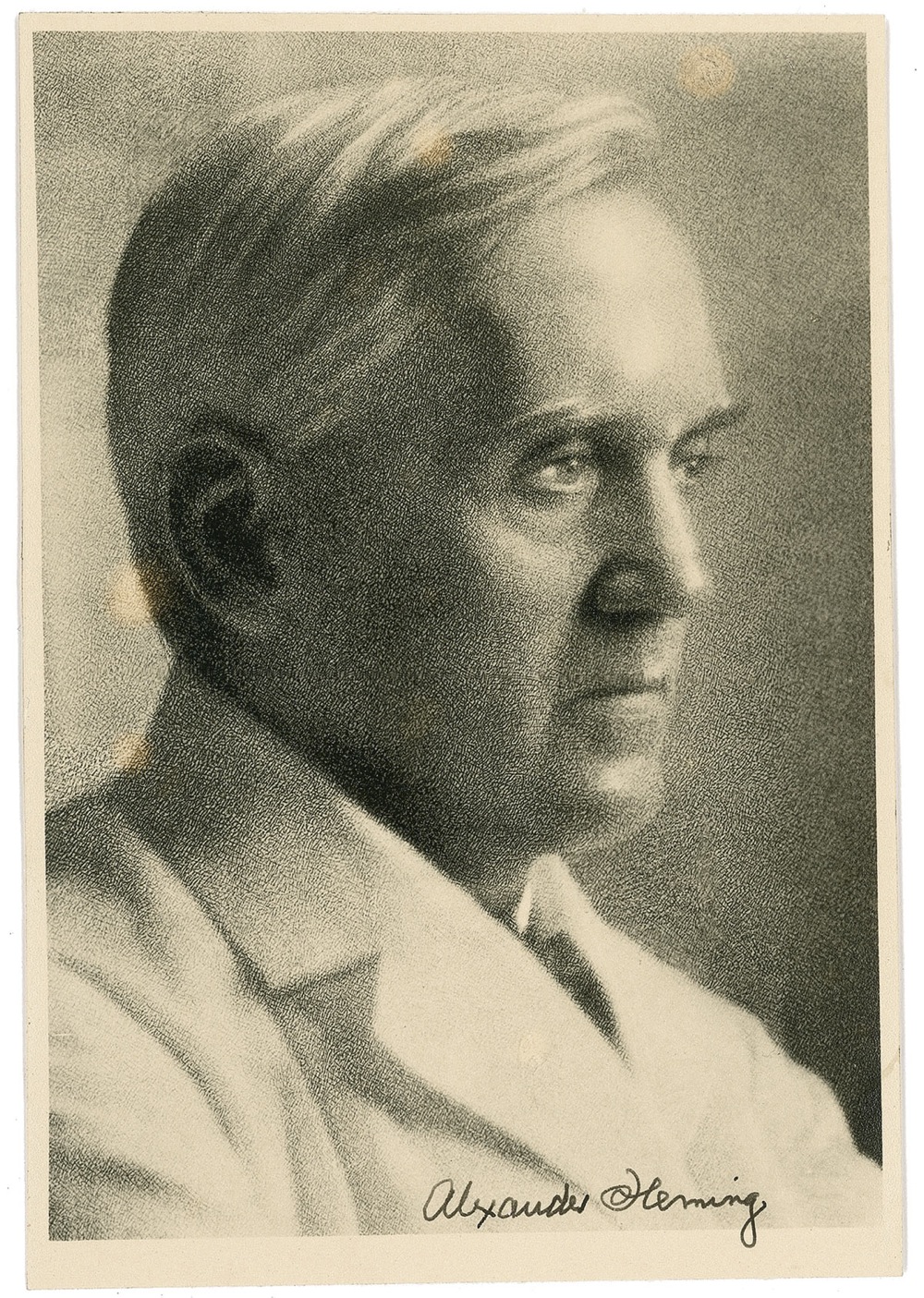
Rare Signed Portrait of the Life-Saving Scientist Who Discovered Penicillin, Alexander Fleming
Signed photo of Alexander Fleming, the Scottish bacteriologist who shared the 1945 Nobel Prize in Medicine for his role in the discovery and isolation of penicillin. Vintage 4.25″ x 6.25″ matte-finish portrait of Fleming looking thoughtfully off to the side, signed “Alexander Fleming” in black fountain pen. Several light spots touching Fleming’s hair and somewhat grainy image quality, otherwise fine condition. Sold for $1,556.
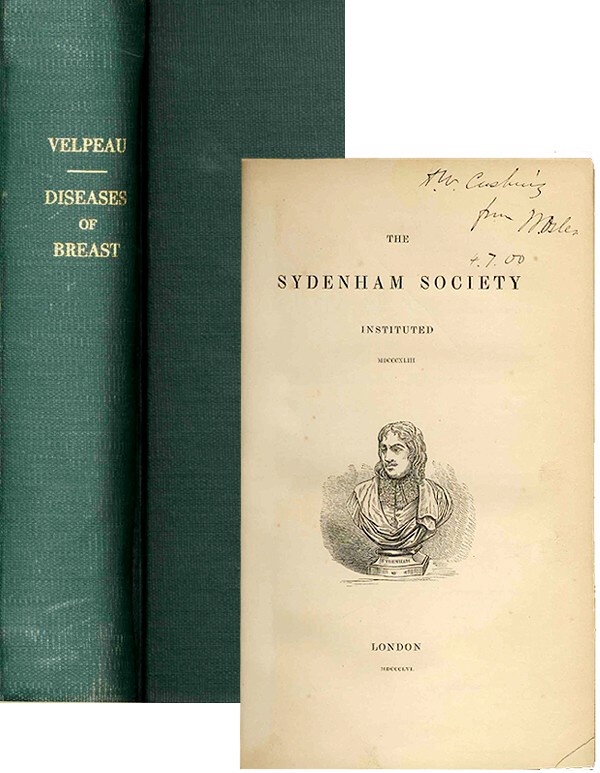
Harvey Cushing / W. Osler Signed Rare Book
Well-known 19th century French surgeon, Alfred-Armand-Louis-Marie Velpeau’s, “A Treatise on The Diseases of the Breast and Mammory Region.” London: Printed for the Sydenham Society: 1756. Rare book translated from French by Mitchell Henry. Dedicated from esteemed diagnostician Sir William Osler to Harvey Cushing. Cushing, mentored by Osler, won the 1926 Pulitzer Prize for his book on Osler. He passed the edition onto successor Elliot Cutler, who forwarded it to Richard Warren. All were Harvard doctors. Rare Osler-to-Cushing dedication. Sold for $1,353.
FREE APPRAISAL. To buy, auction, sell or consign your Elie Metchnikoff signed photo that is for sale, please email your description and photos to [email protected] of Nate D. Sanders Auctions (http://www.NateDSanders.com).
We offer the following services for your Elie Metchnikoff signed photo:
- Appraise Elie Metchnikoff signed photo.
- Auction Elie Metchnikoff signed photo.
- Consign Elie Metchnikoff signed photo.
- Estimate Elie Metchnikoff signed photo.
- Sell Elie Metchnikoff signed photo.
- Elie Metchnikoff signed photo valuation.