
Sell or Auction Your Czar Nicholas Autograph for up to Nearly $1,000 or More at Nate D. Sanders Auctions
FREE APPRAISAL. To buy, auction, sell or consign your Czar Nicholas autograph that is for sale, please email your description and photos to [email protected] of Nate D. Sanders Auctions (http://www.NateDSanders.com).
Sell Your Czar Nicholas Autograph
Nicholas I (Russian: Николай I Павлович, tr. Nikolay I Pavlovich; 6 July [O.S. 25 June] 1796 – 2 March [O.S. 18 February] 1855) reigned as Emperor of Russia, King of Poland and Grand Duke of Finland from 1825 until 1855. He was the third son of Paul I and younger brother of his predecessor, Alexander I. Nicholas inherited his brother’s throne despite the failed Decembrist revolt against him. He is mainly remembered in history as a reactionary whose controversial reign was marked by geographical expansion, economic growth and massive industrialisation on the one hand, and centralisation of administrative policies and repression of dissent on the other. Nicholas had a happy marriage that produced a large family; all of their seven children survived childhood.
Below is a recent realized price for a Czar Nicholas autograph. We at Nate D. Sanders Auctions can obtain up to these amounts or more for you:
Czar Nicholas Autograph. Sold for Nearly $1,000.
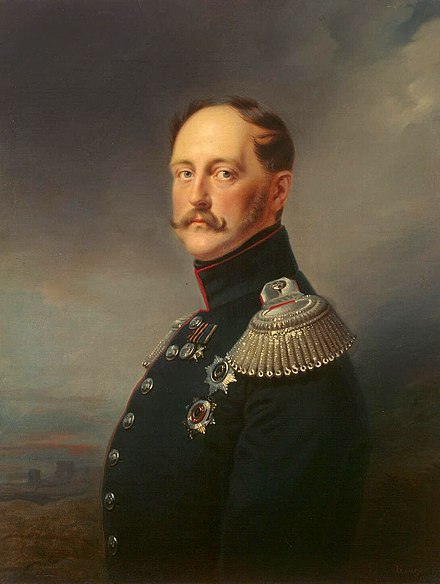
Consign your Czar Nicholas autograph at Nate D. Sanders Auctions. Send a description and images of your item to us at [email protected].
Nate D. Sanders Auctions has sold the following Russian items:
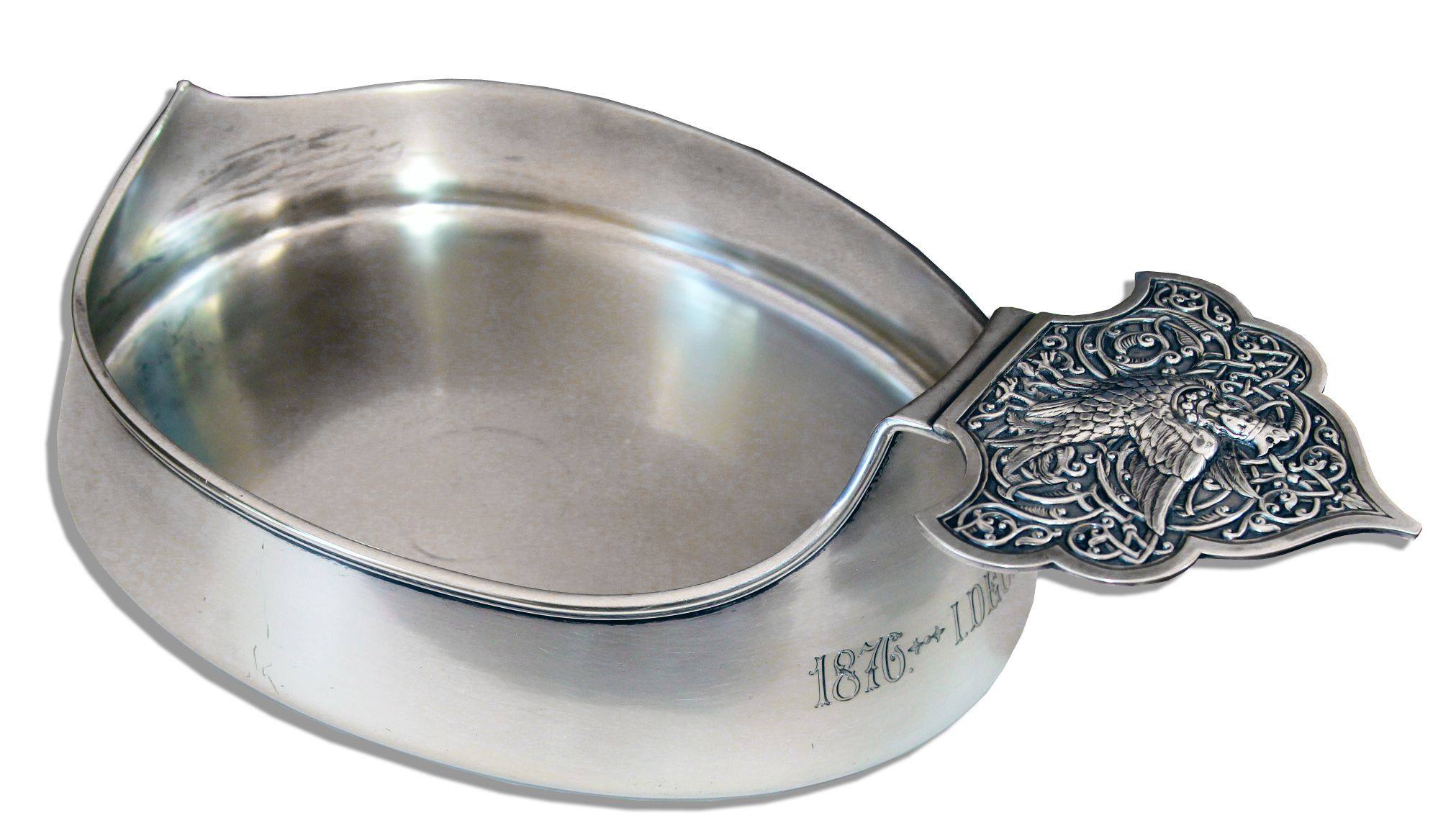
A Parcel-Gilt Silver Kovsh Marked K. Faberge With The Imperial Warrant, Moscow, 1899-1908
Of traditional form with flat oval base, with raised prow, the front engraved with monogram ‘AE,’ the reverse engraved ‘1876 – 1. Dec. – 1901’, the flat stylized handle cast and chased with a Sirin amidst scrolling foliage, marked under base. 12 1/8″ x 24.6″. Provenance from Christie’s. Sold for $23,116.
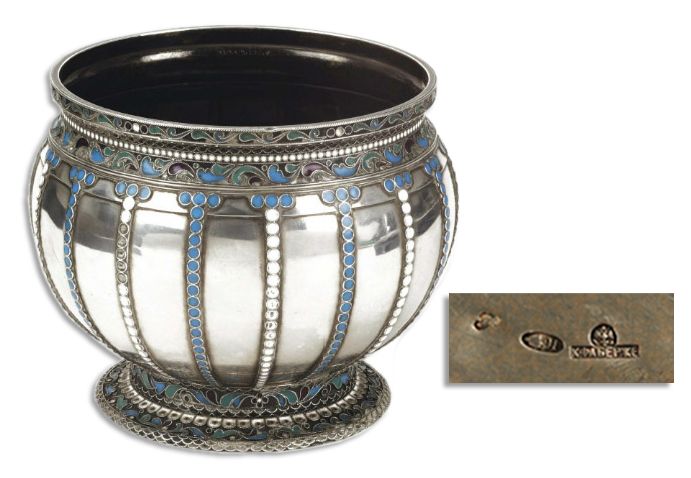
Faberge Vase From The Last Days of the Company’s Pre-Bolshevik Era — Stunning
Perfect silver Faberge vase crafted circa 1908-1917, just before the Bolshevik take-over of the company and when Faberge produced its most exquisite objects. Ribbed bombe vase on a circular foot features applied filigree and cloisonne in white, blue, sea green and purple enamels. Stamped in Russian, ”K. Faberge” with the imperial warrant, Moscow and also ”91”. The inventory number is engraved clearly: ”35280”. A stylized V-shaped stamped character is likely a Faberge workmaster’s mark. Measures 4.25” in height and 5.5” deep at its widest. The diameter of the mouth measures 4.75” and the base, 3.75”. Light tarnishing with occasional scratching and loss of colored enamel, else near fine. A beautiful representation of the Faberge company during Imperial Russia. Sold for $21,013.
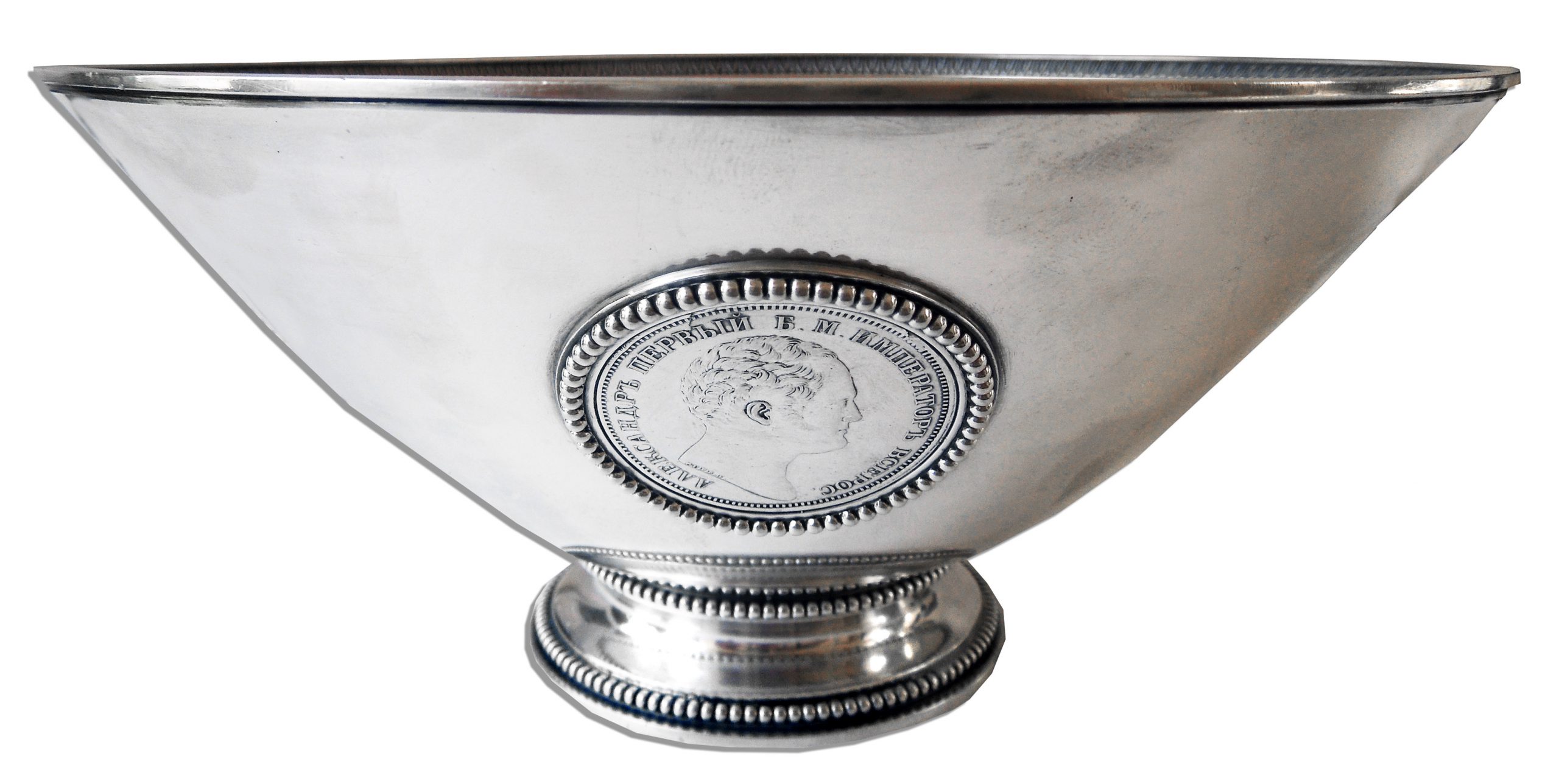
The conical bowl on a circular foot with beaded rim, the sides inset with four silver ruble coins depicting the emperors Nicholas I, Alexander I, Alexander II and Alexander III within beaded roundels, the interior of the rim with chased stiff-leaf motif, marked under base. 7.75” wide. Near fine. Provenance from Christie’s. Sold for $14,351.
Russian Chemist Dmitri Mendeleev Autograph Letter Signed — “…The elements of organic chemistry are represented in such a new way…”
Russian chemist Dmitri Mendeleev, mastermind behind the periodic table of elements, signs a handwritten letter, “D. Mendeleef” in black ink. The letter is written in French and datelined St. Petersburg, 25 November 1888. He writes, “Sir! Allow me to thank you for sending me Remsen’s book…’Introduction to the Study of the Compounds of Carbon.’ The elements of organic chemistry are represented in such a new way…verify if I can get the rights to translate into other languages…” Significant chipping and some paper loss to edges of 8.5″ x 11″ letter, though handwriting remains quite clear and legible. Very good. Handwritten letters by Mendeleev are quite scarce, especially so with chemistry content. Sold for $9,359.

Very Scarce Handwritten Letter by Princess Anastasia, Daughter of Czar Nicholas II — Handwritten letter by the Princess Who Was Assassinated with Her Family & Whose Body Was Never Found — With PSA/DNA COA
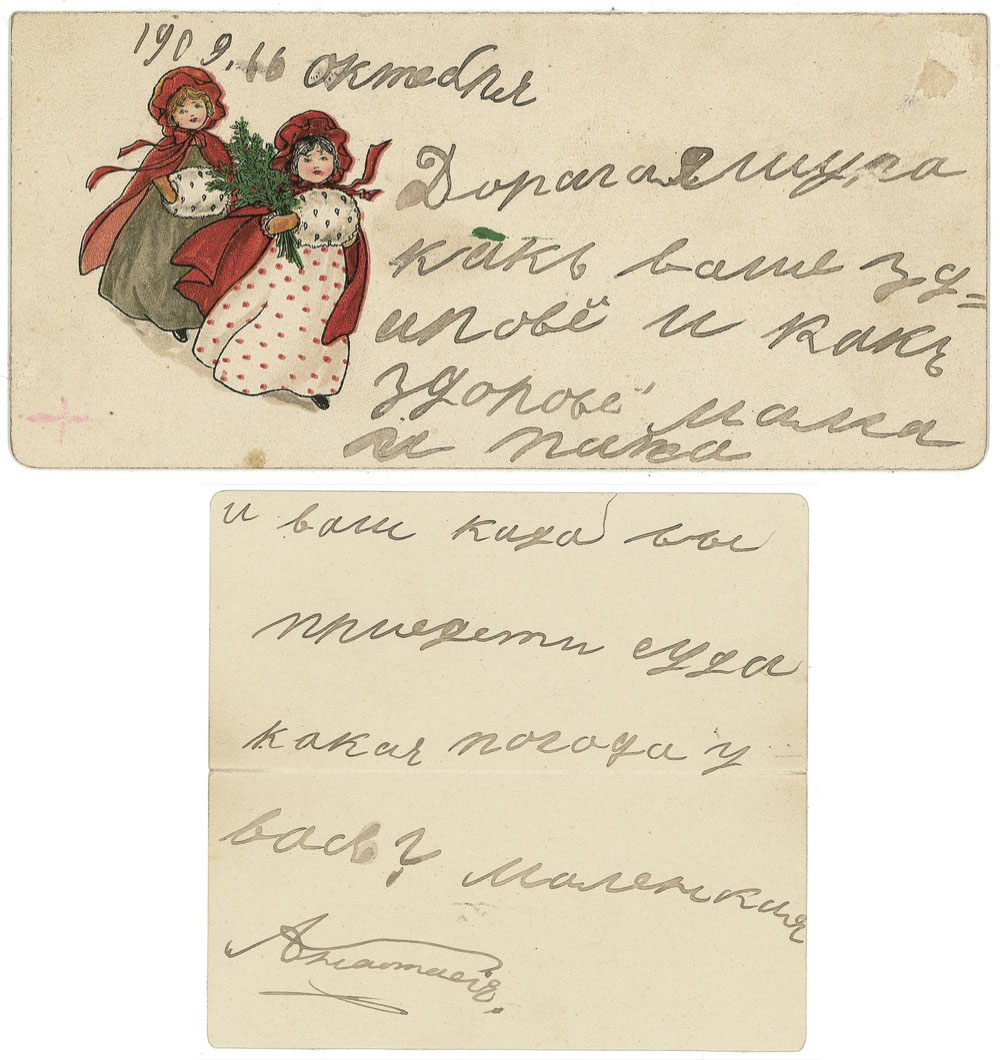
Autograph note signed in Russian, “Little Anastasia,” on the front and inside of a 5.25″ x 2.5″ fold-open card bearing a color chromolithograph of two little girls in winter clothes and sable muffs, one of which carries a Christmas tree. The youngest daughter of Czar Nicholas II of Russia, Anastasia was murdered with her family on 17 July 1918 by forces of the Bolshevik secret police, making any signed items of hers very scarce. In this note dated 16 October 1909, the eight-year old princess writes to “Shura”, asking her, “…how are you and how are mum and dad?…What is the weather like out there? Little Anastasia”. Shura is most likely Alexandra Tegleva, Anastasia’s personal nurse whom only the Princess called “Shura.” Alexandra Tegleva would accompany the Imperial family to Siberia in 1917 when they were fleeing revolutionary forces, and ultimately married Pierre Gilliard, tutor to the children. Some scattered light toning and soiling, primarily to first page and a bit of trivial surface loss to top right corner, otherwise fine condition. A brief but tender note from the young royal. Lot includes COA from PSA/DNA. Sold for $4,300.

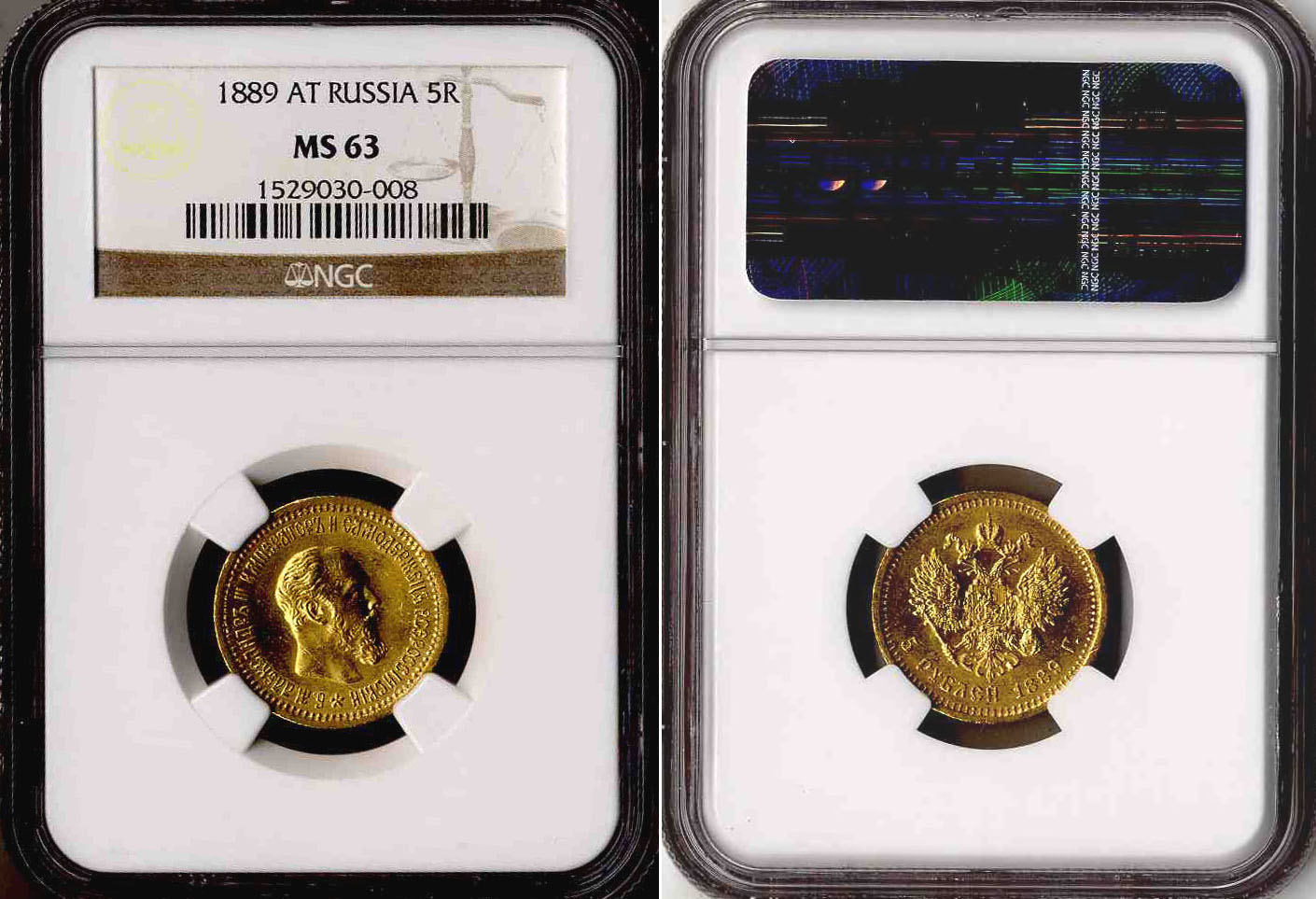
1889 AT Russian 5 Roubles NGC MS63
The ruble or rouble (/ˈruːbəl/; Russian: рубль, IPA: [rublʲ]) or ₽ is or was a currency unit of a number of countries in Eastern Europe closely associated with the economy of Russia. Originally, the ruble was the currency unit of Imperial Russia and then the Soviet Union (as the Soviet ruble), and it is currently the currency unit of Russia (as the Russian ruble) and Belarus (as the Belarussian ruble). On 17 December 1885, a new standard was adopted which did not change the silver ruble but reduced the gold content to 1.161 grams, pegging the gold ruble to the French franc at a rate of 1 ruble = 4 francs. This rate was revised in 1897 to 1 ruble = 2⅔ francs (0.774 grams gold). The ruble was worth about 0.50 USD in 1914. With the outbreak of World War I, the gold standard peg was dropped and the ruble fell in value, suffering from hyperinlation in the early 1920s. With the founding of the Soviet Union in 1922, the Russian ruble was replaced by the Soviet ruble. 1889 AT Russian 5 Roubles — NGC Graded MS63 . Sold for $1,100.
Exceptional, glossy photograph of Tsar Nicholas II, the Empress Alexandra and their first daughter the Grand Duchess Olga. A studio photograph taken by A. Pasetti Studios in St. Petersberg circa 1895, it is printed on the studio’s cardstock. Measuring 4” x 6.25”, this photo of Russia’s last imperial family has some foxing and surface wear but is otherwise in near fine condition. Sold for $600.

FREE ESTIMATE. To buy, auction, sell or consign your Czar Nicholas autograph that is for sale, please email your description and photos to [email protected] of Nate D. Sanders Auctions (http://www.NateDSanders.com).
We also offer the following services for your Czar Nicholas autograph:
- Appraise your Czar Nicholas autograph
- Auction your Czar Nicholas autograph
- Consign your Czar Nicholas autograph
- Sell your Czar Nicholas autograph
- Buy your Czar Nicholas autograph
- Research your Czar Nicholas autograph
- Estimate your Czar Nicholas autograph
- Czar Nicholas autograph auction
- Czar Nicholas autograph consignment
- Czar Nicholas autograph valuation