
Sell or Auction Your Adam Smith Signed Letter for up to Nearly $50,000 or More at Nate D. Sanders Auctions
FREE VALUATION. To buy, auction, sell or consign your Adam Smith signed letter that is for sale, please email your description and photos to [email protected] of Nate D. Sanders Auctions (http://www.NateDSanders.com).
Sell Your Adam Smith Signed Letter
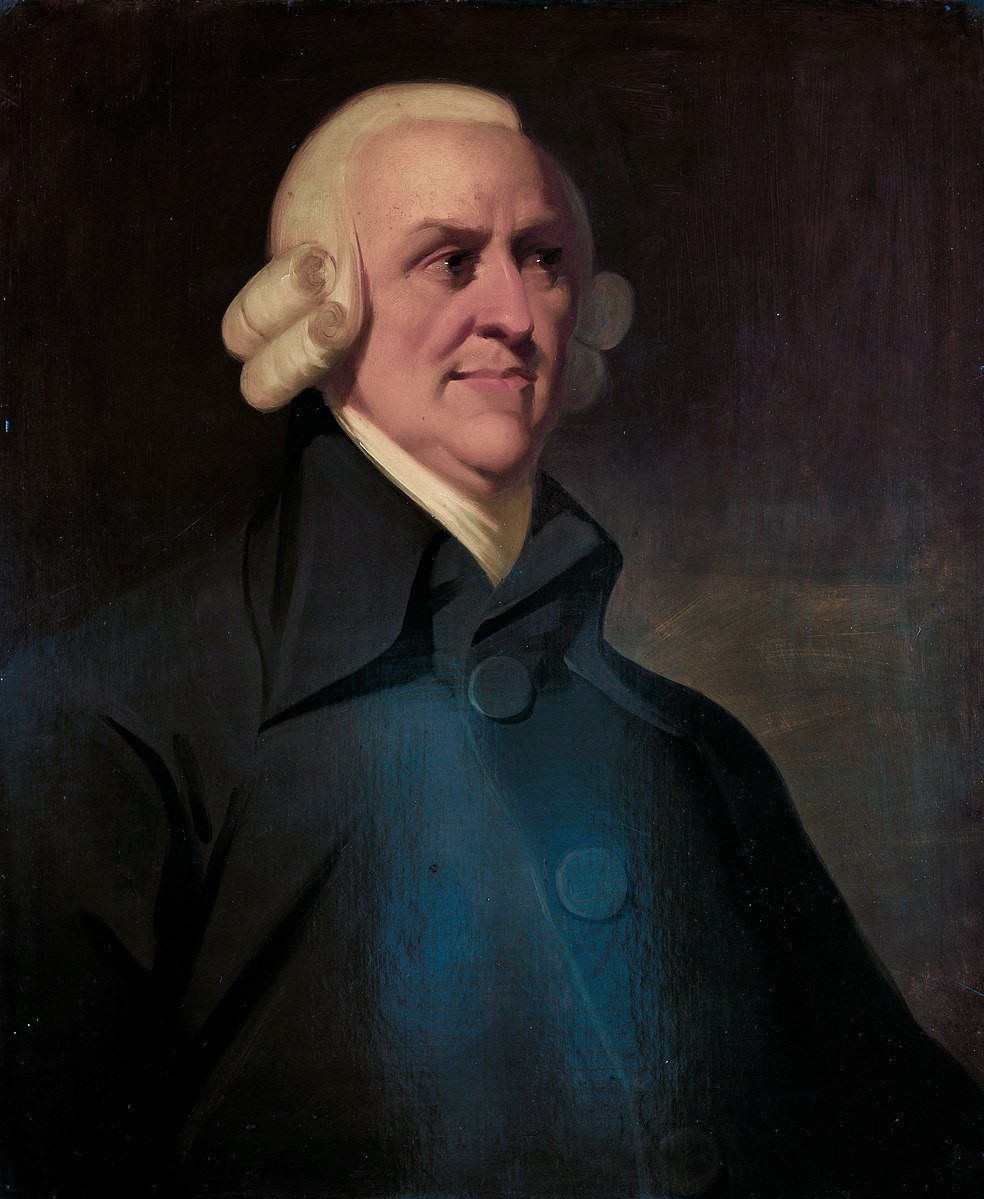

Below is a recent realized price for an Adam Smith autograph letter signed. We at Nate D. Sanders Auctions can obtain up to this amount or more for you:
Adam Smith Signed Letter. Sold for Nearly $50,000.
The following are some related items we have sold:
The Nobel Prize in Economic Sciences, awarded in 1971 to influential economist Simon Kuznets, inventor of the Kuznets Curve in 1955. Kuznets is credited with inventing a quantitative method for correlating per capita income to economic inequality over time, as a country’s economic growth matures. In the ceremony on 11 December 1971, the Nobel Prize committee awarded Kuznets the Nobel Prize for his ”empirically founded interpretation of economic growth which has led to new and deepened insight into the economic and social structure and process of development”. 23K gold medal prominently bears the image of Alfred Nobel upon the obverse, with ”Sveriges Riksbank Till Alfred Nobels Minne 1968” applied in raised letters, encircling the medal. ”Simon Kuznets 1971” is engraved to the rim, and the medal’s reverse contains the north star emblem of the Royal Swedish Academy of Sciences, with the phrase ”Kungliga Vetenskapsakademien” applied. Housed in the original red leather case with Kuznets’ name gilt stamped. Medal weighs 7.25 oz. and measures 2.5” in diameter, consistent with the original Nobel Prizes awarded in 1971. Case measures 5.5” x 5.5” x 1”. Accompanied by a copy of the Nobel Prize speech owned and annotated by Kuznets. This is the sixth Nobel Prize ever sold at auction, and the first in the category of Economic Sciences. Presented in near fine condition. With an LOA from the consignor, Simon Kuznets’ son. Sold for $390,848.


The Nobel Prize in Economic Sciences, awarded in 2005 to Thomas C. Schelling, the foremost expert on game theory as it applies to nuclear weaponry and international relations, and whose theory is particularly relevant now. Schelling is famously credited with the concept of ”uncertain retaliation”, expressed in his 1960 book, ”The Strategy of Conflict”, in which he argued that unpredictability, a higher tolerance for risk, and a willingness to feign irrationality in decision making can lead, if performed correctly, to a superior position over one’s opponents — especially with nuclear weapons. This so-called ”Madman Theory” was used by Richard Nixon in his negotiations with the Soviet Union and North Vietnam, and many experts have stated that both Donald Trump and Kim Jong-un are currently using the strategy in negotiating with each other. Schelling was also one of the “founding fathers” of the modern, leadership-oriented John F. Kennedy School of Government at Harvard, and made wide-ranging policy contributions helping to curtail smoking, confront racial segregation, and address climate change.
Nobel medal, made of 18K gold, prominently bears the image of Alfred Nobel upon the obverse, with ”Sveriges Riksbank Till Alfred Nobels Minne 1968” applied in raised letters, encircling the medal. ”T.C. SCHELLING MMV” is engraved to the rim, and the medal’s reverse contains the north star emblem of the Royal Swedish Academy of Sciences, with the phrase ”Kungliga Vetenskapsakademien” applied. Housed in the original red leather case with Schelling’s name gilt stamped, and also accompanied by the original Nobel Prize certificate awarded to Schelling. Medal weighs 6 oz. and measures 2.625” in diameter, consistent with the Nobel Prizes awarded in 2005. Case measures 5.5” x 5.5” x 1.25”. Certificate is housed in custom leather portfolio, then housed in suede-lined clamshell case measuring 9.75” x 14.75”, beautifully accented with Schelling’s initials in calligraphy. All items are presented in near fine condition. The proceeds from the sale of this auction will be donated to the Southern Poverty Law Center, consistent with the wishes of Thomas Schelling. Sold for $187,500.


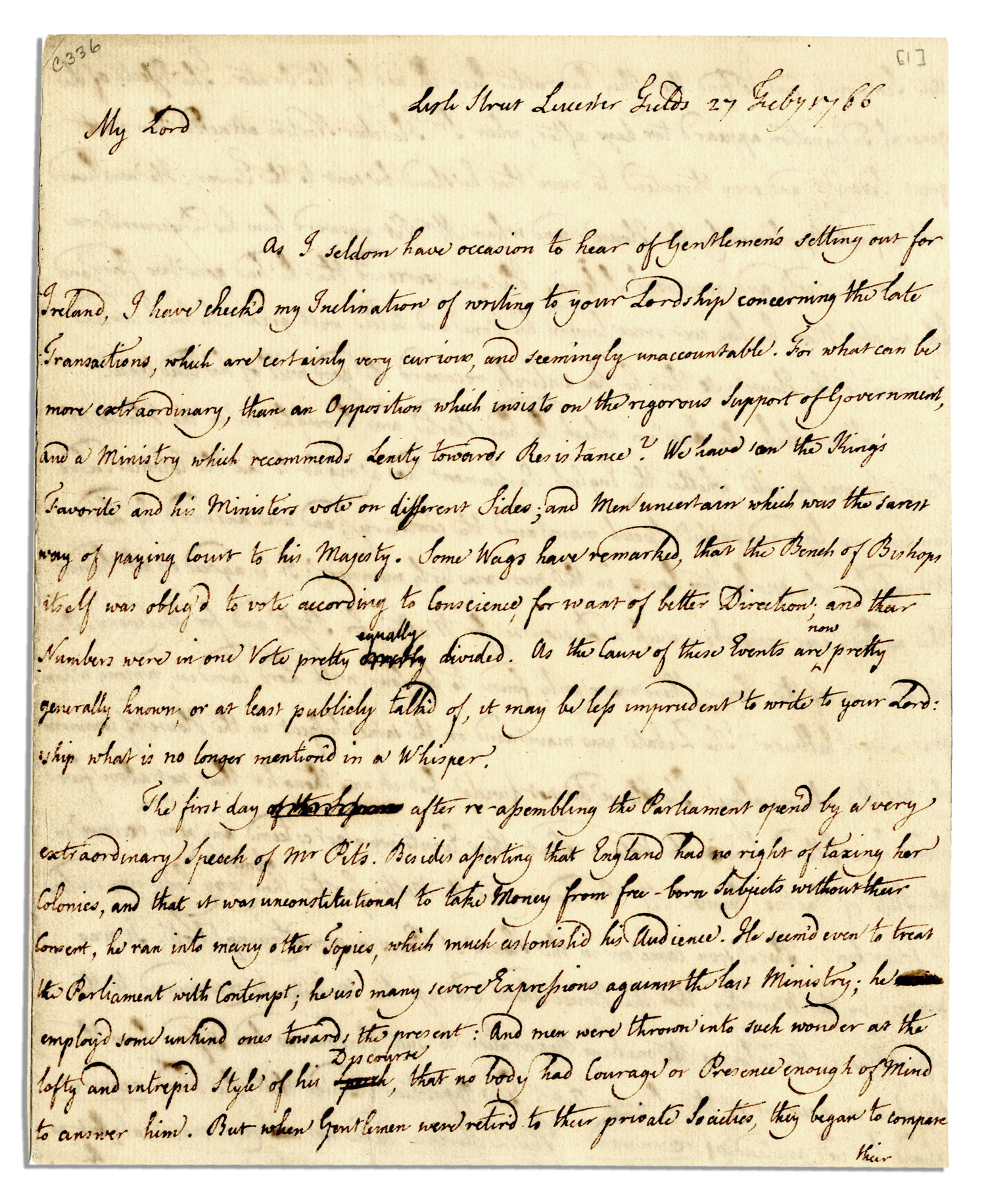
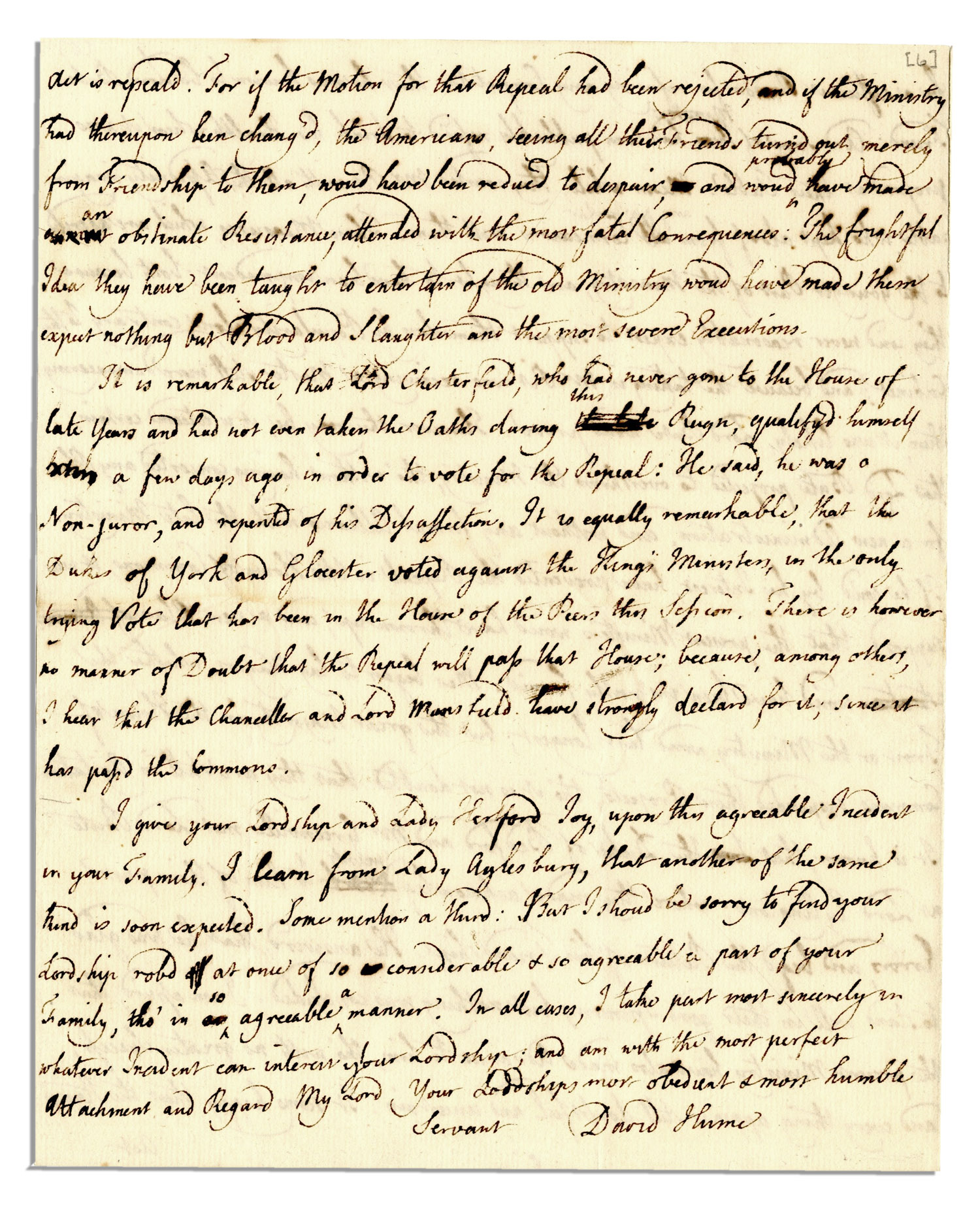
Enlightenment Philosopher David Hume Autograph Letter Signed on Vociferous Debate on the Stamp Act — “…the King had said…he was for the repeal of the Stamp Act…The King has since said, that this was a mistake…”
Historically important David Hume autograph letter signed, discussing the contentious debate in Parliament on the Stamp Act, led by Prime Minister William Pitt who questions the moral authority to tax “free-born subjects without their consent”. Here, Hume writes to the Earl of Hertford, Ambassador to France, after witnessing Parliamentary debate in which Prime Minister William Pitt defends America’s opposition to the Stamp Act. Dated 27 February 1766 from Lisle Street, Leicester Fields, the letter reads in part, “…[T]he Parliament opened by a very extraordinary speech of Mr. Pit’s [William Pitt]. Besides asserting that England had no right to her Colonies, and that it was unconstitutional to take money from free-born subjects without their consent, he…much astonished his audience. He seemed even to treat the Parliament with contempt…and men were thrown into such wonder at the lofty and intrepid style of his discourse, that nobody had courage or presence enough of mind to answer him…Meanwhile the question which he had started, was brought on in the House of Peers; it was disputed, whether the English Parliament had a right to tax the colonies…Mr. Pit had carry’d the matter farther than almost anybody was inclined to follow him…It was moved by Mr. Grenville that the house should address his Majesty to inforce the laws in America. The…question was carried against him by a majority of 140; a number which surprised the Ministers themselves…Lord Rockingham published everywhere that the King had said to him that he was for the repeal of the Stamp Act…The King has since said, that this was a mistake…It was foreseen, that the countenance given the Americans by Mr. Pit and Lord Camden’s appearance for them would increase, if possible, their obstinacy. The bad effects on trade began already to be sensibly felt. Many manufacturers all over England had threatened to dismiss a half or two-thirds of their tradesmen, which must have produced infinite confusion…I am persuaded no one voted against the repeal but from party and in full hopes and confidence of being out-voted…” Hume, here serving on the staff of the British Embassy in Paris, also references the rumor that the lack of opposition to the repeal of the Stamp Act was partly due to Lord Bute’s having plotted to overthrow the Ministry. Letter runs six pages on two folded sheets. Measures 7.25″ x 9″. Reinforced along vertical folds, else near fine. This letter, found in “Letters of David Hume” has been called by William Knight, Hume’s biographer as “a long, minute, and singularly graphic account of the transactions of Parliament on its first day of its assembling that year.” Published in Grieg, “Letters of David Hume,” 2:18-23. Provenance: Sotheby’s John Young sale, 26 April 1869, lot 500; Alfred Morrison catalogue, 1897; Parke-Bernet sale, 26 November 1941, lot 269. Sold for $57,000.
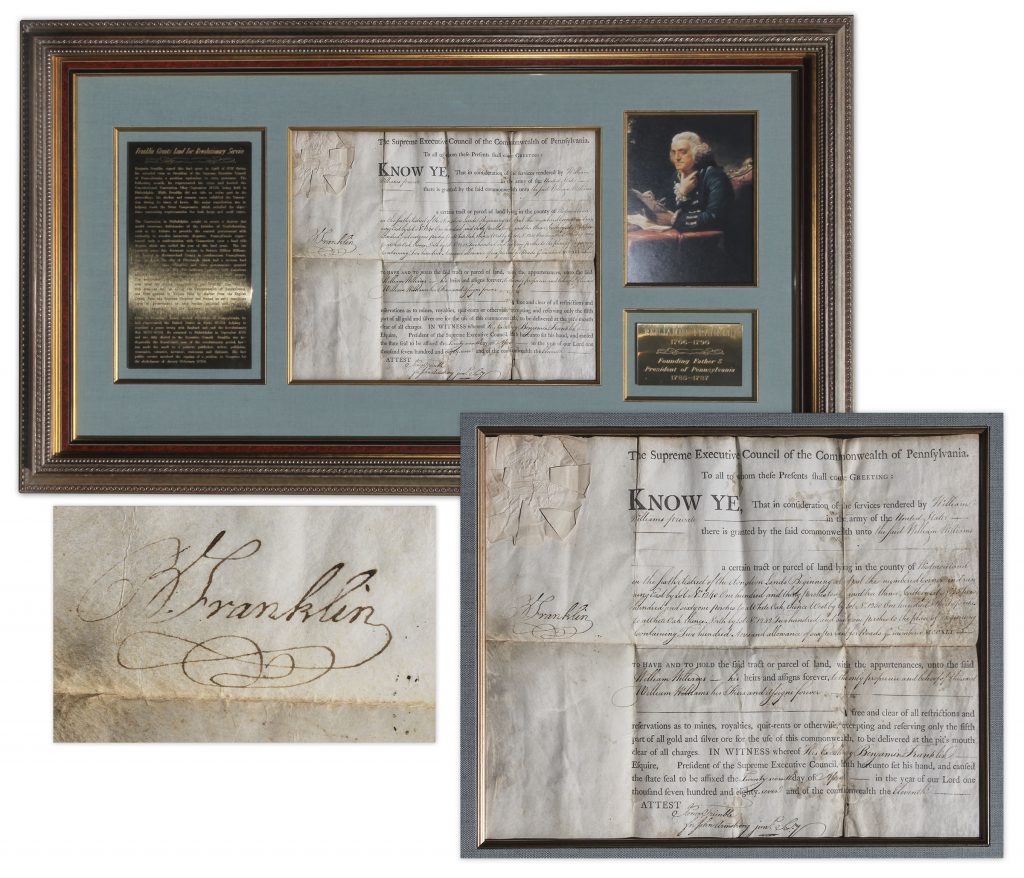
Benjamin Franklin land grant signed in Philadelphia on 27 April 1787, just one month before the start of the Constitutional Convention held in that city. Franklin served as President of Philadelphia’s Executive Council and signs ”B. Franklin” in that capacity, granting Private William Williams land in exchange for his service in the Revolutionary War. Document measures 15” x 12.5”, beautifully matted and framed to 40” x 23”. Weighs 14 lbs. Folds, toning and light staining throughout. Very good condition. Sold for $15,125.
Napoleon Bonaparte letter signed with exceptional content regarding funding his vast armies which, by 1811 when this letter was written, encompassed almost all of Europe and with preparations to invade Russia in the works. Dated 21 April 1811, letter translates in part, ”Count Mollien, I cannot sign this partial decree. It is necessary that you agree beforehand with the Minister of War Administration. It results from your report that, if you paid 4/5th of the 42 millions, he would have received only 27 million, and that you had 40 million paid. But the minister’s budget, considering the extraordinary arming which is being done, must be increased to 160 millions. Thereupon, I pray to God that he keeps you under his Holy protection. / Napoleon”. Single page measures 7.25” x 9”. Folds and light uniform toning, overall near fine. Sold for $5,125.

Napoleon Bonaparte Letter Signed, With an Exceptionally Large Signature
Napoleon Bonaparte letter signed, with an exceptionally large signature filling half the page. Bonaparte writes to one of his closest allies in the French government, Michel-Louis-Etienne Regnaud de Saint-Jean d’Angely, who then served as president of the Interior at the Council of State.
Datelined Paris on 3 January 1810, Napoleon writes in part, translated from the French, ”I read with interest the table you sent to me on the situation of the budget of cities in 1808. This leads me to extend the measure and to submit to the Council of State the budgets of cities whose income does not rise more than 5000 francs. I see that the cities have 14 million of assets and 85 million of liabilities…I would like you to send me a report on these debts on the mechanism adopted to the amortization fund to turn them off and on what there would be to do for that and to bring them up to date. I see that the municipal expenses amount to 8 million which seems to me a very high sum. Reviewing the table, I see the City of Niort, which is paid for 216 thousand francs in annuities and the granting of which is 140 thousand francs. There must be something against the law about this amount because the grant from Niort cannot return 140,000 francs…”
Two page document on a single sheet measures 7.25” x 9”. Ink stain at bottom of second page, and shallow folds, else near fine. Sold for $5,000.

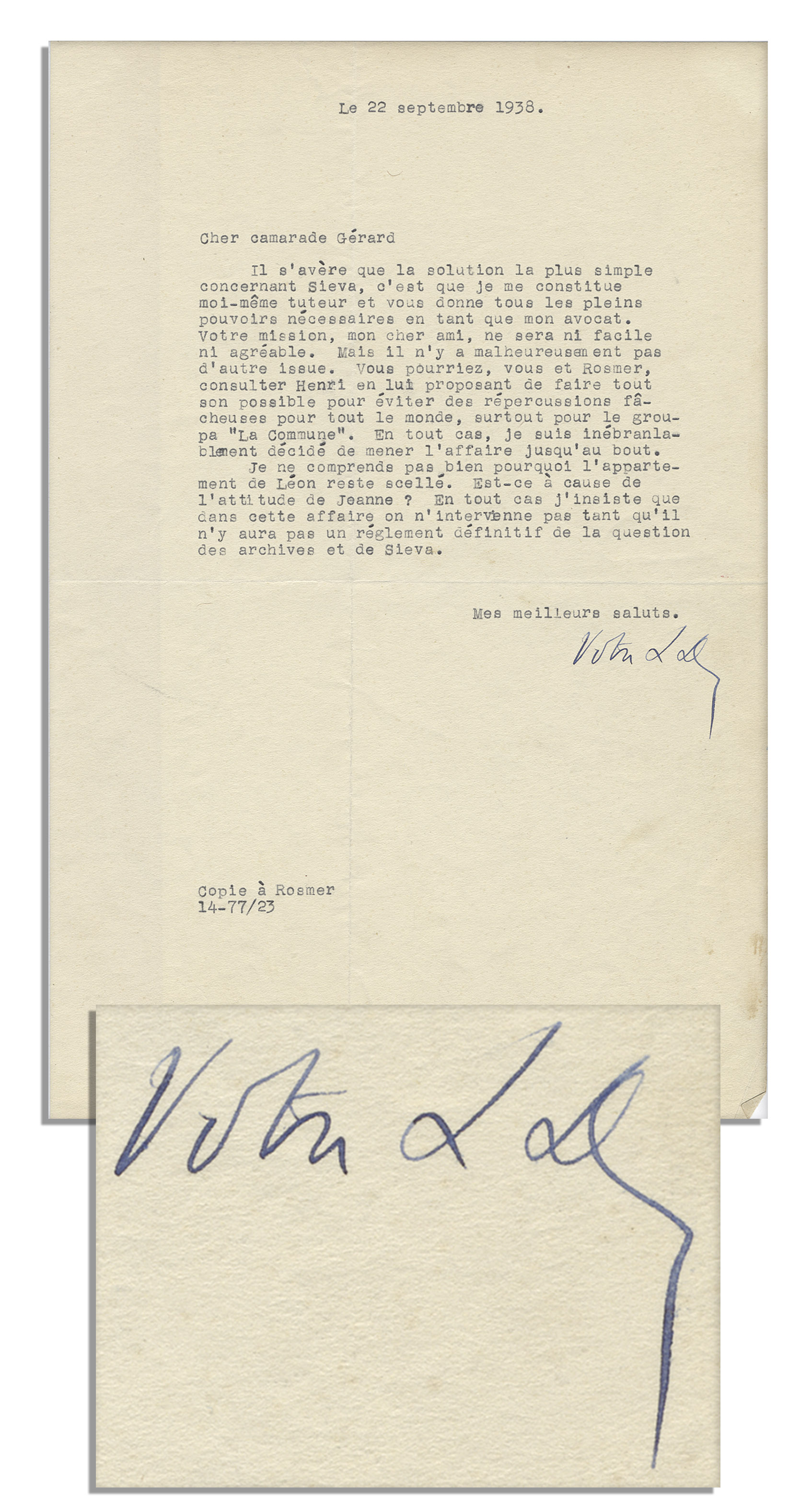
Typed letter signed “Leon Trotsky” in blue ink. French-language letter is dated 22 September 1938 and addressed to his attorney, Gerard Rosenthal, regarding custody of Trotsky’s grandson Sieva. The boy’s mother Zinaida, Trotsky’s daughter, had her Soviet citizenship revoked and committed suicide in 1933. Sieva then went to live with his mother’s brother Leon, who died under mysterious circumstances in February of 1938. Leon Sr. here takes action to obtain guardianship. Letter translates in full, “It appears the simplest solution concerning Sieva is to appoint myself guardian and give you full power necessary as my lawyer. My dear friend, your mission is not going to be easy nor pleasant. But unfortunately there is no other way. You and [French Communist leader Alfred] Rosmer could consult with Henri and suggest to him to do all it takes to prevent repercussions for everyone, above all to the group ‘The Commune’. In any case, I am determined to see this matter through. I don’t quite understand why Leon’s apartment remains sealed. Is it because of Jeanne’s [Jeanne Molinier, then custodian of Sieva] attitude? At any rate, I insist that nothing be done in this matter as long as the question of the archives and Sieva is not resolved.” Single-page letter measures 7.25″ x 11″. Toning and creasing, else near fine. Sold for $2,269.
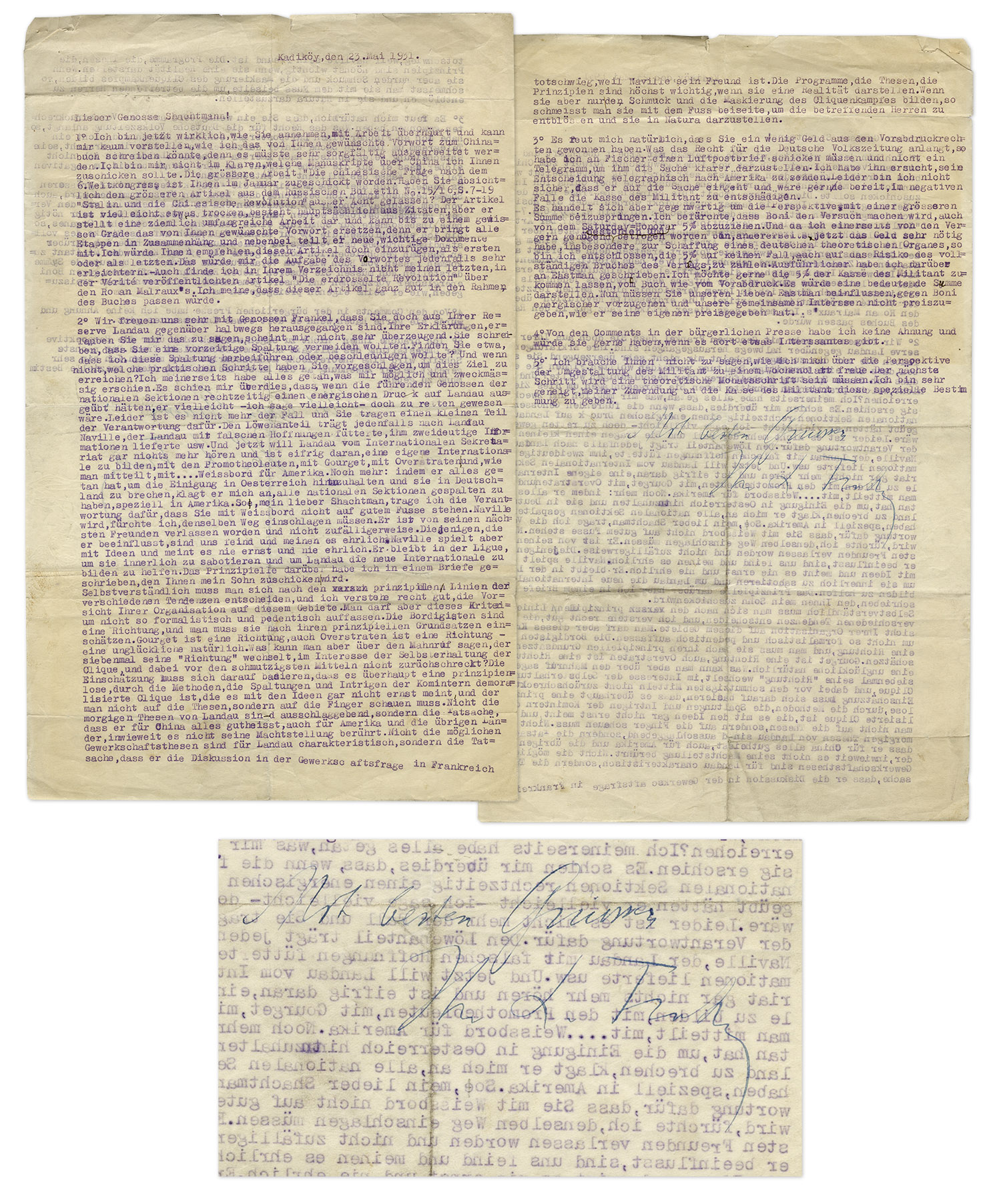
Leon Trotsky Letter Signed — “…Do you actually believe that I wanted to provoke…the [Communist party] split?…as long as his power is not threatened he approves of everything in China…”
Fantastic and scarce letter signed by Leon Trotsky, dated 23 May 1931 from Kadikoy, Turkey, where Trotsky was exiled by Joseph Stalin, struggling not only to stay relevant but also to stay alive. Trotsky writes to his close friend and comrade, Max Shactman on a host of subjects, most notably the factions developing within the Communist party after its takeover by Stalin. Signed “L. Trotsky” and written in German with an English translation, the densely written letter of some 95 typed lines reads in part, “…I am now really, as you can imagine, swamped with work and can hardly imagine how I could write you the requested preface for the China book…Did you deliberately ignore the bigger article from the Russian Bulletin No. 15/16, pages 7-19 ‘Stalin and the Chinese Revolution’…I also do not find in your index my last article ‘The Strangled Revolution’…We are very glad with Comrade [Jan] Frankel that you came at least half way out of your reserve towards [Kurt] Landau. Your explanation, allow me to say, seems not to be too convincing. You write that you wanted to avoid a premature split. Do you actually believe that I wanted to provoke or expedite this split?…I for my part have done everything that seemed possible and appropriate. It appeared to me, by the way, that if the leading comrades of the national sections had put strong pressure on Landau at the right time he could have perhaps – I repeat perhaps – been saved. Unfortunately, this is no longer the case and you carry some of the responsibility. The lion’s share of the fault, after Landau, lies with [Pierre] Naville, who fed Landau false hopes, delivered confusing information to him, etc. Now Landau wanted to hear nothing more about the International Bureau and is busy creating his own International…There is more: since he did everything possible to shake up the agreement in Austria and to break it in Germany, he accuses me of splitting up all national sections, especially in America. So, my dear Shactman, you see that I am being blamed for the fact that you and [Albert] Weissbord are not on good terms…Naville, however, plays with ideas and is never earnest or honest…What can one say about the warning that if one changes one’s ‘course’ seven times in the interest of self preservation of the Clique and is not afraid to use the dirtiest methods?…Landau’s themes of tomorrow are crucial, but the fact that as long as his power is not threatened he approves of everything in China, also in America and all the other countries…” Trotsky then discusses copyright fees, “Since on the one hand I have been cheated…I do need the money very urgently now”, as well as “comments in the local press and if they are interesting I would like to know about them”. He closes with stating “how pleased I am about the prospect of the change of the ‘Militant’ to a weekly paper. The next step must be a theoretical monthly paper…” Soon after this letter was written, Trotsky would move to France where he was given asylum. He was then transferred to Norway where he lived under increasing confinement, until his move to Mexico, where he was murdered by Stalin’s proxies in 1940. Two page letter measures 8.5″ x 13.25″. Folds and some chipping to top; overall in very good condition, with exceptional content regarding the pre-WWII divisions in the Communist party. Sold for $1,995.
FREE VALUATION. To buy, auction, sell or consign your Adam Smith signed letter that is for sale, please email your description and photos to [email protected] of Nate D. Sanders Auctions (http://www.NateDSanders.com).
We offer the following services for your Adam Smith signed letter:
- Appraise Adam Smith signed letter.
- Auction Adam Smith signed letter.
- Consign Adam Smith signed letter.
- Estimate Adam Smith signed letter.
- Sell Adam Smith signed letter.