
Sell or Auction Your John Newton Autograph Letter Signed for up to Nearly $10,000 or More at Nate D. Sanders Auctions
FREE APPRAISAL. To buy, auction, sell or consign your John Newton autograph letter signed that is for sale, please email your description and photos to [email protected] of Nate D. Sanders Auctions (http://www.NateDSanders.com).
Sell Your John Newton Autograph Letter Signed
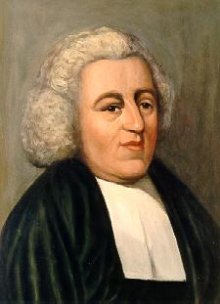
John Newton (/ˈnjuːtən/; 4 August [O.S. 24 July] 1725 – 21 December 1807) was an English Anglican cleric, a captain of slave ships who later became an investor in the slave trade but subsequently became an abolitionist. He served as a sailor in the Royal Navy for a period after forced recruitment.
Below is a recent realized price for a John Newton autograph letter signed item. We at Nate D. Sanders Auctions can obtain up to this amount or more for you:
John Newton Autograph Letter Signed. Sold for nearly $10,000.
Here are some items that our auction house, Nate D. Sanders (http://www.NateDSanders.com) has sold:
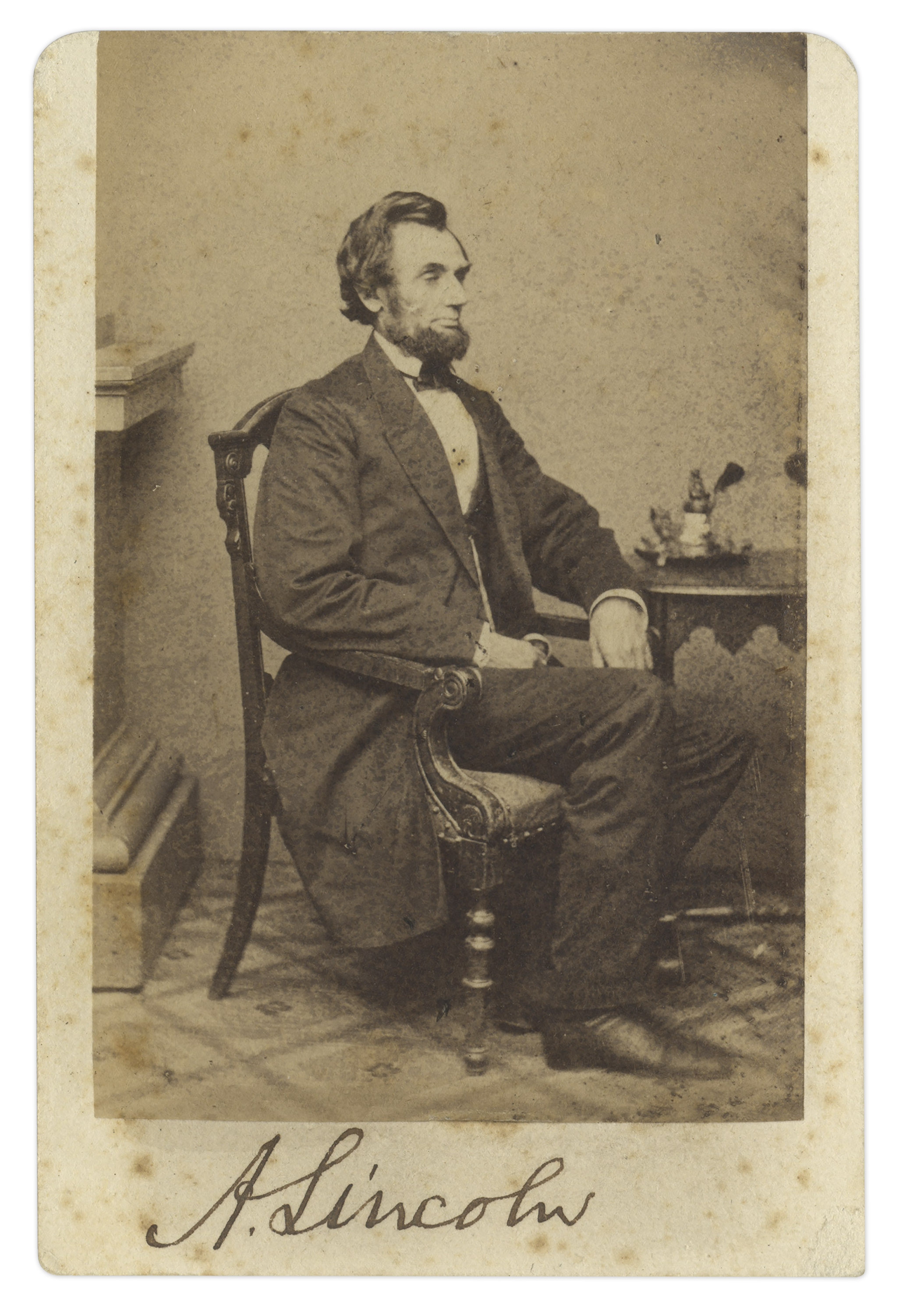
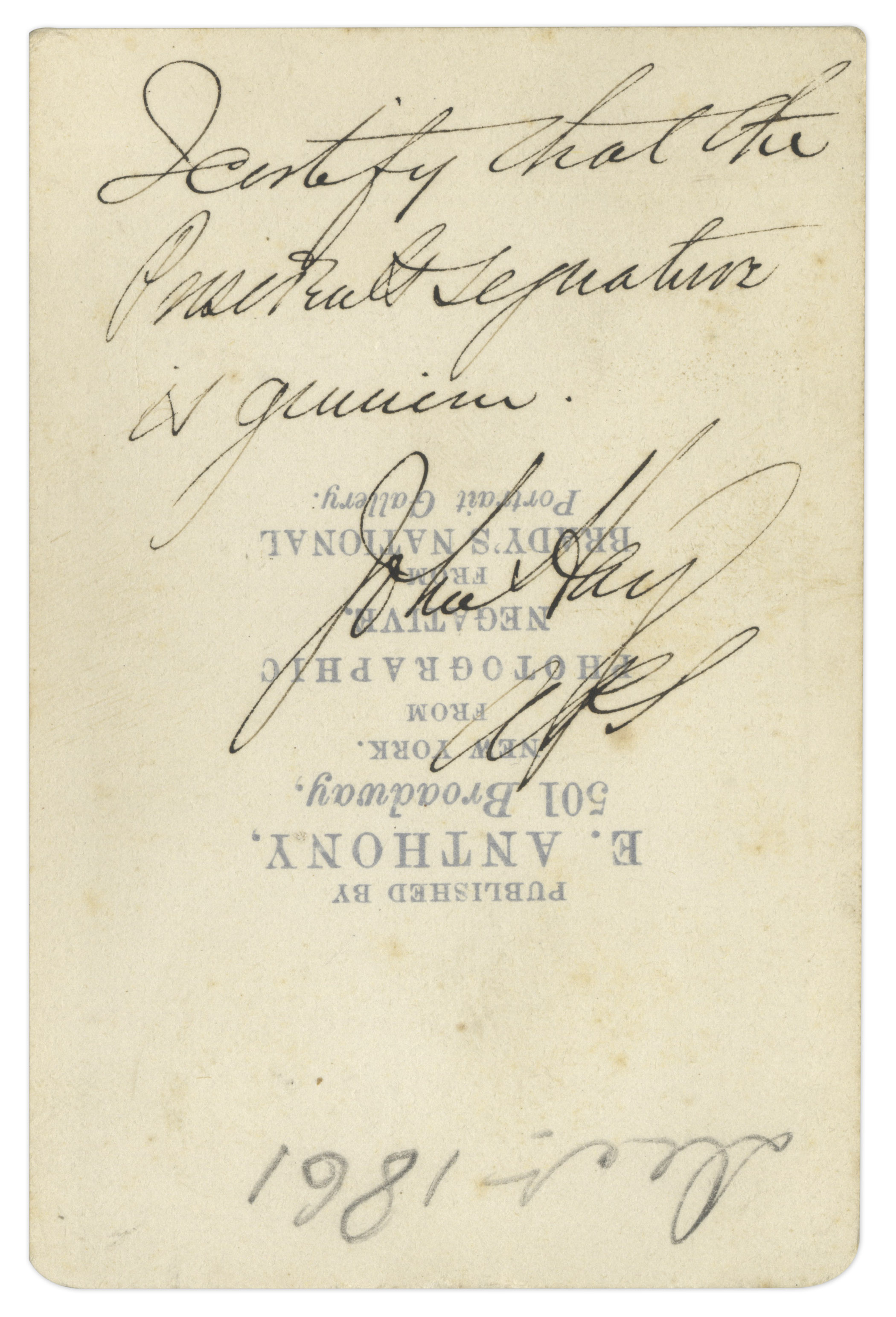
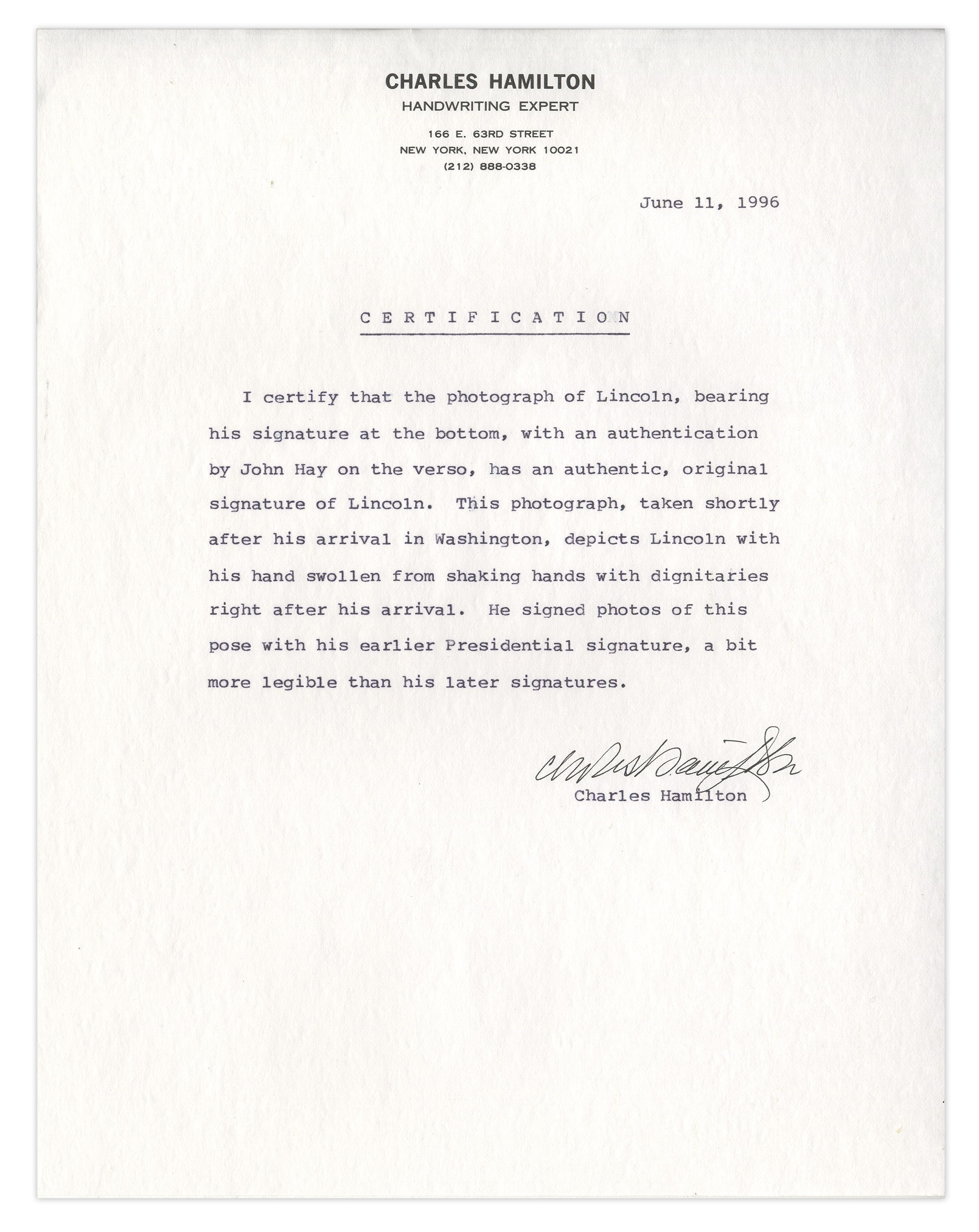
Abraham Lincoln Signed CDV as President — John Hay Certifies Signature as Authentic on Verso
Exceptionally rare Abraham Lincoln signed carte-de-visite photograph, taken by Alexander Gardner in 1861 and signed as President. Signed ”A. Lincoln” below the seated portrait of Lincoln. John Hay, Lincoln’s private secretary, authenticates the signature upon the verso by writing, ”I certify that the President’s signature is genuine / John Hay”. With ”Brady’s National Portrait Gallery” backstamp. Measures 2.5” x 3.75”. Very good with some foxing and wear, but with a strong signature by Lincoln. With provenance from Profiles in History and with a COA from Charles Hamilton. Sold for $49,913.
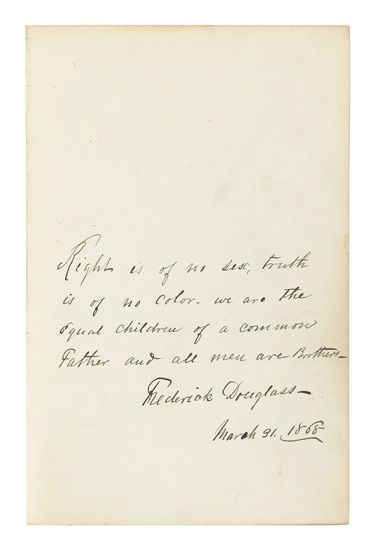
Frederick Douglass Autograph Quotation Signed — “Right is of no sex, truth is of no color. We are the equal children of a common Father and all men are Brothers” — With 30+ Signatures of 19th Century Abolitionists
Inspiring collection of signatures by 19th century abolitionists, with the crown jewel being an autograph quotation signed by Frederick Douglass, “Right is of no sex, truth is of no color. We are the equal children of a common Father and all men are Brothers – Frederick Douglass – March 31, 1868”. Album contains about 35 other signatures. Album is very worn with front board detached and backstrip missing. Some dampstaining present on front and rear blank pages. Page signed by Douglass is near fine with only toning to margins. Sold for $8,800.
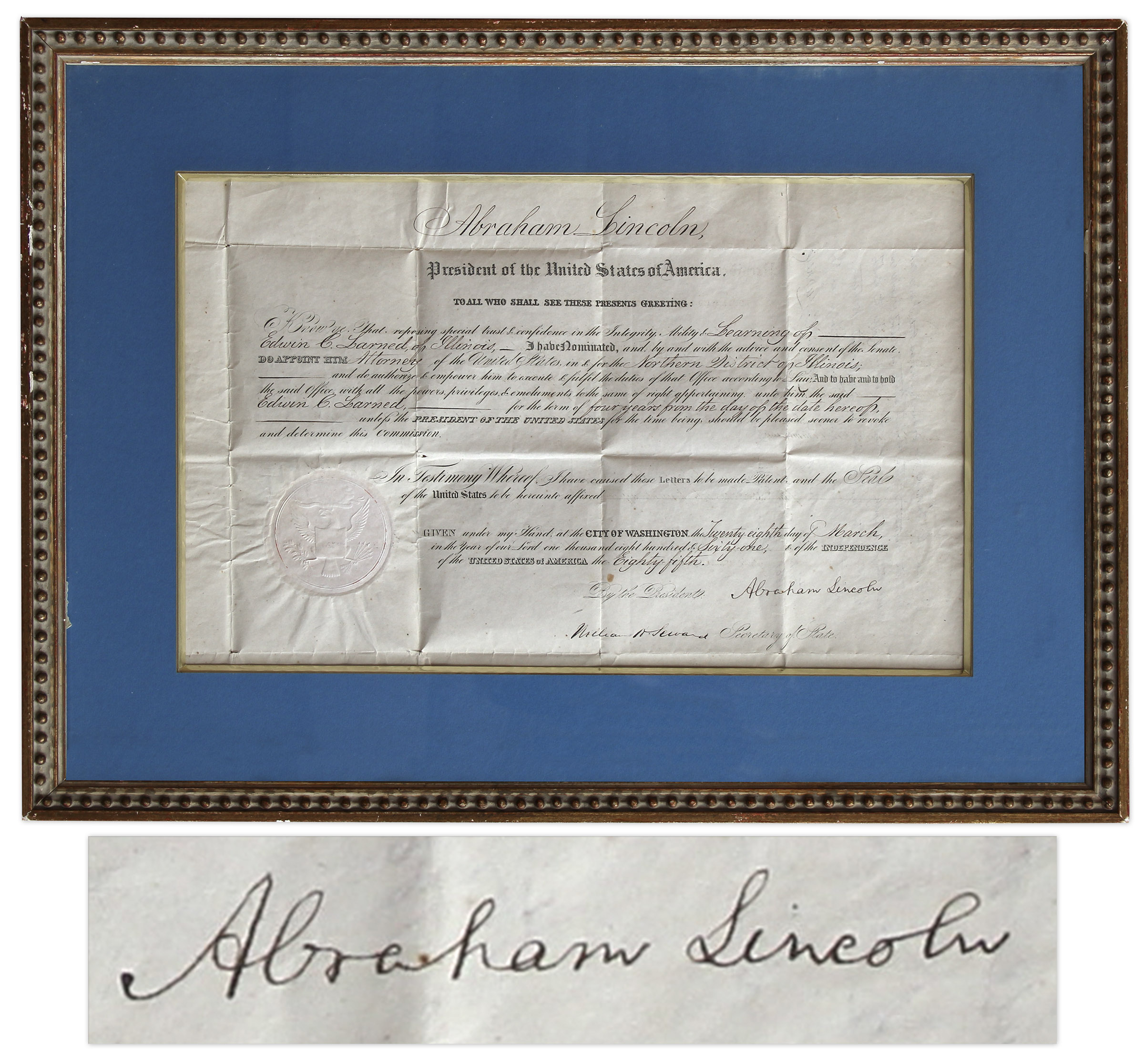
As President, Abraham Lincoln signs his full name in black ink to a document, appointing Edwin C. Larned as ”Attorney of the United States in & for the Northern District of Illinois” on 28 March 1861. Lincoln entered office just 24 days prior, on 4 March 1861, and the Civil War would break out 15 days later. Larned was an anti-slavery public speaker and personal friend of Lincoln. Document is co-signed by William H. Seward, Secretary of State, and retains its Presidential paper seal at lower left. Document measures 15.5” x 9.5”, framed to 20.5” x 15.5”. Minor holing at fold intersections, otherwise near fine with a bold signature by Lincoln. Sold for $7,500.
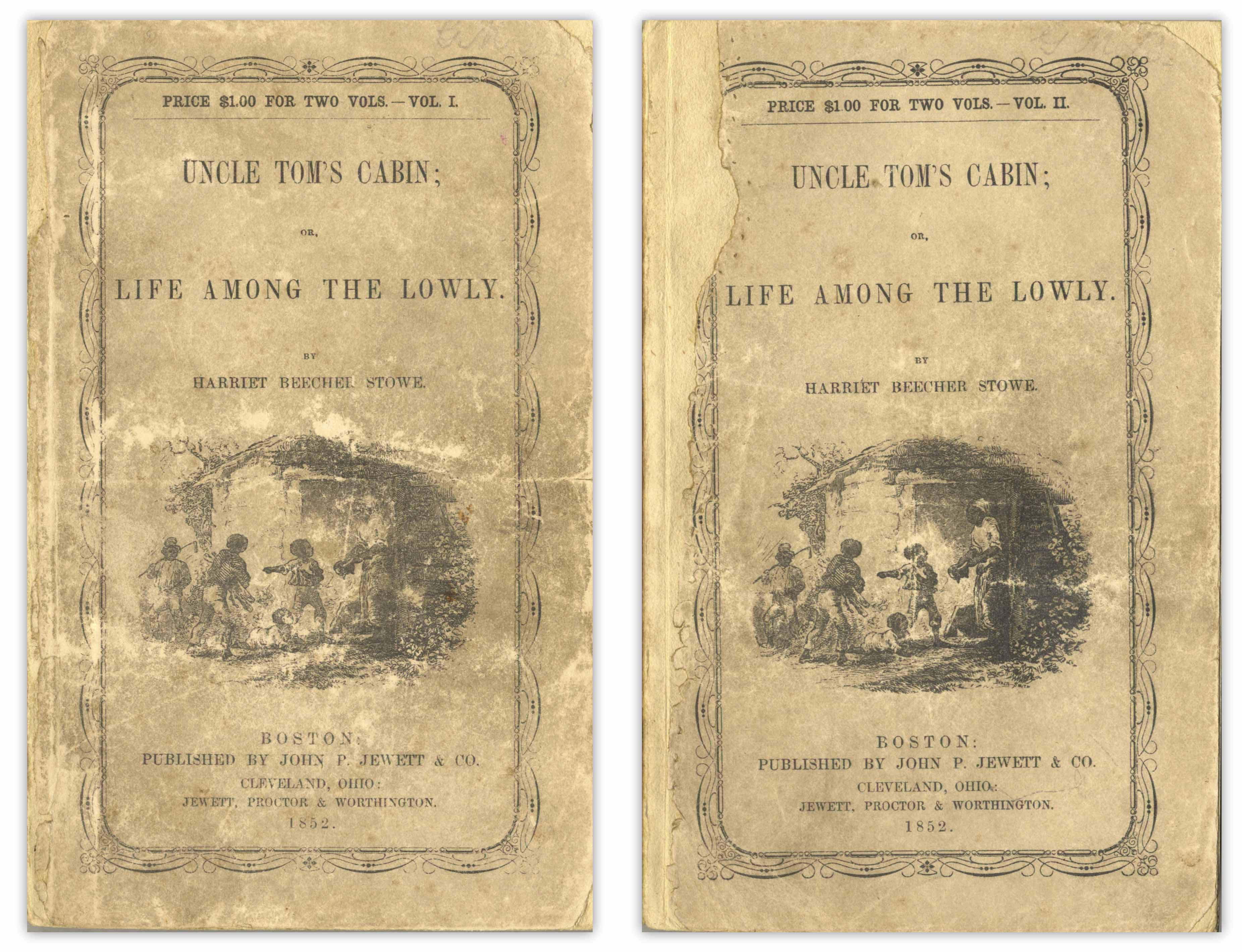
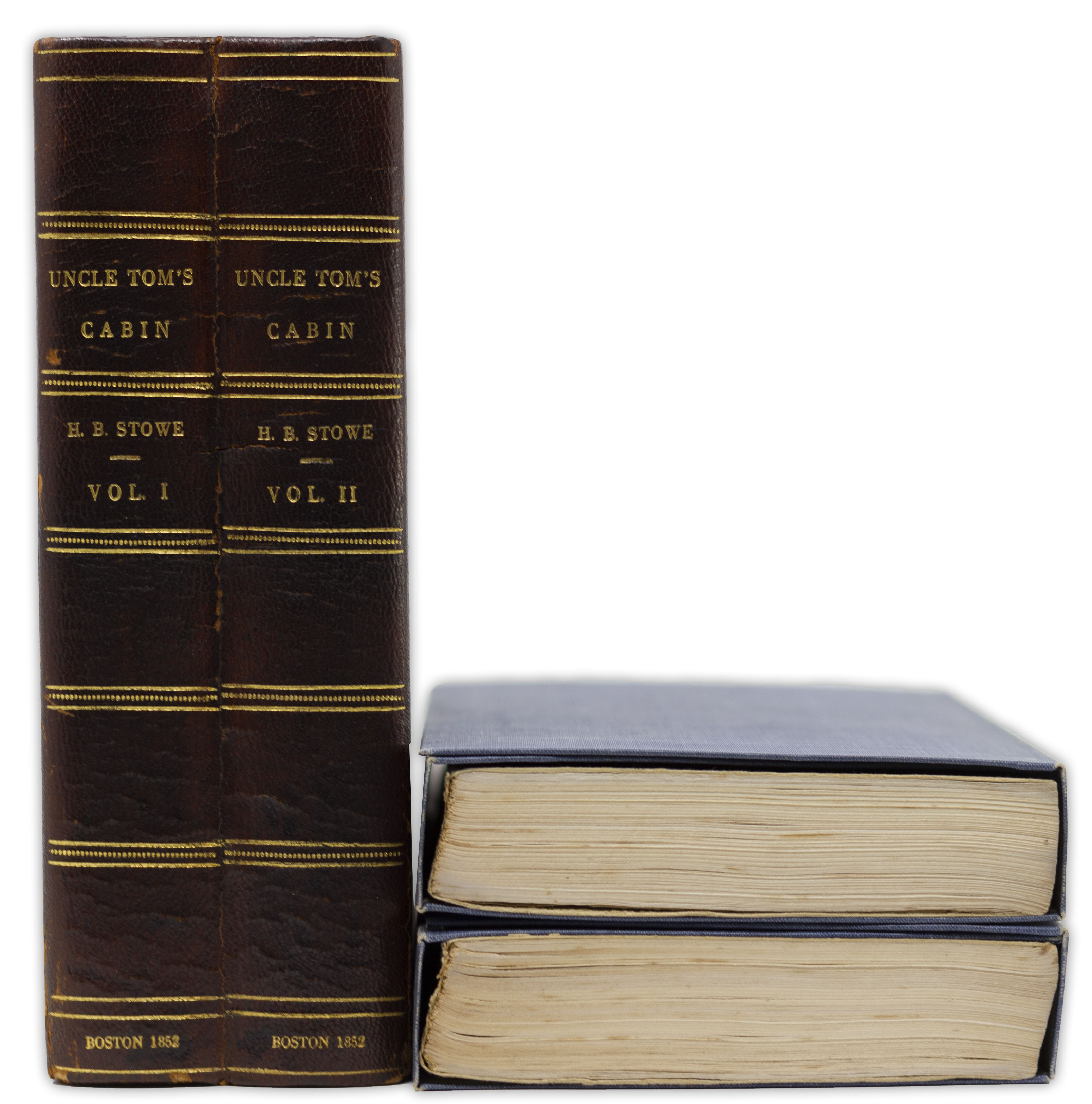
First Edition, First Printing of “Uncle Tom’s Cabin”
Extraordinarily scarce first edition, first printing of Harriet Beecher Stowe’s ”Uncle Tom’s Cabin”, in the publisher’s wrappers binding ”A”, the rarest of the three variants of the first printing. Boston: John P. Jewett, 1852. Two volumes, as issued, with three plates in each volume by Hammett Billings, priced at $1.00 for both volumes. All other first printing points are present: ”spilt” instead of ”spiled” on page 42, line 1 of Vol. I; ”cathecism” instead of ”catechism” on page 74, line 5 of Vol. II; no attribution to Billings for the engravings; no other printings designated on the title page of either volume; with the following statements on the copyright page: ”Entered according to Act of Congress, in the year 1851, by Harriet Beecher Stowe” and ”Stereotyped by Hobart & Robbins”.
Published on 20 March 1852 after first appearing in serialized form, the first printing of 5,000 copies of ”Uncle Tom’s Cabin” sold out within a few days, and the second printing by the end of March. Included in ”Books That Changed America”, the author Robert Downs stated of it, ”Within a decade after its publication Uncle Tom’s Cabin had become the most popular novel ever written by an American…there is substantial evidence that the book precipitated the American Civil War.” And from PMM, the catalog of the most influential books ever written: ”In the emotion charged atmosphere of mid-19th century America Uncle Tom’s Cabin exploded like a bombshell. To those engaged in fighting slavery it appeared as an indictment of all the evils inherent in the system they opposed; to the pro-slavery forces it was a slanderous attack on ‘the Southern way of life’…the social impact of on the United States was greater than that of any book before or since.”
Volumes measure 4.625” x 7.375” housed in blue clamshell cases and a custom slipcase. With provenance from famed dermatologist and collector Paul E. Bechet, with his library labels, causing shadowing to title pages. Spines of both volumes repaired, with some paper loss, more so on Vol. II with that back cover replaced. Light toning, wear and soiling. Overall a very good set. Sold for $5,750.
Slave Ship Log Triangle Trade 1784-89
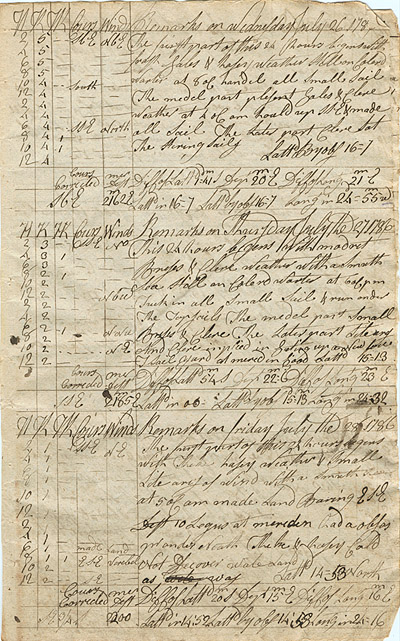
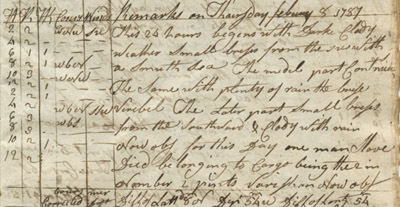
Ships’ log for slave vessels out of Newport, Rhode Island during the Triangle Trade. 68pp. log for voyages in December 1784, July 1786, June 1787 and Feb. to April 1789. The voyages were complete, although the logs themselves are not. A record for the ships Louis, Louisa Ware, Betsey Ware and Calsey all under different masters. These ships sailed from Newport, Rhode Island to Africa to the West Indies. The ships were part of the Triangle Trade. Ships from Europe brought manufactured goods to Africa and the goods were traded for slaves. The slaves were brought back to the Americas and traded for raw materials molasses, timber, and later, tobacco and cotton. The raw materials were then shipped to Europe where they would be processed into manufactured goods. It was called a Triangle Trade because it followed a triangular route between Africa, the Caribbean and North America, and Europe. Eventually the trading route also distributed Virginia tobacco, New England rum, and indigo and rice crops from South Carolina and Georgia. A majority of the journal details weather, latitude and speed. There are minimal references to slaves but a more thorough reading may reveal more. The entries also place the boats in the areas of trade. “…on bord of the good ship called the Louisa Ware of is Master Robert Champling….Dep. From the Latt of 14:27 and Lang of 17:20 bound round the shores of Grandey for Cape mount so God send the good ships in safely…” “A jurnel or a log by Gods permishon on bord of good ship called the Louisa. Robert Champling master bound from the coast of Afraica towards the West Indes begun Dec. the 28, 1786 …” “A jurnel or a log by Gods permishon on bord of the good ship called the Louisa. Rob’t Champling master bound from the island of St. Tomas towards the West Indes Monday, January the 25th 1789 at 8 of pm track my dep’t from the island of St Thomas baring SSE Drift…” “Thursday, February 8, 1787…New Obj for this day one man slave died belonging to cargo being therein.” The Middle Passage was the most famous route of the triangular trade. This voyage carried Africans across the Atlantic Ocean. Captains of slave ships were known as either “loose packers” or “tight packers,” depending on how many slaves they housed in the space they had. However, most ships were “tight packers” (especially those in the 18th century) and life for the slaves on these ships was extremely uncomfortable. Slaves were taken from the holding forts, shackled together with leg-irons and carried to the ships in the dugout canoes. Once they were aboard, they were branded to show who owned them and their clothes removed. Slaves were housed in the ships as if they were cargo. Men were kept in chains while women and children were allowed to go free. It was common for about a third of the number on a ship to die before they reached the Americas. Fascinating log book in very good condition. Sold for $5,514.
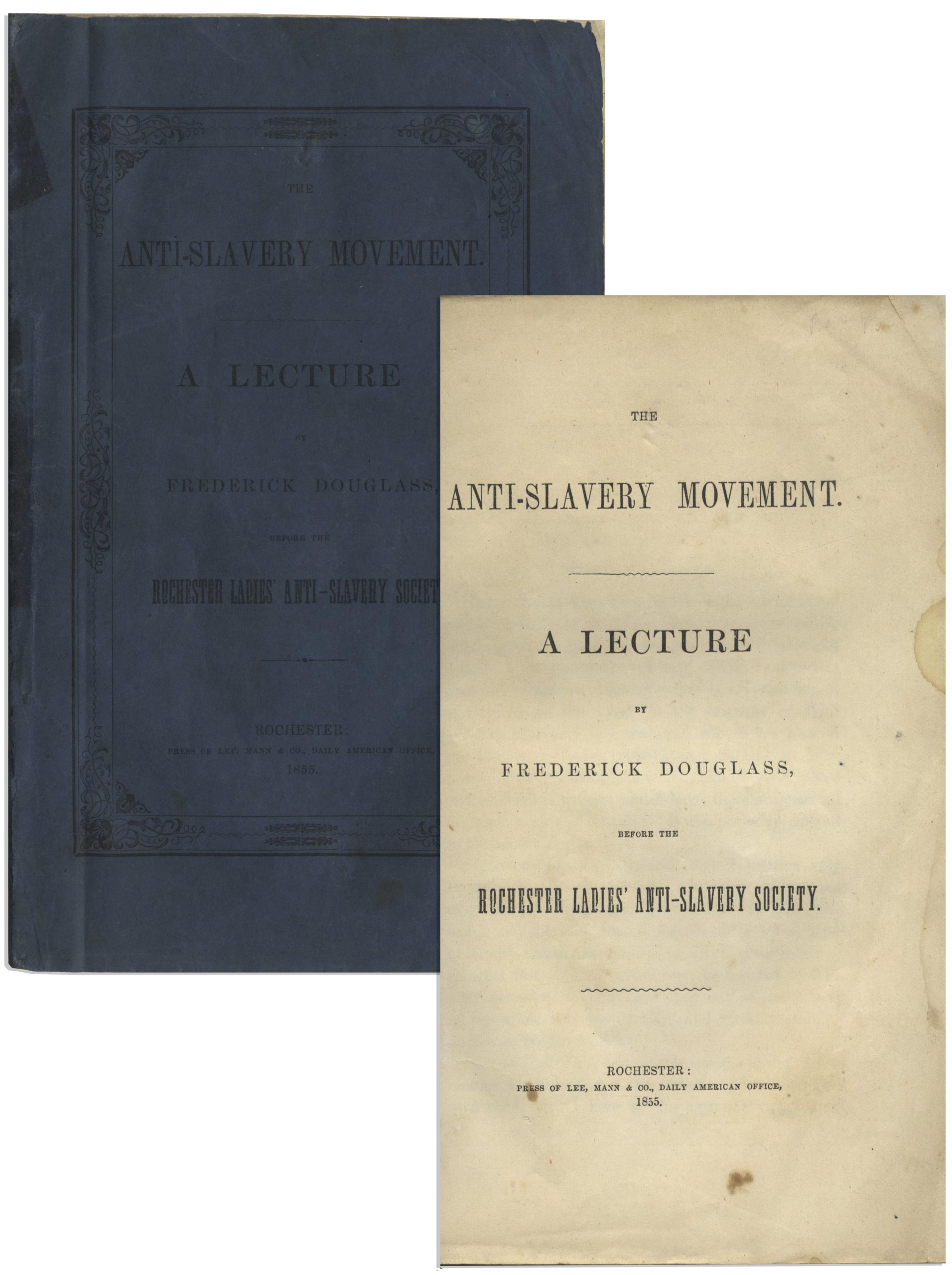
Anti-Slavery Movement, A Lecture, By Frederick Douglass
“The Anti-Slavery Movement, A Lecture, By Frederick Douglass, Before The Rochester Ladies Anti-Slavery Society.” Printed in 1855 in Rochester, New York, by the Press of Lee, Mann, and Co., Daily American Office. A name is written on the top of page 44. Measures 5 1/2″ x 8 13/16″. 48 pages. Restoration work on spine. Minor wear, foxing and staining on cover and interior pages and minor paper loss on the bottom of four pages. Very Good. Rare. Sold for $3,600.
FREE VALUATION. To buy, auction, sell or consign your John Newton autograph letter signed that is for sale, please email your description and photos of your Charleston Servant Slave Hire Badge to [email protected] of Nate D. Sanders Auctions (http://www.NateDSanders.com)