
Sell or Auction Your Extracts from Treaties Between Great-Britain and Kingdoms 1792 for up to Over $5,000 or More at Nate D. Sanders Auctions
FREE APPRAISAL. To buy, auction, sell or consign your Extracts from Treaties between Great-Britain and Kingdoms 1792 that is for sale, please email your description and photos to [email protected] of Nate D. Sanders Auctions (http://www.NateDSanders.com).
Sell Your Extracts from Treaties Between Great-Britain and Kingdoms 1792
Below is a recent realized price for an Extracts from Treaties between Great-Britain and Kingdoms 1792 item. We at Nate D. Sanders Auctions can obtain up to this amount or more for you:
Extracts from Treaties Between Great-Britain and Kingdoms 1792. Sold for over $5,000.
Here are some items that our auction house, Nate D. Sanders (http://www.NateDSanders.com), has sold:
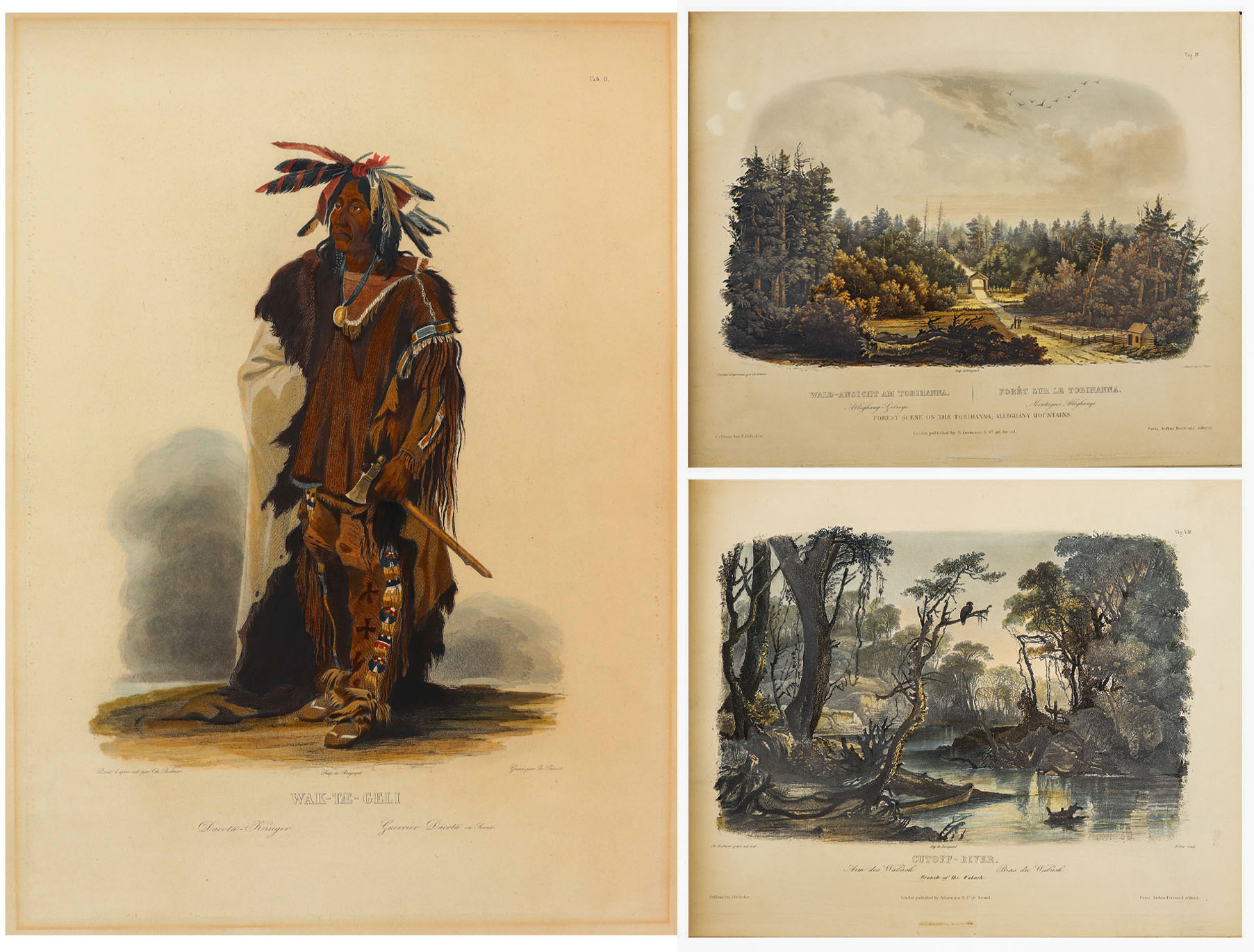
Karl Bodmer Prince of Wied’s Travels in the Interior
Stunningly beautiful collection of 81 hand-colored aquatints by the Swiss artist Karl Bodmer, a complete collection from the illustrated travelogue, “Prince of Wied’s Travels in the Interior of North America”. Bodmer, who journeyed with the German Prince Maximilian of Wied-Neuwied from 1833-34 along the Missouri River, produced what is considered the best depictions of the indigenous peoples and landscapes during the frontier era, an America then still unspoiled by western migration. Of the Native American tribes of the Great Plains that they encountered, Bodmer’s depictions of the Blackfeet and Mandan tribes are especially important as the populations of these tribes were greatly affected by the smallpox epidemic of 1837, thus making Bodmer’s work the last visual testament to their culture.
Prince Max, as he was called, chose Bodmer to accompany him on the expedition along the Missouri River to visually depict the scenes that the Prince would write about. The result is this collection: three volumes of text by the Prince and two volumes of aquatints by Bodmer, in the first Paris edition published by Chez Arthus Bertrand, 1840-43 (“Voyage dans l’interieur de l’Amerique du Nord”). Text volumes in French also include 37 wood-engraved illustrations, only lacking the map in completeness. The two complete volumes of illustrations include the large folio volume with 48 oversized hand-colored aquatints measuring approximately 24.5″ x 18″, and the quarto volume with 33 hand-colored aquatints measuring approximately 12.5″ x 10.25″. The complete set of 81 aquatints is magnificent in their display, a time capsule with their hand-coloring evoking the sense of awe and discovery of the expedition. All volumes are bound in half black morocco and blue paper-covered boards with gilt accenting, and with black morocco labels to illustrated volumes. Minor handling wear to volumes, with a few small repaired tears to plates, some plates supplied with variance to margins, minute toning and foxing, a few plates beginning to separate from binding. Overall a very good plus set with excellent display quality. Sold for $175,000.


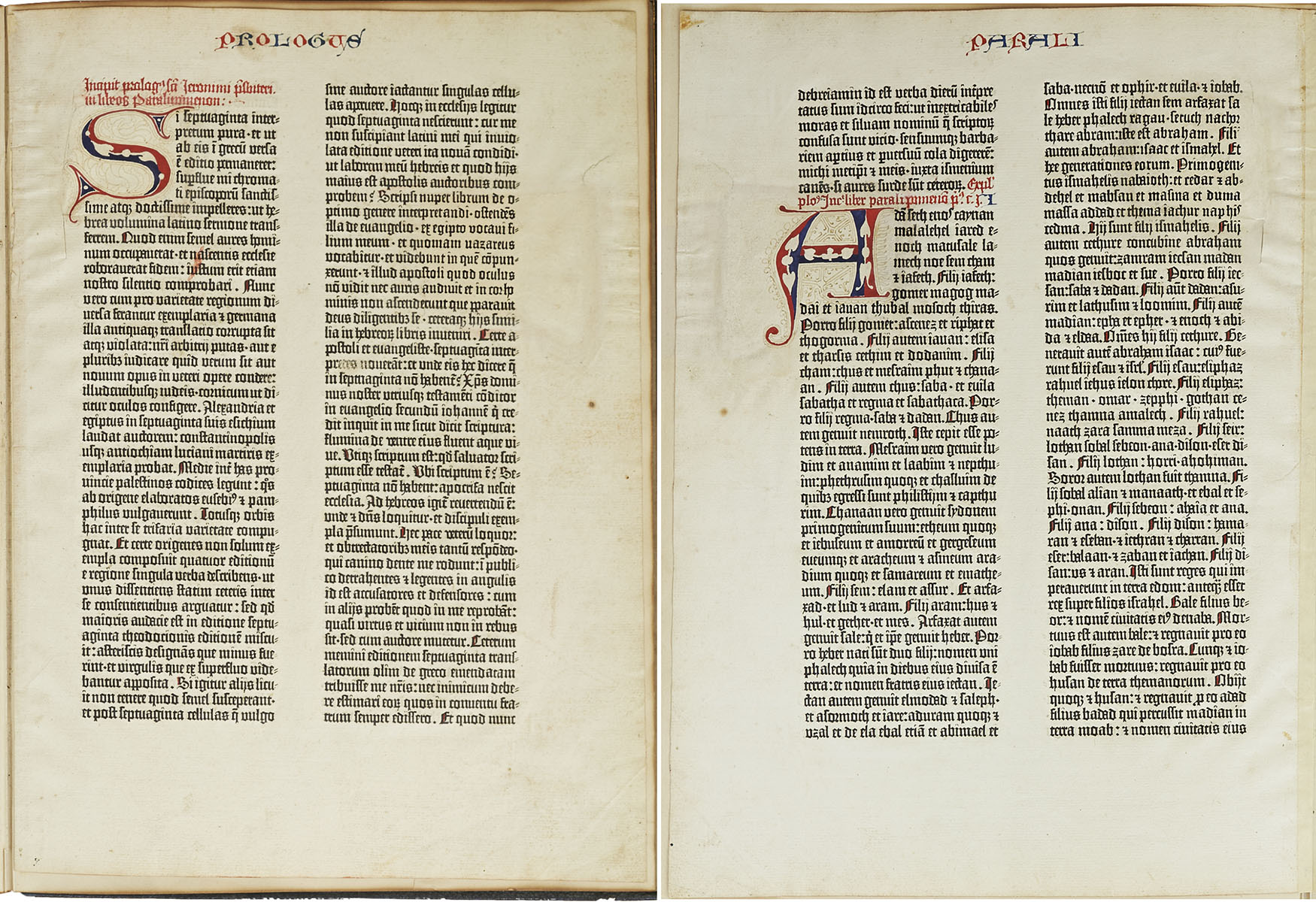
Gutenberg Bible Leaf 193 Chronicles of Old Testament
Scarce leaf from the Gutenberg Bible, one of the earliest major books printed from moveable metal type, the invention that ushered in the Age of Enlightenment by democratizing knowledge through mass production of literature. Printed by Johannes Gutenberg in Mainz, Germany from 1450-1455, less than 50 complete or near-complete copies of the Gutenberg Bible are now extant, with nearly all those housed in public institutions. Singular leaves are also scarce, with the leaf presented here having been acquired by bookseller Gabriel Wells, whose purchase of an incomplete Bible in 1920 gave way to selling the individual leaves alongside an essay by A. Edward Newton entitled “A Noble Fragment”. Leaf is number 193 of the full Latin Bible, with the recto being the Prologue to 1 Chronicles of the Old Testament, and the verso the first part of Chapter 1 of 1 Chronicles. Each page features two columns of 42 lines in dark black Gothic type, accented by red and blue rubrication. Each copy of the Gutenberg Bible differs in its rubrication and illumination, with buyers at the time deciding upon these embellishments after the Bible was printed. The six-line rubricated letters of this leaf were likely added later, restored to match the original style. Leaf measures 11.125″ x 15.375″, bound on edge to portfolio measuring 11.75″ x 16″. Paper quality is still bright with very little foxing or discoloration compared to other examples. A stunning example from the book that changed the course of history. Sold for $136,500.
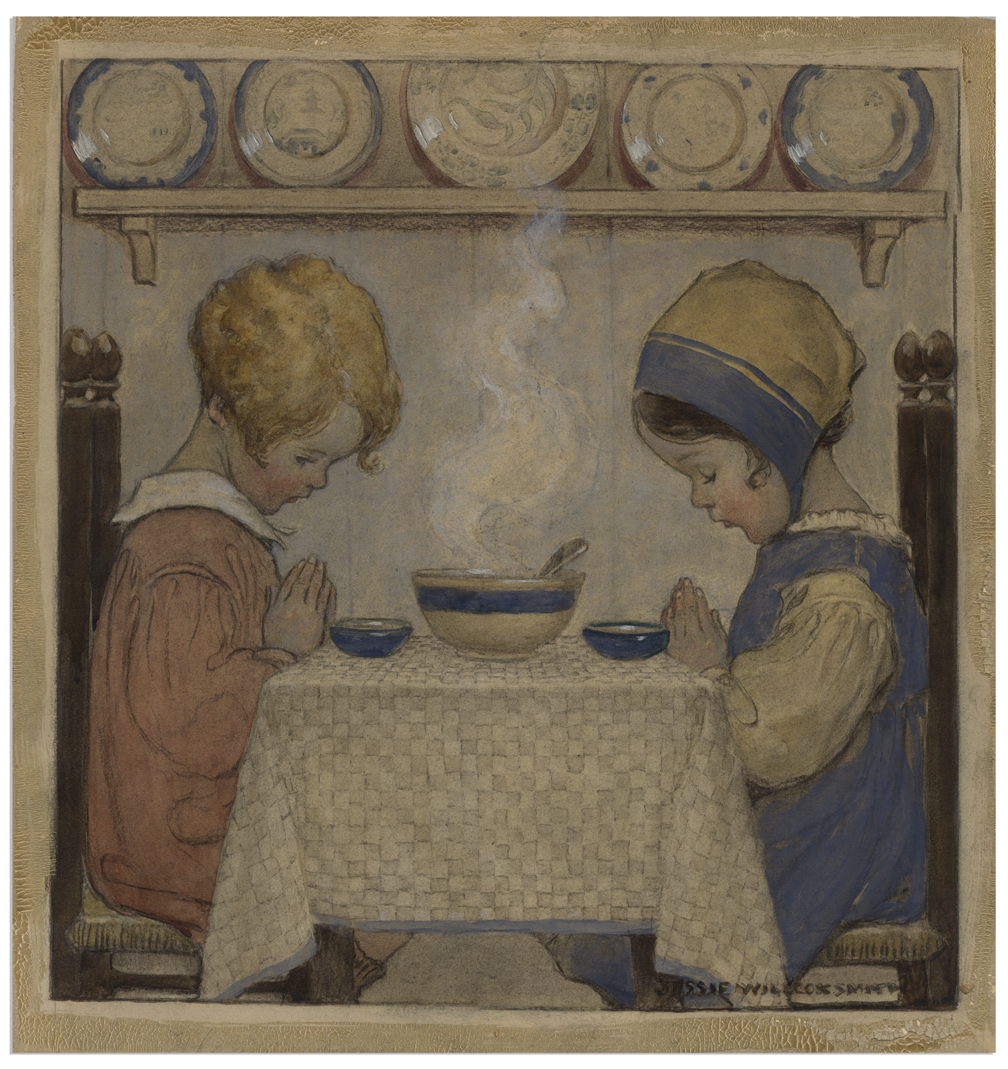
Jessie Willcox Smith Original Cover Art for ”Good Housekeeping” From November 1920 Entitled ”We Give Thee Thanks”
Beloved American illustrator, Jessie Willcox Smith original cover art for the November 1920 issue of ”Good Housekeeping” as well as the April 1922 issue of the UK edition, entitled ”We Give Thee Thanks”. Mixed media on illustration board measures 18.25” x 19”, showing two children praying before their meal. Signed ”Jessie Willcox Smith” at lower right. Artwork is one of Willcox Smith’s most memorable pieces, with limited edition lithographs even being made of it, a quintessential example of her work featuring two gently postured children in a moment of gratitude and familial warmth.
Jessie Willcox Smith was the exclusive cover artist for ”Good Housekeeping” from 1917-1933, and was the second woman inducted into the Society of Illustrators Hall of Fame, followed shortly thereafter by Elizabeth Shippen Green and Violet Oakley, fellow members of the Red Rose Girls, a group of female artists who flourished during the Golden Age of Illustration. Very good condition with no restoration apparent under blacklight. Artwork was given to Anne Champe Orr, the needlework editor for ”Good Housekeeping”, and then by descent to consignor. Sold for $82,500.
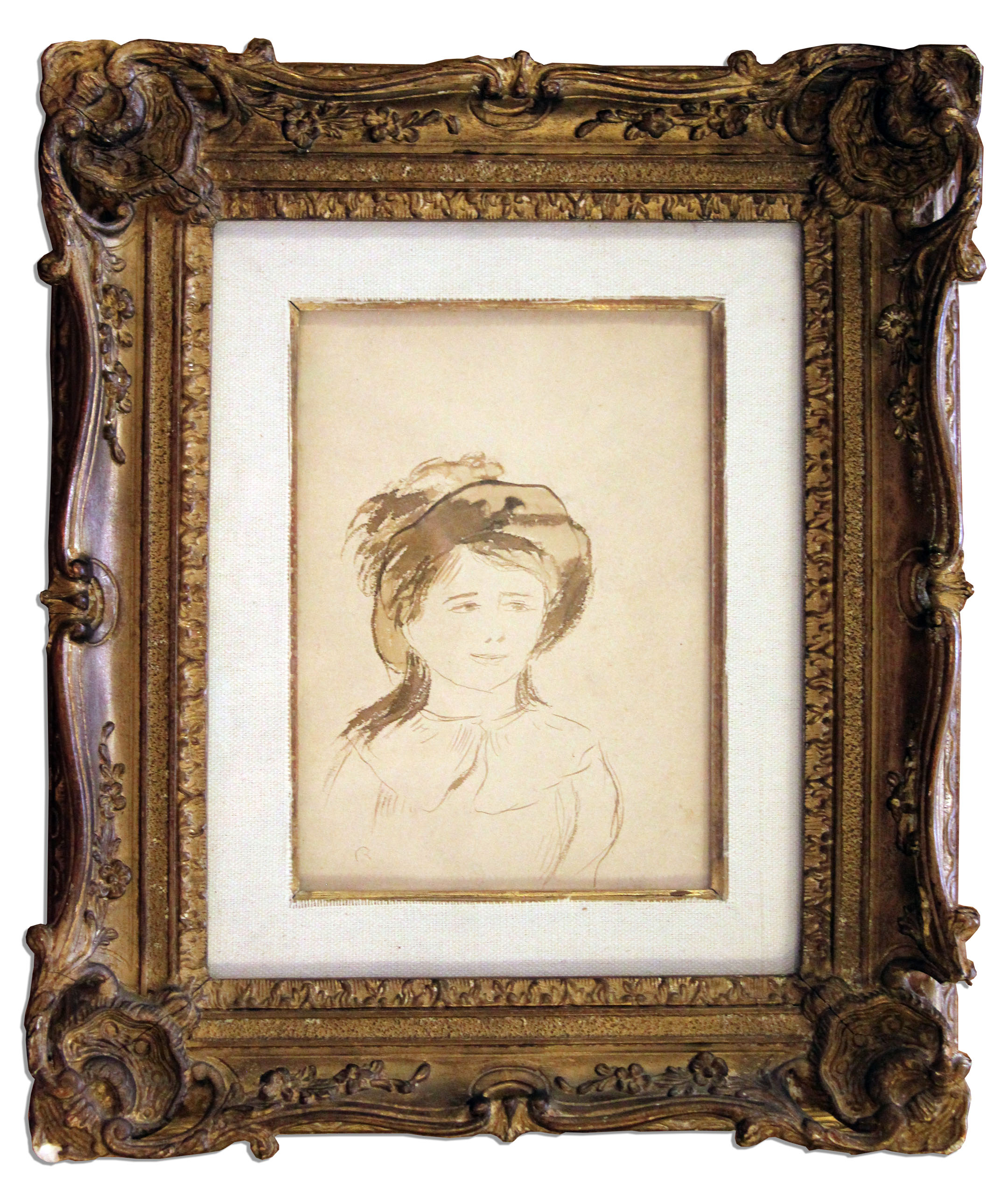
Pierre-Auguste Renoir Drawing — Portrait of a Young Girl ”Fillette”
French Impressionist master Pierre-Auguste Renoir drawing, pen and ink with ink wash of a young girl with a hat, entitled ”Fillette”. The drawing, created circa 1882, is signed with the initial, ”R”. Renoir, who had been painting Parisian scenes for many years, saw his fame take off when, along with other Impressionist painters, including Monet, Degas and Cezanne, his work was represented in the first Impressionist Exhibition in 1874. He painted scenes of people at work and play, often painting women and girls. He was known for his free brush strokes and the warm sensuality present in the light and color of his palette. Two of Renoir’s most famous paintings, ”Luncheon of the Boating Party” and ”Girl With a Hoop”, were completed during the early 1880’s when this drawing was made. The drawing, measuring 5.5” x 7.75”, is in fine condition. With provenance from Sotheby’s. Also featured in: (1) page 171, Vol. II of ”Pastels & Drawings of Pierre-Auguste Renoir” by Ambroise Vollard. Paris: 1918; (2) page 568, Vol. II of ”Renoir. Catalogue Raisonne of the Paintings, Pastels, Drawings and Watercolours 1882-1894” by Guy-Patrice & Michel Dauberville. Paris: 2009. Superb Renoir drawing. Sold for $65,959.
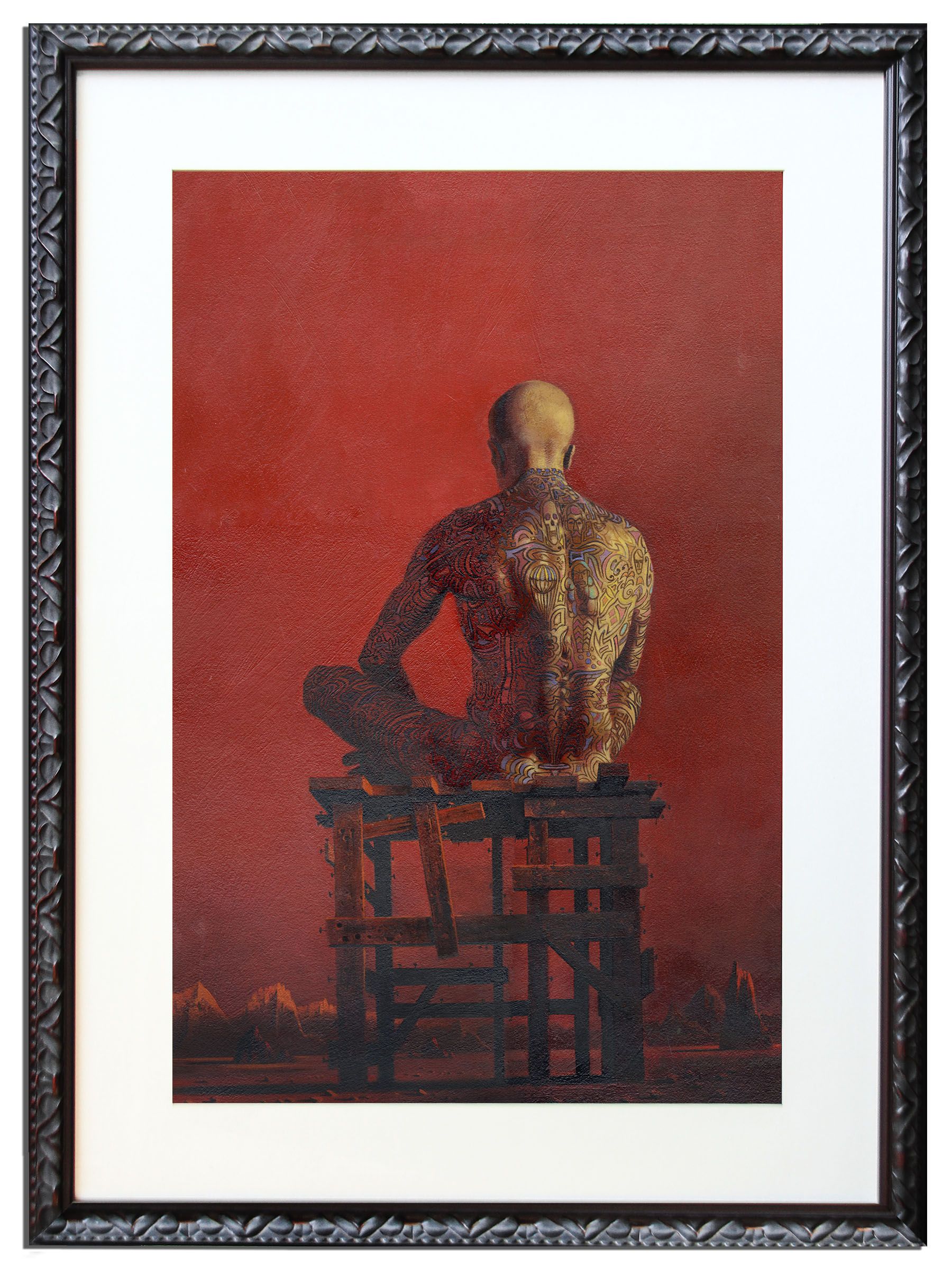
Artist Dean Ellis original ”Red Illustrated Man” painting commissioned for the cover art of Ray Bradbury’s ”The Illustrated Man”. Ellis’ depiction was used for the cover of the Bantam Books 1969 paperback edition of ”The Illustrated Man”. Composed in casein on illustration board. Painting measures 17” x 26.5” and is framed to an overall size of 26” x 35”. Near fine condition. With a COA from the Ray Bradbury estate. Sold for $45,894.
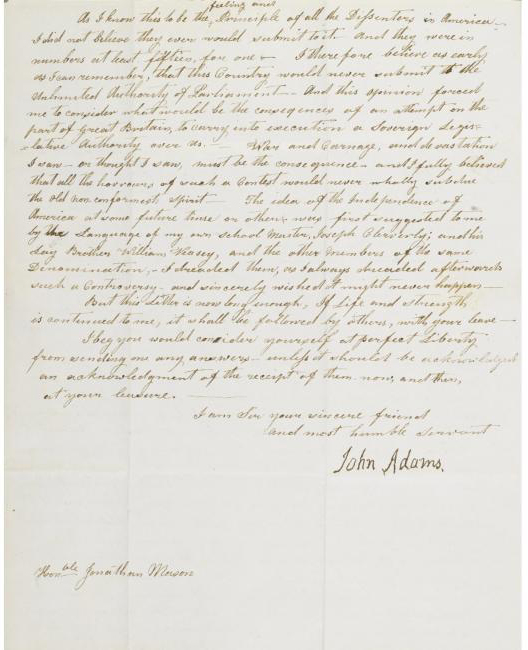
John Adams Reflects Upon the Real Causes of the American Revolution — “…what would be the consequences of an attempt on the part of Great Britain, to carry into…Authority over Us…War and Carnage, and devastation I saw – or thought I saw must be the consequence – and I fully believed that all the horrours of such a Contest would never wholly subdue the old non-conformist Spirit…” — Extraordinary and Moving Letter on the Indefatigable Spirit of the American Colonists
Exceptionally stirring and important letter signed by John Adams almost 50 years after the American Revolution, after which enough time had passed that Adams felt compelled to correct the record about the true causes of the American Revolution. Addressed to Jonathan Mason of Boston, letter is dated 31 August 1820 from “Montezillo”, Adams’ playful comparison to Jefferson’s larger estate at Monticello. In this letter, Adams posits that the fear and hatred of heirarchy, especially in matters of religion by The Church of England, were the wellspring of revolution, rather than simple economic or social issues. In part, “…The real principles, Motives, and feelings which gave rise to the Revolution have been very superficially and imperfectly investigated. For one example among many, The dread of the Hierarchy; and of the high principles in Religion and government; which then prevailed in the Church of England and which were more openly and dogmatically professed and asserted in America than in England itself – Are not sufficiently known, and have not been sufficiently considered. – Indeed it is almost impossible to convince at this day, any young Man; or even any middle aged Man of the extravagance to which those high doctrines were carried before the Revolution…And of the Authority of the Church in matters of Religion – yet these Doctrines, I heard asserted almost every day – The idea that such a Church, and such doctrines and such Hierarchy where [sic] to be established by Act of Parliament appeared to me worse than Death – As I know this to be the feeling and Principle of all the Dissenters in America – I did not believe they would submit to it…I therefore believe as early as I can remember, that this Country would never submit to the Unlimited Authority of Parliament – And this opinion forced me to consider what would be the consequences of an attempt on the part of Great Britain, to carry into execution a Soverign Legislative Authority over Us. – War and Carnage, and devastation I saw – or thought I saw must be the consequence – and I fully believed that all the horrours of such a Contest would never wholly subdue the old non-conformist Spirit…” Signed boldly and clearly “John Adams”. Two page letter with integral franked address leaf measures 8″ x 10″. Minor loss from seal tear on address leaf, else near fine. Housed in a light blue cloth folding case, with the blue morocco spine lettered gilt. Sold for $45,000.
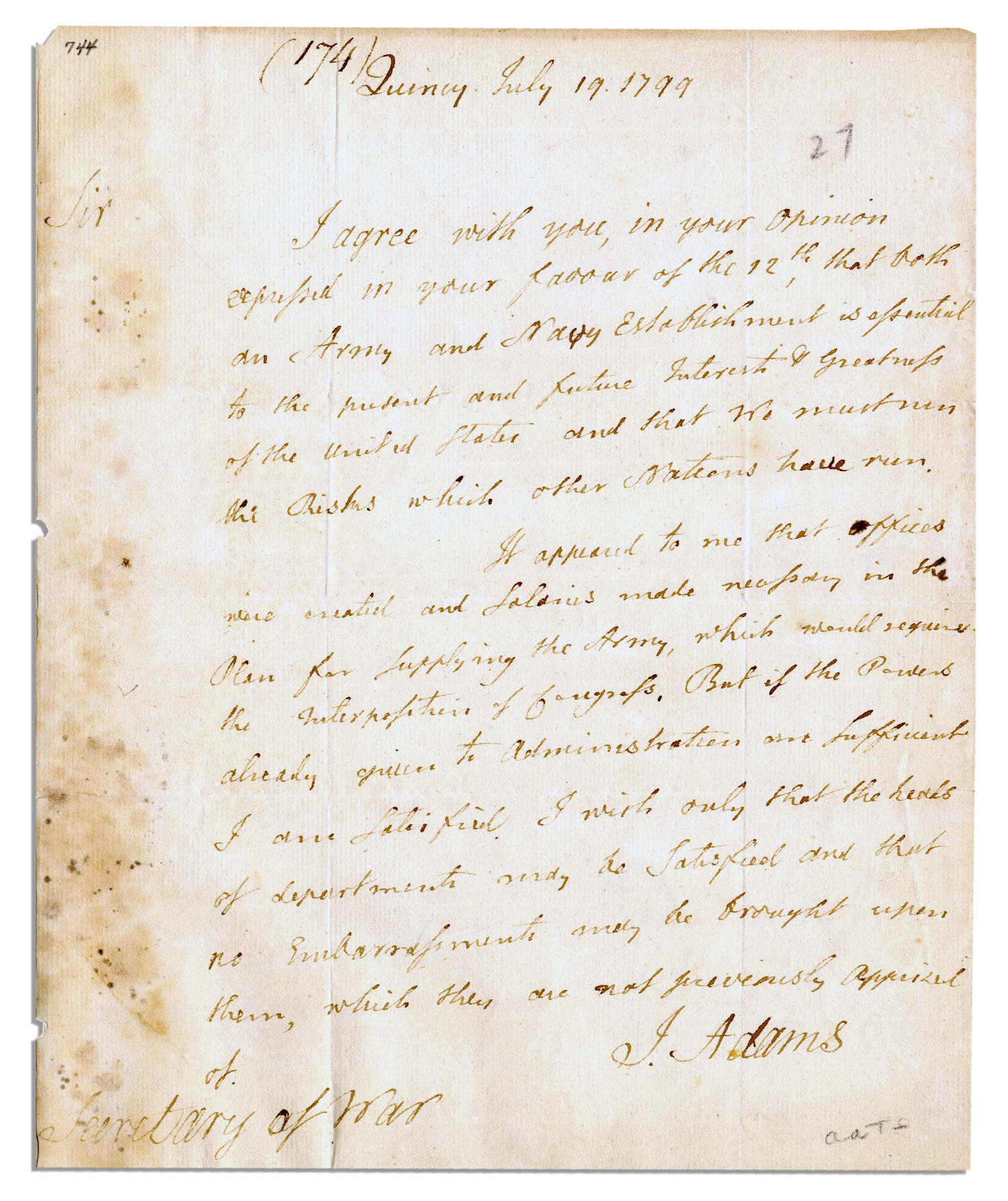
John Adams ALS as President, Who Didn’t Have a Full-Time Military! — “…an Army and Navy Establishment is essential to the present & future Interests & Greatness of the United States…”
Historically important John Adams autograph letter signed dated 19 July 1799, during his term as the second American President. Adams writes from Quincy, Massachusetts to Secretary of War James McHenry regarding the need for a standing army and navy, warning of embarrassment should the department heads be surprised. After the end of the American Revolution, the U.S., distrustful of standing militaries, sold off the last ship in its Continental navy and disbanded its army. A small navy was reinstated to protect American commerce with the onset of war in Europe in 1793. The U.S. negotiated a treaty with Britain but negotiations with France broke down during the XYZ affair. France, an ally to the American colonies during the American Revolution, now saw the U.S. as a British ally during their own war with England, and began seizing American merchant ships. In 1798, Congress established a Department of the Navy and empowered the merchant marine to defend American ships. A provisional army was also authorized. Peace negotiations with France began in January 1799, while Adams continued to build up the American military, as reflected in this letter. It reads in part, “…I agree with you…that both an Army and Navy Establishment is essential to the present and future Interests & Greatness of the United States and that We must run the Risks which other Nations have run. It appeared to me that Offices were created and Salaries made necessary in the Plan for Supplying the Army, which would require the Interposition of Congress, But if the Powers already given to Administration are Sufficient I am Satisfied…J. Adams”. This letter appears in “The Works of John Adams,” volume 8, 1856. Minor foxing and dampstaining along left edge of single page letter, measuring 8″ x 9.75″. Separation to folds; overall very good. Sold for $27,000.
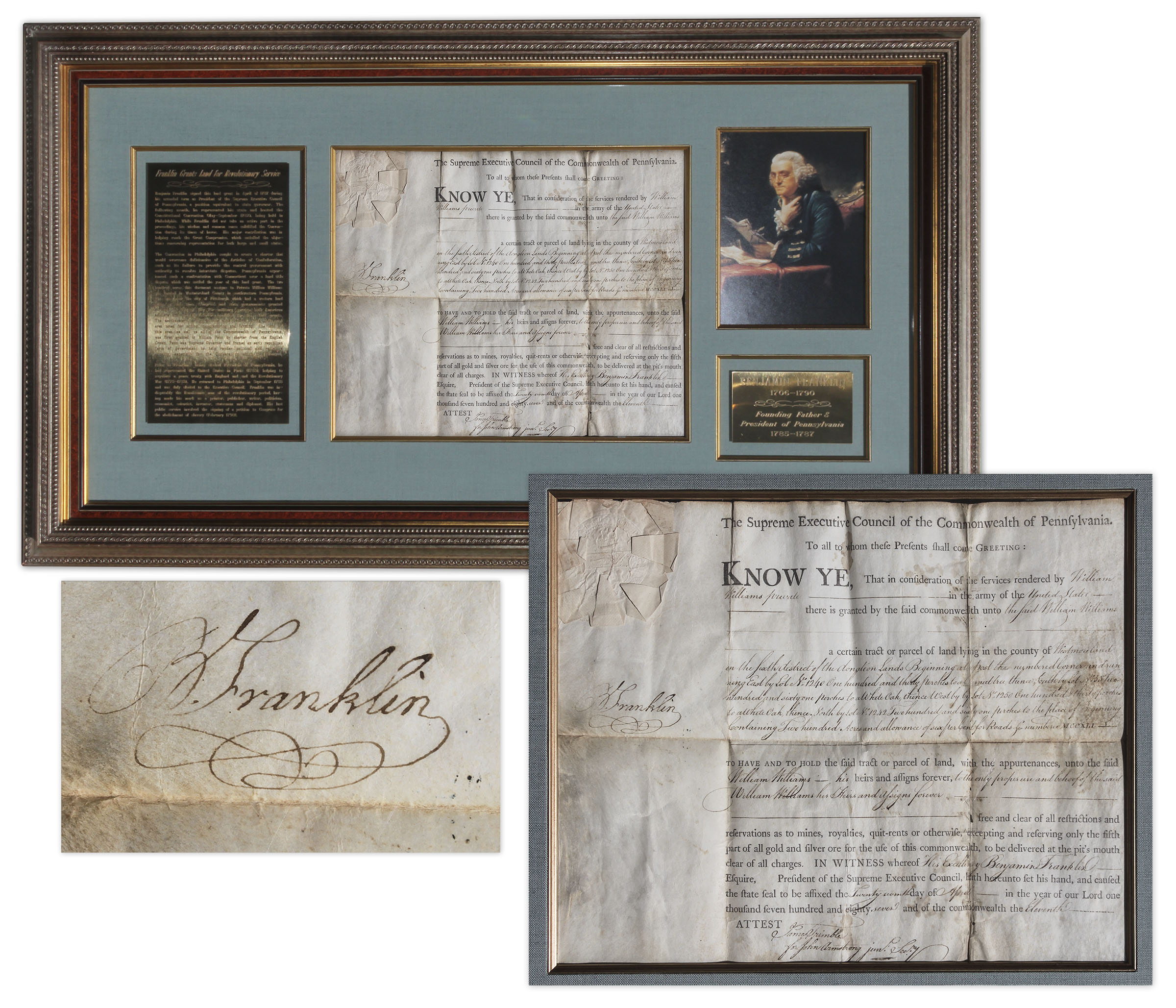
Benjamin Franklin land grant signed in Philadelphia on 27 April 1787, just one month before the start of the Constitutional Convention held in that city. Franklin served as President of Philadelphia’s Executive Council and signs ”B. Franklin” in that capacity, granting Private William Williams land in exchange for his service in the Revolutionary War. Document measures 15” x 12.5”, beautifully matted and framed to 40” x 23”. Weighs 14 lbs. Folds, toning and light staining throughout. Very good condition. Sold for $15,125.
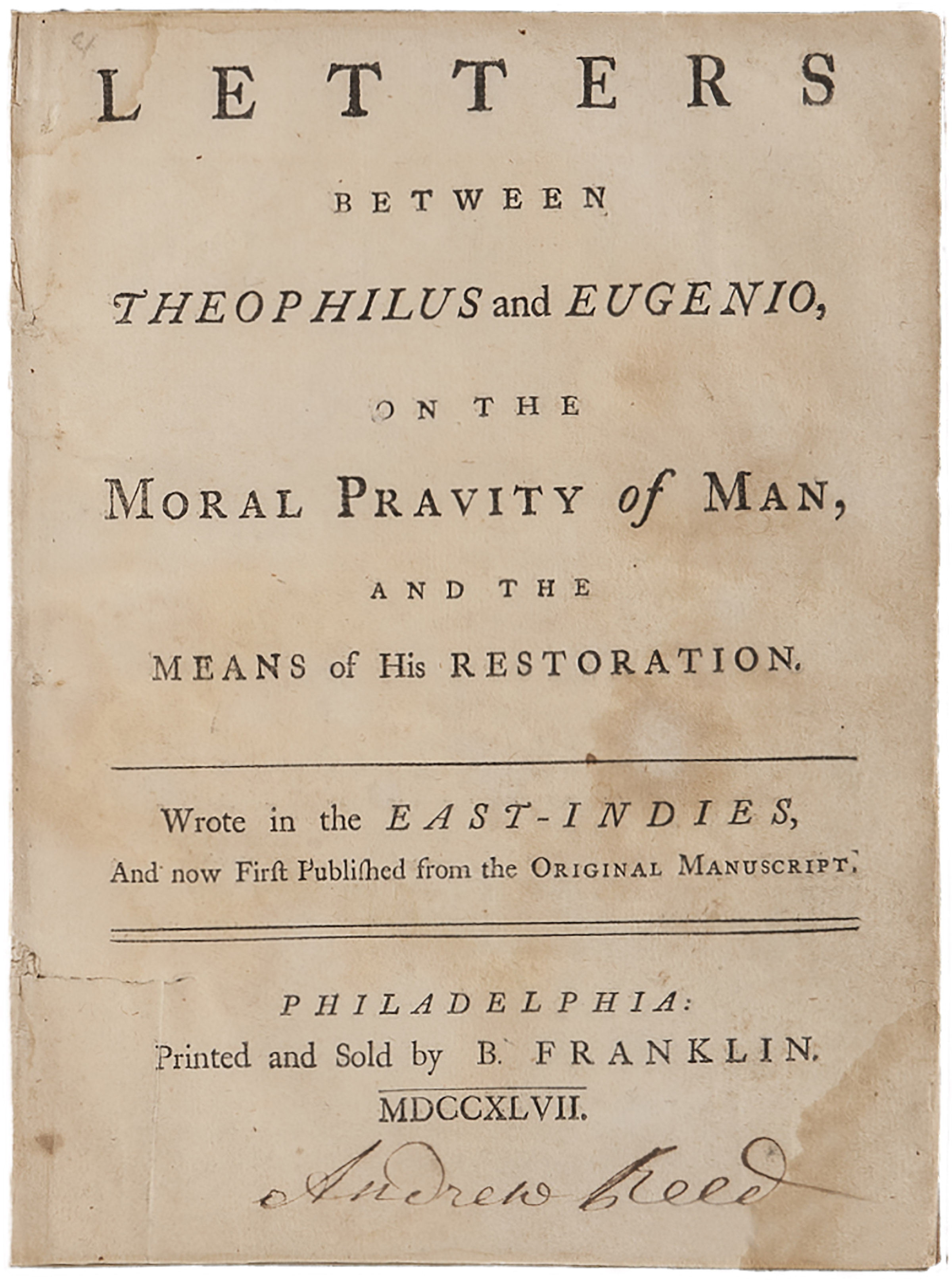
From the Printing Press of Benjamin Franklin, “Letters between Theophilus and Eugenio, on the Moral Pravity of Man, and the Means of his Restoration” — One of Only 16 Titles Published by Franklin
One of only 16 books printed by Benjamin Franklin, “Letters between Theophilus and Eugenio, on the Moral Pravity of Man, and the Means of his Restoration”. Philadelphia: Printed and Sold by B.[enjamin] Franklin, 1747. The first and only edition. Authorship of this volume of letters was once erroneously attributed to Franklin by Sabin, although it’s now believed to be by Sir Richard Blackmore. Book runs 64pp. in original wrappers, bound in full morocco black pebbled leather measuring 6.25″ x 7.75″ with git titling on spine. Previous owner’s name of “Andrew Reed” written to bottom of title page and page 20, possibly the wealthy 18th century Philadelphia merchant. Closed tear and water stain to title page, both lessening over the subsequent 2-3 leaves. Very good condition. Sold for $5,775.
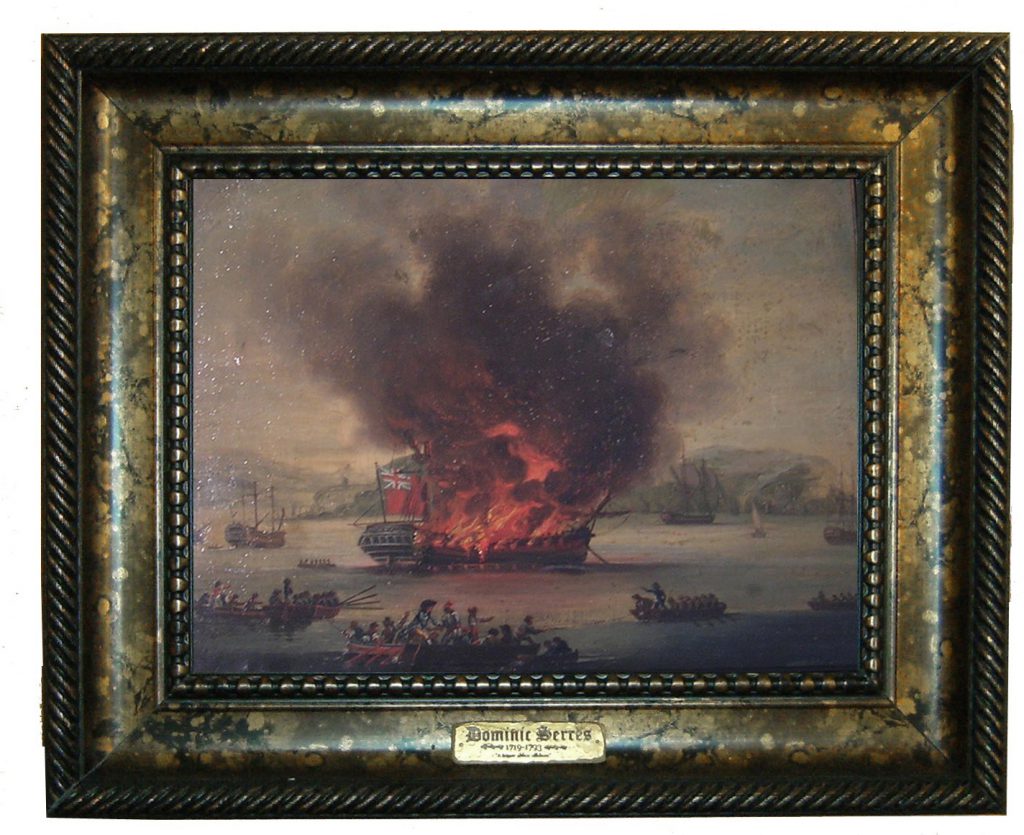
Dominic Serres’ “Frigate Ablaze”
“A Frigate Ablaze Offshore” by Dominic Serres. Intricate image captures a battle scene during the American Revolution. In the foreground, British soldiers watch from rescue boats as their ship is destroyed. The main ship appears at center, highlighted by brilliant flames of orange and yellow; a British flag is prominently displayed on the bow. Though French by birth, Dominic Serres spent most of his life in Britain and was influenced by the styles of 17th century Dutch maritime artists. His paintings frequently feature naval battle scenes set during the American Revolution and the Seven Years’ War. Oil on metal image measures 16.75″ x 12.5″; 22.5″ x 18.5″ framed. Slight metal pitting, not affecting image. Excellent condition. Sold for $3,573.
Consign your Extracts from Treaties between Great-Britain and Kingdoms 1792 at Nate D. Sanders Auctions. Send a description and images of your Extracts from Treaties between Great-Britain and Kingdoms 1792 to us at [email protected].
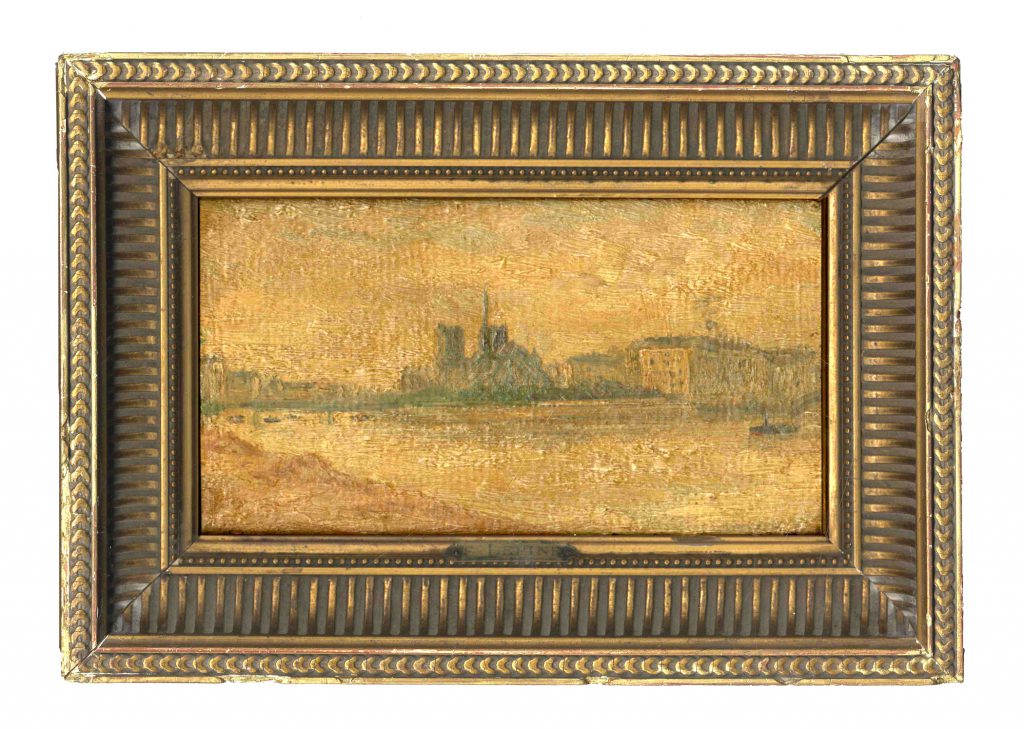
Stanislas Lepine French Oil Painting
Landscape painting by French painter Stanislas Lepine. Oil on wood panel. Signed to lower left. Born in Caen, Normandy in 1835, Lepine began studying art as a young man under Jean-Baptiste-Camille Corot, a master expressionist painter whose work significantly influenced the likes of Monet, Degas and Picasso. The critic Georges Lecomte called Lepine the direct artistic descendant of the great Corot. The influence of Johann Barthold Jongkind is also evident in Lepine’s paintings, particularly in his use of light. In this brooding atmospheric piece, Lepine depicts a view of Notre Dam from the foggy banks of the Seine River. The Seine drew his attention throughout his career, and is a common subject of his paintings. Though he was highly regarded by his peers, Lepine gained little recognition during his lifetime. In 1874, he was invited to exhibit at the first Impressionist Exhibition, and in 1889 he took the top prize at the Exposition Universelle. He died three years later, poor and still relatively unknown, at the age of 57. Only after his death did his paintings begin to win wider acclaim, and in 1892 a retrospective of his work was held at Durand-Ruel. Image measures 9.5″ x 6″; framed, 13″ x 9″. Frame, which shows chipping and other edgewear, appears to be original to the piece; a small wood name plate to the lower center of the frame reads “S. Lepine.” Panel is slightly warped from age but paint shows no cracking. Mild surface grime, otherwise near fine condition. Sold for $2,455.
FREE APPRAISAL. To buy, auction, sell or consign your Extracts from Treaties between Great-Britain and Kingdoms 1792 that is for sale, please email your description and photos to [email protected] of Nate D. Sanders Auctions (http://www.NateDSanders.com).