
Sell or Auction Your John Hancock Lottery Ticket Signed for up to Over $20,000 or More at Nate D. Sanders Auctions
FREE ESTIMATE. To buy, auction, sell or consign your John Hancock lottery ticket signed that is for sale, please email your description and photos to [email protected] of Nate D. Sanders Auctions (http://www.NateDSanders.com).
Sell Your John Hancock Lottery Ticket Signed
Founding Father John Hancock was a noted Patriot of the American Revolution, merchant, president of the Second Continental Congress and governor of the Commonwealth of Massachusetts. He was the first person to sign the Declaration of Independence on July 4, 1776 and is remembered for his bold and stylized signature. The term “John Hancock” is now a synonym for one’s signature in the United States.
Below is a recent realized price for a John Hancock lottery ticket signed item. We at Nate D. Sanders Auctions can obtain up to this amount or more for you:
John Hancock Lottery Ticket Signed. Sold for over $20,000.
click to enlarge
The following are some additional John Hancock items we have sold:
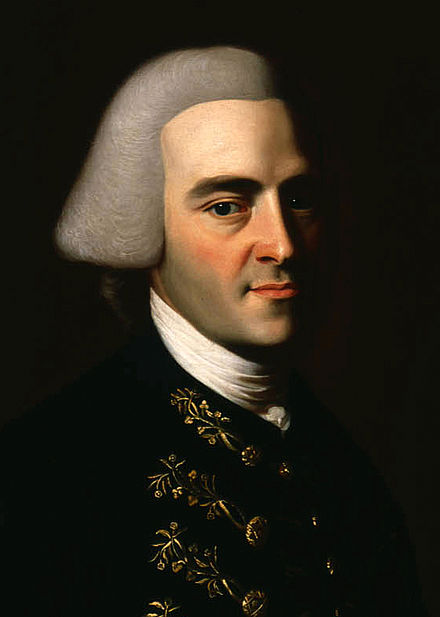
John Hancock Autograph Letter Dated April 26, 1775
John Hancock autograph letter to Joseph Warren and the Committee of Safety, requesting two soldiers be appointed for command. A very important John Hancock signed autograph letter from one week after the Revolutionary War started. Dated 26 April 1775, 7.5″ x 9″, from Worcester, Massachusetts. Slight fold creases, mounted to probable acid-free board, tape stains on top, left, and right margins, not affecting text. Small tear through date. In full, “From a Conviction of your Disposition to promote the General Good, I take the Freedom to Request your Countenance and good offices in fav. of W Edward Crafts of this place that he may be appointed to the Command of a Company. I know him well, he is capable, I Beg your attention to this, it will give great Satisfaction to Mr. [Samuel] Adams & to myself, & to the People of this Country, do gratify us. I also beg leave you will Recommend to the Notice of General Heath in my Name W. Nathel Nazro of this Town, who is serious of being Notic’d in the Army, he is lively, active, and capable. My respects to Heath & all friends. Pray Gen Heath to take Notice of this Recommendation- / God Bless you. Adieu / I am your real friend / John Hancock (signed).” On 14 April, Massachusetts Governor Gage is secretly ordered by the British to enforce the Coercive Acts and suppress “open rebellion” among colonists by using all necessary force. An object of some importance to the royal governor, to get possession of Mr. Hancock and Samuel Adams; and this is said to have been intended in the expedition to Concord, which led to the memorable battle of Lexington, the opening scene of the revolutionary war. Notwithstanding the secrecy with which that expedition was planned, these patriots, who were at the time members of the provincial congress at Concord, fortunately made their escape; but it was only at the moment the British troops entered the house where they lodged. Following this battle, Governor Gage issued his proclamation, offering a general pardon to all who should manifest a proper penitence for their opposition to the royal authority, excepting the above two gentlemen, whose guilt placed them beyond the reach of the royal clemency.
On Tuesday evening, 18 April, General Gage orders 700 British soldiers to Concord to destroy the colonists’ weapons depot. Observing the movements of the British troops, Dr. Joseph Warren dispatched William Dawes, by way of Roxbury, and Paul Revere, by way of Charlestown, to give the alarm to the people dwelling on the roads toward Concord. Revere reaches Lexington about midnight and warns Sam Adams and John Hancock who are hiding out there. Next morning, on hearing the news of the firing at Lexington, Warren left his patients in charge of his pupil and assistant, William Eustis, and rode off to the scene of action. He seems to have attended a meeting of the committee of safety that morning at the Black Horse tavern in Menotomy (now Arlington), and there to have consulted with Gen. William Heath. By the time Lord Percy reached Menotomy on his retreat, Gen. Heath had assumed command of the militia, and the fighting there was perhaps the severest of the day. Dr. Warren kept his place near Heath, and a pin was struck from his head by a musket-ball. During the next six weeks he was indefatigable in urging on the military preparations of the New England colonies. General William Heath performed valuable services in the pursuit of the British troops from Concord on 19 April, 1775. At dawn on April 19 about 70 armed Massachusetts militiamen stand face to face on Lexington Green with the British advance guard. An unordered ‘shot heard around the world’ begins the American Revolution. A volley of British rifle fire followed by a charge with bayonets leaves eight Americans dead and ten wounded. The British regroup and head for the depot in Concord, destroying the colonists’ weapons and supplies. At the North Bridge in Concord, a British platoon is attacked by militiamen, with 14 casualties. British forces then begin a long retreat from Lexington back to Boston and are harassed and shot at all along the way by farmers and rebels and suffer over 250 casualties. News of the events at Lexington and Concord spreads like wildfire throughout the Colonies. On 23 April, the Provincial Congress in Massachusetts ordered 13,600 American soldiers to be mobilized. Colonial volunteers from all over New England assemble and head for Boston, then establish camps around the city and begin a yearlong siege of British-held Boston. An excellent John Hancock autograph letter. Sold for $10,745.
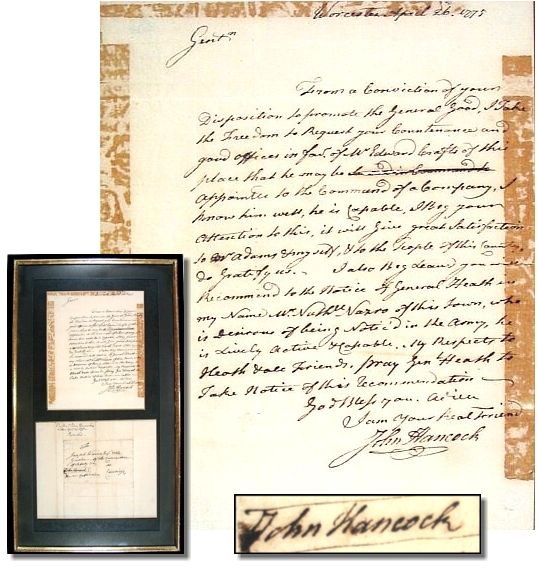
John Hancock military document signed from 1776, as President of the Continental Congress, appointing an Ensign to the 1st New Hampshire Regiment, headed by Colonel John Stark. At the Revolutionary War Battle of Bennington, Stark rallied over 1,400 untrained militiamen, without uniforms and using their personal firearms, to thwart a British raid on Bennington, Vermont, famously telling his troops, “We’ll beat them before night or Molly Stark’s a widow!” Dubbed “The Hero of Bennington” and promoted to General, Stark also proved himself at Bunker Hill, Trenton, Princeton and the Siege of Boston.
John Hancock’s large, eloquent signature is on full display here, with his characteristic paraph below. Dated 8 November 1776, document is countersigned by Charles Thomson as Secretary of the Continental Congress. Measures 12″ x 8.25″. Reinforced with paper on verso. Some separation along folds, with folds touching the ends of Hancock’s signature. Overall very good condition given age, and with a bold, attractive signature by Hancock. Sold for $9,375.
John Hancock Signs a Document in 1793, The Last Year of His Life — for a Bounty on Hemp
John Hancock document signed as Governor of Massachusetts. The founding father signs his original ”John Hancock” for one of the last times, in Boston on 7 June 1793, just months before his death. Payment to one Mace Tisdale is ordered for a bounty on hemp in this partially-printed document. The fields are filled in by an unknown hand, and Secretary John Avery countersigns. Included in the lot is a 24 October 1794 autograph note signed by Tisdale to treasurer Thomas Davis, assigning the bounty to a David West. A red wax seal remnant is present with receipt signature to verso. Measures 7.5” x 9”. Single page document is in very good condition with toning and separation to fold. Hancock’s signature was not only the most attractive to grace the Declaration of Independence, it was the first, given his role as President of the Second Continental Congress. Sold for $5,407.

John Hancock boldly signed document as the first Governor of Massachusetts. Datelined Boston, 15 March 1781, Hancock appoints Joseph Fisk to Surgeon of the 1st Regiment of Foot in the Continental Army during the Revolutionary War. Document reads in part, ”…You are therefore carefully & diligently to discharge the Duty of a Surgeon to the said Regiment…” Document measures 14.25” x 9.25”. Boldly signed ”John Hancock” with his flourish at the bottom. Tissue repairs and small paper loss at intersecting folds. Very good condition. Sold for $5,000.

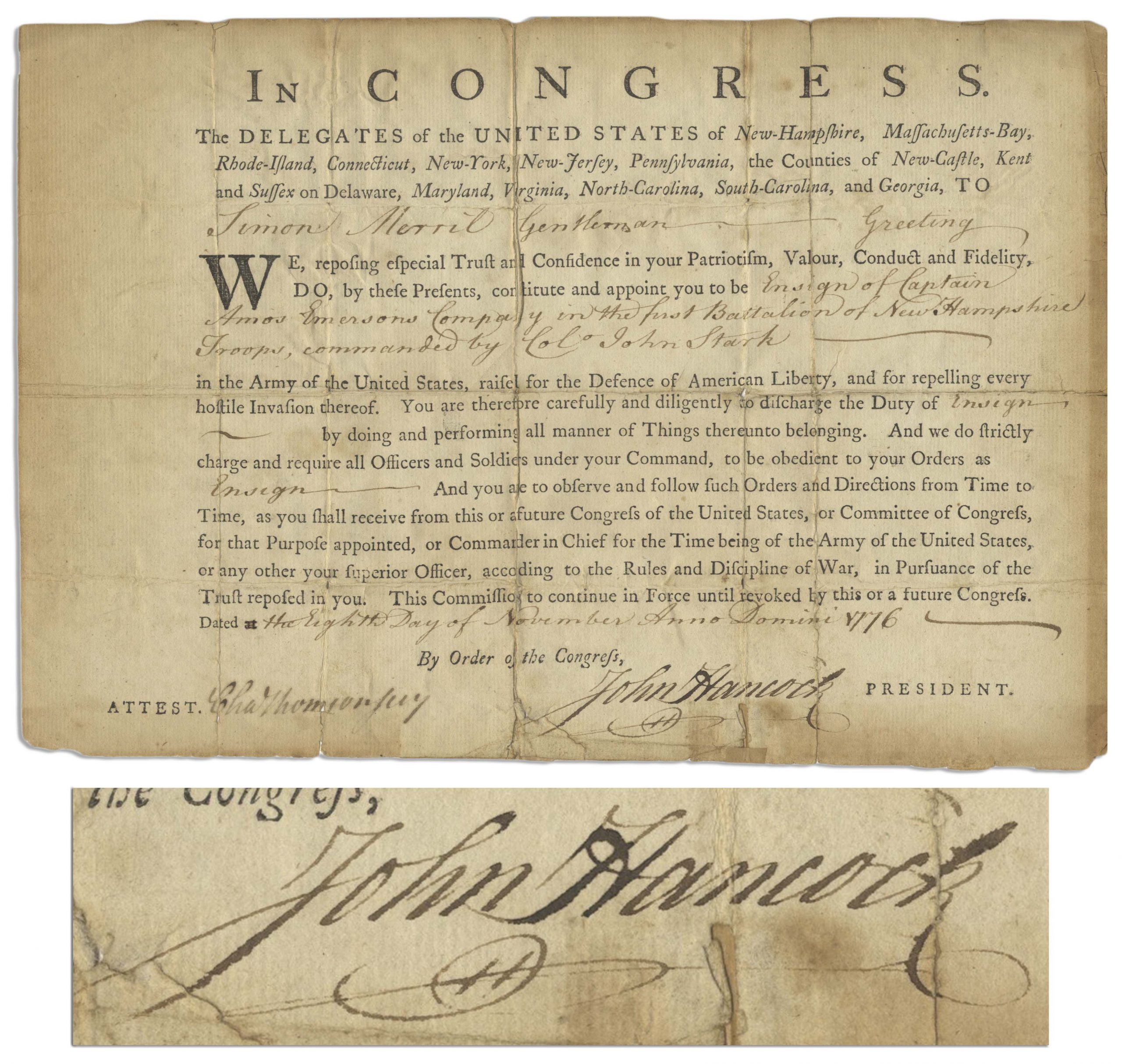
John Hancock free franked signature from 1782 during the Revolutionary War while he served as Governor of Massachusetts. Hancock here writes to Brigadier General Nathaniel Goodwin to a fort on Gurney Bay in Plymouth, Massachusetts, writing ”Public Service” to the upper portion and signing ”John Hancock”. Address leaf measures 6.25” x 7.5”, framed to 28” x 19.75”, with a plaque telling the historical events in 1782. Frame weighs 8 lbs. 4 oz. Small smudge to signature, light toning and spot of discoloration. Very good condition. Sold for $3,125.
FREE ESTIMATE. To buy, auction, sell or consign your item that is for sale, please email your description and photos to [email protected] of Nate D. Sanders Auctions (http://www.NateDSanders.com).
We offer the following services for your John Hancock lottery ticket signed:
- Appraise your John Hancock lottery ticket signed
- Auction your John Hancock lottery ticket signed
- Consign your John Hancock lottery ticket signed
- Sell your John Hancock lottery ticket signed
- Research your John Hancock lottery ticket signed